


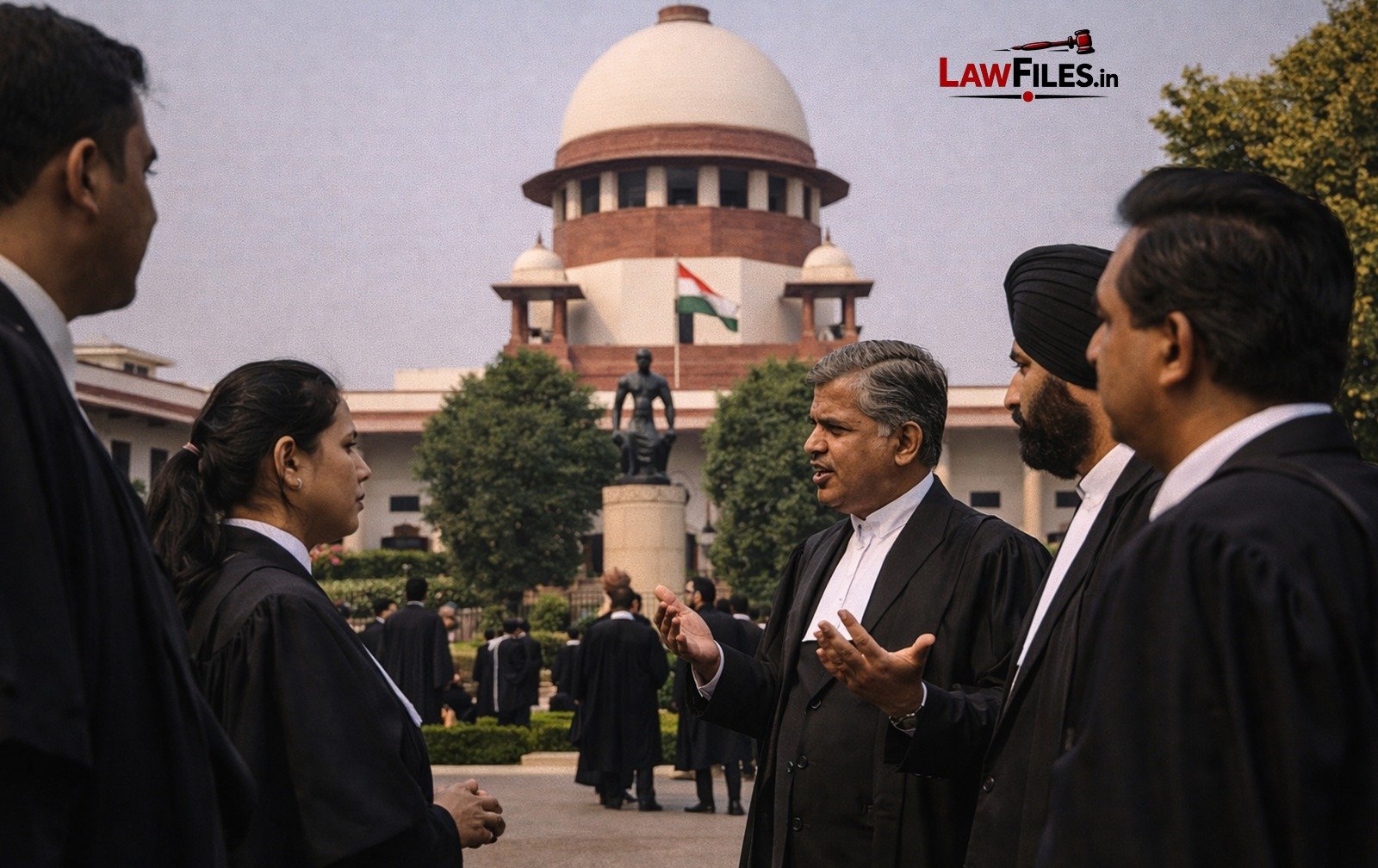
In a significant judgment reaffirming the reformative foundations of criminal jurisprudence, the Supreme Court has ruled that the gravity or heinousness of an offence alone cannot become the sole ground for denying remission to a convict who has undergone prolonged incarceration and demonstrated satisfactory conduct in prison. The Court ordered the release of a convict in the widely discussed Madhumita Shukla murder case after he spent more than twenty-two years behind bars, holding that executive authorities cannot mechanically reject remission merely because the crime generated public outrage or involved exceptional brutality.
The ruling is legally important because it revisits the constitutional philosophy underlying remission, punishment, and rehabilitation in India’s criminal justice system. At a time when public discourse surrounding serious crimes increasingly favours punitive approaches, the judgment serves as a reminder that Indian constitutional jurisprudence continues to recognise the possibility of reform and reintegration even in cases involving grave offences.
The case arose from the murder of poet Madhumita Shukla, a crime that attracted national attention due to its sensational circumstances and alleged political links. The convict seeking remission had remained incarcerated for over two decades and approached the Court after remission authorities declined to grant premature release despite long imprisonment and eligibility under applicable remission policies.
While rejecting the remission request, authorities had reportedly relied heavily upon the seriousness and social impact of the offence. The State argued that the nature of the crime was so grave that release of the convict would send a wrong message to society and undermine public confidence in the justice system. However, the Supreme Court disagreed with this reasoning and observed that if seriousness of the offence alone were treated as an absolute bar, the very concept of remission would become meaningless in cases involving serious crimes.
The Bench emphasised that remission jurisprudence is not intended to reward innocence but to evaluate whether continued incarceration serves any meaningful legal or social purpose after substantial imprisonment has already been undergone. According to the Court, constitutional and statutory provisions relating to remission require authorities to assess factors such as conduct in prison, possibility of reformation, psychological transformation, social reintegration, and the broader objectives of criminal punishment rather than mechanically focusing only upon the original offence.
The judgment reflects the judiciary’s continuing engagement with the reformative theory of punishment, which views imprisonment not merely as retribution but also as an opportunity for rehabilitation. Indian criminal law historically recognises multiple theories of punishment including deterrence, retribution, prevention, and reformation. Over time, constitutional courts have increasingly stressed that modern penology cannot entirely abandon the possibility that individuals may reform through long incarceration and institutional correction.
Critically analysed, the decision challenges a growing trend toward purely punitive public discourse surrounding criminal justice. In recent years, especially in high-profile crimes involving violence, public and political narratives often equate justice exclusively with prolonged incarceration or irreversible punishment. The Supreme Court’s ruling subtly pushes back against this tendency by reaffirming that constitutional governance cannot be driven solely by emotional responses to heinous crimes.
The Court also highlighted an important distinction between sentencing and remission. While the seriousness of an offence undoubtedly influences the original sentence imposed by the trial court, remission proceedings involve a different legal inquiry altogether. Once a convict has served a substantial portion of the sentence, the focus shifts toward evaluating post-conviction conduct, prison behaviour, and prospects of rehabilitation. Treating the original crime as the only relevant consideration would effectively nullify statutory remission frameworks established under criminal law.
The ruling further underscores that remission is not an act of charity but a recognised component of criminal justice administration rooted in constitutional and statutory principles. Under the Code of Criminal Procedure and constitutional powers vested in the executive under Articles 72 and 161, remission serves as a mechanism enabling the State to account for human transformation, institutional discipline, and changing circumstances over time.
Another important dimension of the judgment lies in its reaffirmation of Article 21 jurisprudence. The right to life and personal liberty under Article 21 has repeatedly been interpreted by constitutional courts to include protection against arbitrary or mechanical exercise of executive power in matters affecting liberty. The Court’s insistence upon fair and reasoned consideration of remission applications reflects this broader constitutional commitment against arbitrary state action.
The decision also exposes recurring inconsistencies in remission practices across Indian States. Different States frequently adopt divergent standards while evaluating premature release applications, often leading to allegations of arbitrariness, political influence, or selective application of policy. In several instances, remission decisions have generated intense controversy because similarly situated convicts receive unequal treatment depending upon political context, media attention, or administrative discretion.
The Madhumita murder case particularly illustrates how high-profile crimes complicate remission jurisprudence. Public outrage surrounding sensational offences often creates institutional hesitation in granting remission even after convicts satisfy eligibility requirements. Authorities fear criticism that release may appear insensitive toward victims or socially unacceptable. However, the Supreme Court’s judgment indicates that constitutional principles cannot be subordinated entirely to public sentiment or symbolic demands for perpetual punishment.
At another level, the ruling reflects judicial recognition of the psychological and human consequences of extended incarceration. Spending over twenty-two years in prison represents a substantial deprivation of liberty, often involving social isolation, emotional deterioration, and irreversible loss of personal life opportunities. The Court appears to have acknowledged that once imprisonment has substantially served punitive and deterrent purposes, indefinite continuation may cease to advance legitimate penological objectives.
The judgment also contributes to the evolving debate concerning the purpose of prisons in constitutional democracies. If prisons are conceived solely as instruments of retribution, remission naturally appears incompatible with serious crimes. However, if correctional institutions are also intended to facilitate rehabilitation and eventual reintegration, then remission becomes an essential mechanism recognising successful reformation. The Supreme Court’s reasoning clearly aligns with this latter constitutional vision.
Importantly, the Court did not dilute the seriousness of the original offence. The judgment does not trivialise violent crime or suggest automatic release for all convicts after lengthy incarceration. Rather, it insists that executive authorities must conduct a balanced and individualized assessment instead of mechanically invoking heinousness as a universal justification for rejection.
The ruling may also influence future remission disputes involving life convicts who have undergone prolonged imprisonment. Courts may increasingly scrutinise whether authorities have genuinely considered reformative factors or merely reproduced formulaic references to seriousness of the offence while rejecting applications. This could potentially strengthen procedural fairness and transparency in remission decision-making across jurisdictions.
Another constitutional concern raised by the judgment involves the relationship between judicial sentencing and executive remission powers. While courts impose punishment through sentencing, remission operates within the executive domain as part of correctional administration. The Supreme Court’s intervention demonstrates that although remission remains an executive function, its exercise remains subject to constitutional standards of fairness, rationality, and non-arbitrariness.
The judgment also revives larger philosophical questions concerning whether individuals should be permanently defined by their worst acts or whether constitutional systems must preserve the possibility of redemption. Modern criminal jurisprudence increasingly grapples with this tension between accountability and rehabilitation. The Supreme Court’s reasoning suggests that Indian constitutionalism continues to leave space for the possibility that prolonged imprisonment may produce genuine transformation deserving legal recognition.
At a broader institutional level, the ruling reflects the judiciary’s attempt to preserve balance within criminal justice policy at a time when public discourse often demands harsher punishments and reduced tolerance for remission. Constitutional courts increasingly function as safeguards against majoritarian impulses favouring perpetual incarceration irrespective of individual reform or statutory entitlement.
Ultimately, the Supreme Court’s decision ordering release of the Madhumita murder case convict after twenty-two years represents more than an individual remission ruling. It reaffirms a foundational constitutional principle that punishment in a democratic legal system cannot be guided solely by vengeance or societal anger. By holding that heinousness alone cannot justify denial of remission, the Court has reinforced the idea that the criminal justice system must continue to recognise human reform, constitutional fairness, and the possibility of rehabilitation even in cases involving the gravest offences.
