

Close Menu
LawFilesLawFiles

    Subscribe to Updates

    Get the latest creative news from FooBar about art, design and business.

    What's Hot

    Supreme Court Suggests Reconsidering Colonial-Era Rule Under Section 306 of Succession Act: Should Civil Liability Die With the Wrongdoer?

    May 20, 2026

    Massive Expansion for Madras High Court: Supreme Court Collegium Recommends 19 New Judges Amid Growing Judicial Backlog

    May 20, 2026

    Supreme Court Clarifies Limits of Reassessment Under Income Tax Act: ‘Reason to Believe’ Cannot Become a Tool for Endless Tax Scrutiny

    May 18, 2026
    Facebook X (Twitter) Instagram Threads
    Wednesday, May 20
    LawFilesLawFiles
    Facebook X (Twitter)
    • Home
      • Who We Are
      • Our Mission
      • Advisory board
      • Contact US
    • Supreme Court
    • High Courts
      • Gujarat High Court
      • Jharkhand High Court
      • Rajasthan High Court
      • Karnataka High Court
      • Andhra Pradesh High Court
      • Allahabad High Court
      • Himachal Pradesh High Court
      • Chhattisgarh High Court
      • Jammu & Kashmir and Ladakh High Court
      • Kerala High Court
      • Punjab and Haryana High Court
      • Patna High Court
      • Madhya Pradesh High Court
      • Madras High Court
      • Bombay High Court
      • Orissa High Court
      • Calcutta High Court
      • Meghalaya High Court
      • Delhi High Court
      • Manipur High Court
      • Gauhati High Court
    • Corporate
    • Taxation Laws
      • Income Tax
      • GST
      • Customs & Excise
    • Global Affairs
    • Articles
      • Sitting Judge’s’ Views
      • Senior Advocate
      • Policy Analysis
      • Tax Expert
    • PILS
      • Free/Affordable Legal Aid
      • PIL Cell
      • Law student Volunteer Cell (research & Drafting)
      • NGO & Legal services Authority Tie-ups
      • Online Legal Formats
      • Online Legal Help Form
    Subscribe Premium
    LawFilesLawFiles
    Home»Political News»Sabarimala Reference Hearing Revives Constitutional Debate on ‘Morality’: Raju Ramachandran Warns Against Majoritarian Interpretation of Religious Freedom
    Political News

    Sabarimala Reference Hearing Revives Constitutional Debate on ‘Morality’: Raju Ramachandran Warns Against Majoritarian Interpretation of Religious Freedom

    Anvita DwivediBy Anvita DwivediMay 12, 2026No Comments5 Mins Read
    WhatsApp Facebook Twitter Copy Link
    Share
    Facebook Twitter Pinterest Copy Link WhatsApp

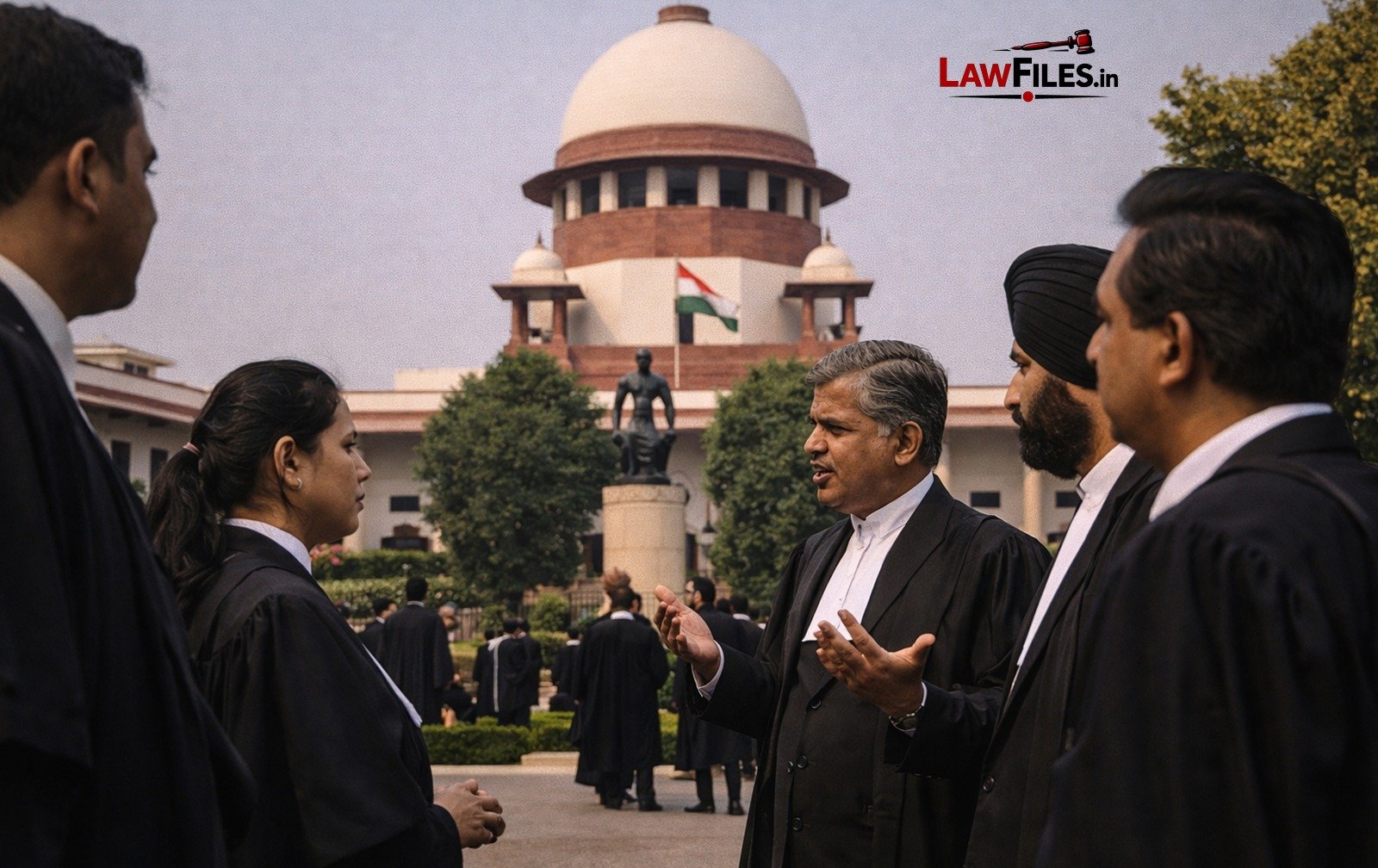
    The long-pending Sabarimala reference proceedings before the Supreme Court witnessed a significant constitutional intervention this week as Senior Advocate Raju Ramachandran argued that interpreting “morality” under Articles 25 and 26 of the Constitution as “public morality” would dangerously subordinate fundamental rights to majoritarian social beliefs. His submissions before the nine-judge Bench have reopened one of the most profound constitutional debates in modern Indian jurisprudence: whether constitutional rights are to be governed by evolving constitutional principles or by prevailing societal morality.

    Appearing in the expansive reference concerning the scope of religious freedom and judicial review of religious practices, Ramachandran contended that permitting “public morality” to determine the limits of Articles 25 and 26 would effectively allow dominant social groups to define constitutional freedoms. Such an approach, he argued, would undermine the transformative nature of the Constitution and erode protections available to minorities, dissenters, women, and historically marginalized communities.

    The submissions arise in the broader context of the Supreme Court’s continuing reconsideration of issues flowing from the landmark 2018 Indian Young Lawyers Association v. State of Kerala judgment, where a Constitution Bench had struck down the exclusion of women aged between 10 and 50 from entry into the Sabarimala temple. The majority in that case held that exclusionary practices rooted in biological notions of menstruation violated constitutional guarantees of equality, dignity, and religious freedom. (sci.gov.in)

    However, following intense social and political backlash, a subsequent five-judge Bench in 2019 referred broader questions relating to essential religious practices, denominational rights, and the intersection between equality and religious autonomy to a larger nine-judge Bench. The present hearings therefore extend far beyond Sabarimala alone; they may ultimately shape constitutional interpretation in disputes involving mosque entry, female genital mutilation, Parsi women’s rights in fire temples, and broader questions of gender justice within religious institutions. (barandbench.com)

    Ramachandran’s argument strikes at the conceptual core of constitutional morality—a doctrine that has increasingly shaped progressive constitutional jurisprudence in India. The doctrine gained prominence in judgments such as Navtej Singh Johar v. Union of India, which decriminalised homosexuality, and Joseph Shine v. Union of India, which struck down adultery laws. In these decisions, the Supreme Court repeatedly emphasised that constitutional rights cannot be constrained merely because prevailing social morality disapproves of certain identities or practices. (sci.gov.in)

    According to Ramachandran, reading “morality” in Articles 25 and 26 as “constitutional morality” is essential to preserving the anti-majoritarian character of the Constitution. Otherwise, the rights of vulnerable groups would perpetually remain hostage to dominant social sentiment. His submissions reflect a broader constitutional philosophy that the Indian Constitution was designed not merely to reflect existing social morality but to transform it.

    The debate becomes especially significant because Articles 25 and 26 expressly make religious freedom subject to “public order, morality, and health.” The interpretive dispute therefore concerns the meaning of the word “morality” itself. Conservative readings have historically understood it as public morality grounded in societal values and religious traditions. Progressive constitutional interpretation, however, increasingly views it as constitutional morality rooted in liberty, equality, dignity, and fraternity.

    Critically, the consequences of this interpretive choice extend far beyond temple entry disputes. If “morality” is equated with prevailing social norms, constitutional protection for unpopular minorities becomes inherently unstable. Practices or identities rejected by dominant groups could be excluded from constitutional protection on grounds of social disapproval. Ramachandran’s warning that “majoritarian notions will prevail” therefore reflects anxiety about democratic majoritarianism overwhelming constitutional liberalism.

    The hearings also reveal the continuing tension between two competing visions of the Indian Constitution. One vision treats the Constitution as a transformative document intended to dismantle inherited structures of hierarchy and exclusion. The other emphasizes judicial restraint in matters involving deeply embedded religious traditions and community autonomy. The Sabarimala reference has effectively become the constitutional battleground where these competing philosophies confront each other directly.

    At a deeper level, the case raises difficult questions regarding judicial competence in determining what constitutes “essential religious practice.” Indian courts have long struggled with the controversial Essential Religious Practices doctrine, under which judges examine whether contested practices are fundamental to a religion and therefore constitutionally protected. Critics argue that this doctrine forces secular courts into theological adjudication inconsistent with constitutional secularism itself.

    Ramachandran’s submissions indirectly challenge that framework by shifting focus away from theological centrality toward constitutional values. The implication is significant: even if a discriminatory practice is religiously sanctioned, it may still fail constitutional scrutiny if it violates equality and dignity guarantees. Such reasoning strengthens the primacy of constitutional morality over ecclesiastical autonomy.

    The proceedings also unfold against a politically charged social backdrop. The original Sabarimala verdict triggered mass protests in Kerala, ideological polarisation, and sustained resistance from sections of devotees who viewed judicial intervention as an assault upon religious faith. The continuing hearings therefore represent not merely a legal dispute but a larger societal struggle over the relationship between faith, gender justice, and constitutional authority.

    Importantly, the nine-judge Bench’s eventual ruling could substantially redefine the future trajectory of Indian secularism. Indian secularism has historically differed from Western models by permitting principled State intervention in religious practices to advance social reform. The Court’s interpretation of morality within Articles 25 and 26 may determine how far constitutional courts can continue intervening in exclusionary religious customs in the future.

    From a jurisprudential perspective, Ramachandran’s arguments revive Dr. B.R. Ambedkar’s original conception of constitutional morality. Ambedkar had repeatedly warned that constitutional democracy cannot survive merely through electoral majorities unless citizens and institutions remain committed to constitutional values over social prejudices. The present debate therefore resonates with foundational anxieties embedded within the constitutional project itself.

    Ultimately, the Sabarimala reference is no longer merely about entry into a temple. It has evolved into a defining constitutional inquiry into whether India’s democratic order will be governed primarily by constitutional values or by prevailing social majorities. Raju Ramachandran’s warning before the Supreme Court captures the stakes succinctly: if public morality becomes the governing standard for constitutional freedoms, the Constitution’s role as a shield for minorities and dissenters may itself stand fundamentally weakened.


    Raju Ramachandran Warns Against Majoritarian Interpretation of Religious Freedom Sabarimala Reference Hearing Revives Constitutional Debate on ‘Morality’:
    Share. WhatsApp Facebook Twitter Pinterest Email
    Anvita Dwivedi

    Related Posts

    Supreme Court Suggests Reconsidering Colonial-Era Rule Under Section 306 of Succession Act: Should Civil Liability Die With the Wrongdoer?

    May 20, 2026

    Massive Expansion for Madras High Court: Supreme Court Collegium Recommends 19 New Judges Amid Growing Judicial Backlog

    May 20, 2026

    Supreme Court Clarifies Limits of Reassessment Under Income Tax Act: ‘Reason to Believe’ Cannot Become a Tool for Endless Tax Scrutiny

    May 18, 2026
    Add A Comment
    Leave A Reply Cancel Reply

    Demo
    Top Posts

    Wrongful Claim Rejection Amounts to Deficiency in Service: Delhi Consumer Commission Holds Star Health Liable

    March 16, 202667 Views

    Bombay High Court Quashes POCSO Case, Directs Accused to Fund MacBook for Victim’s Education

    February 28, 202650 Views

    Siyahat Meri Syahi Se: A Journey That Transforms Travel into Thought and Entrepreneurship

    March 18, 202641 Views

    Supreme Court Notice on Muslim Personal Law: Reopening the Constitutional Debate on Gender Equality and Faith

    April 16, 202624 Views
    Don't Miss

    Supreme Court Suggests Reconsidering Colonial-Era Rule Under Section 306 of Succession Act: Should Civil Liability Die With the Wrongdoer?

    By Anvita DwivediMay 20, 2026

    In a legally significant and intellectually consequential observation, the Supreme Court has recommended that the…

    Massive Expansion for Madras High Court: Supreme Court Collegium Recommends 19 New Judges Amid Growing Judicial Backlog

    May 20, 2026

    Supreme Court Clarifies Limits of Reassessment Under Income Tax Act: ‘Reason to Believe’ Cannot Become a Tool for Endless Tax Scrutiny

    May 18, 2026

    Supreme Court Says Tenant’s Defence Cannot Be Struck Off Without Determining Whether Rent Default Was Wilful

    May 18, 2026
    Stay In Touch
    • Facebook
    • Twitter

    Subscribe to Updates

    Get the latest creative news from SmartMag about art & design.

    Top Posts

    Wrongful Claim Rejection Amounts to Deficiency in Service: Delhi Consumer Commission Holds Star Health Liable

    March 16, 202667 Views

    Bombay High Court Quashes POCSO Case, Directs Accused to Fund MacBook for Victim’s Education

    February 28, 202650 Views

    Siyahat Meri Syahi Se: A Journey That Transforms Travel into Thought and Entrepreneurship

    March 18, 202641 Views
    Don't Miss

    Supreme Court Suggests Reconsidering Colonial-Era Rule Under Section 306 of Succession Act: Should Civil Liability Die With the Wrongdoer?

    By Anvita DwivediMay 20, 2026

    In a legally significant and intellectually consequential observation, the Supreme Court has recommended that the…

    Massive Expansion for Madras High Court: Supreme Court Collegium Recommends 19 New Judges Amid Growing Judicial Backlog

    May 20, 2026

    Supreme Court Clarifies Limits of Reassessment Under Income Tax Act: ‘Reason to Believe’ Cannot Become a Tool for Endless Tax Scrutiny

    May 18, 2026

    Supreme Court Says Tenant’s Defence Cannot Be Struck Off Without Determining Whether Rent Default Was Wilful

    May 18, 2026
    Stay In Touch
    • Facebook
    • YouTube
    • TikTok
    • Instagram
    Top Trending
    About Us
    About Us

    LawFiles.in is a comprehensive legal news platform delivering real-time updates from the Supreme Court, High Courts, Tribunals, Corporate and Tax law, Regulators, Politics, Crime, Consumer cases, and Global Affairs.

    Email Us: lawfilesoffical@gmail.com
    Contact: +91 8800026066

    Contact Us:
    India International Centre
    40, Max Mueller Marg
    Lodhi Estate, New Delhi-110003

    Facebook X (Twitter)
    Our Picks

    Supreme Court Suggests Reconsidering Colonial-Era Rule Under Section 306 of Succession Act: Should Civil Liability Die With the Wrongdoer?

    May 20, 2026

    Massive Expansion for Madras High Court: Supreme Court Collegium Recommends 19 New Judges Amid Growing Judicial Backlog

    May 20, 2026

    Supreme Court Clarifies Limits of Reassessment Under Income Tax Act: ‘Reason to Believe’ Cannot Become a Tool for Endless Tax Scrutiny

    May 18, 2026

    Supreme Court Says Tenant’s Defence Cannot Be Struck Off Without Determining Whether Rent Default Was Wilful

    May 18, 2026

    Bartering the Girl Child: The Rajasthan High Court’s Decisive Strike Against ‘Atta-Satta’ Marriages

    May 18, 2026
    Most Popular

    ED Can Arrest Even If FIRs Are Added to ECIR Later: Punjab & Haryana High Court

    January 30, 20260 Views

    Non-Disclosure Of QCBS Criteria In Tender Alone Not Enough To Allege Malafides: Gauhati High Court

    January 31, 20260 Views

    January 2026 Monthly Digest: Important Rulings of the Jammu & Kashmir and Ladakh High Court

    February 2, 20260 Views

    Custodial Death and State Liability : A Critical Analysis of the Allahabad High Court’s ₹10 Lakh Compensation Judgment

    February 22, 20260 Views

    SC Reopens Debate on 3-Year Practice Rule for Judicial Service

    February 22, 20260 Views
    © 2026 LawFiles. Owned by Varta24 Media.
    • Articles
    • Careers
    • Corporate
    • Global Affairs
    • Law Firms & Lawyers
    • PILS
    • Regulatory

    Type above and press Enter to search. Press Esc to cancel.