


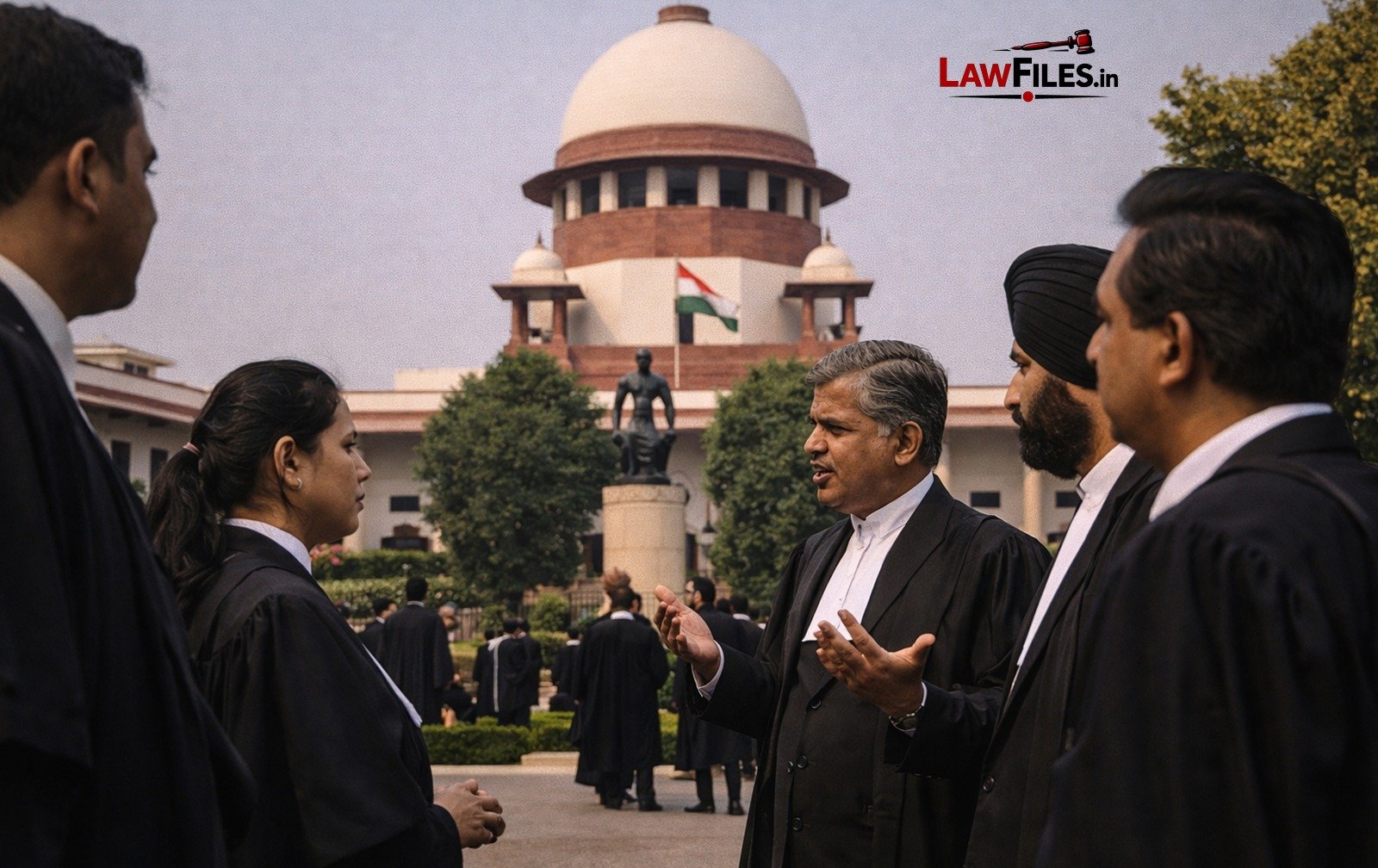
In a legally and politically sensitive development, the Supreme Court of India has upheld the bail granted to Arunachal Pradesh IAS officer Talo Potom in the alleged abetment to suicide case concerning 19-year-old Gomchu Yekar. The order, passed by a Bench comprising Justice J.K. Maheshwari and Justice Atul S. Chandurkar, reversed the earlier decision of the Gauhati High Court’s Itanagar Bench which had cancelled the officer’s bail and directed his immediate arrest.
The case has drawn nationwide attention not merely because it involves a senior bureaucrat, but because of the disturbing allegations emerging from the suicide notes allegedly left behind by the deceased. Gomchu Yekar, a 19-year-old youth employed in the State Public Works Department, allegedly accused Talo Potom and another official of sexual exploitation, sustained harassment, and exposing him to HIV/AIDS, circumstances which, according to the prosecution narrative, ultimately drove him to suicide.
The Supreme Court, however, while hearing Potom’s appeal against cancellation of bail, found no sufficient ground to interfere with the original grant of bail by the trial court. Importantly, the Bench refrained from making observations on the evidentiary value of the suicide note or the merits of the prosecution case, clarifying that any such comments could prejudice the ongoing trial. This judicial restraint is significant because courts dealing with bail are not expected to undertake a detailed evaluation of evidence that may influence the final adjudication.
At the same time, the Supreme Court imposed a strong caveat: the accused shall not attempt to influence witnesses or interfere with the investigation, and any such conduct could become grounds for cancellation of bail. This balanced formulation reflects the Court’s continuing attempt to reconcile two competing constitutional imperatives the accused’s right to personal liberty under Article 21 and the integrity of the criminal justice process.
The ruling becomes particularly significant when viewed against the sharply worded observations previously made by the Gauhati High Court. While cancelling bail earlier this year, the High Court had termed the Sessions Court’s order “perverse,” observing that the trial court ignored crucial evidence and conducted what effectively amounted to a “mini trial” at the bail stage. The High Court had also stressed the possibility that releasing an “influential person” during a nascent stage of investigation could derail the probe.
The High Court’s concerns were rooted in several factual aspects of the investigation. The prosecution had informed the court that WhatsApp chats and voice messages exchanged between the accused and the deceased had allegedly been deleted and were still undergoing forensic analysis. The Special Investigation Team had also reportedly confirmed through forensic examination that the suicide notes were written in the deceased’s own handwriting.
Yet, the Supreme Court’s intervention demonstrates a recurring doctrinal principle in Indian bail jurisprudence: cancellation of bail requires a substantially higher threshold than mere disagreement with the original order. Courts have repeatedly held that once liberty has been granted, it cannot be lightly withdrawn unless there is evidence of misuse of liberty, interference with investigation, intimidation of witnesses, or glaring perversity. In essence, the Supreme Court appears to have concluded that while the allegations may indeed be grave, the standards necessary for cancellation of bail were not sufficiently established at this stage.
The case also raises difficult questions concerning the legal architecture of “abetment to suicide.” Indian courts have historically struggled with defining the threshold of “instigation” or “active provocation” required under the law. Mere allegations of harassment, however morally reprehensible, do not automatically satisfy the statutory ingredients unless there exists a proximate nexus between the accused’s conduct and the act of suicide. The judiciary has therefore maintained caution in converting emotionally charged allegations into presumptive criminal liability without rigorous evidentiary scrutiny.
Simultaneously, the social dimensions of the case cannot be ignored. The allegations contained in the suicide notes sexual exploitation, abuse of power, institutional coercion, and vulnerability of a young subordinate employee have generated widespread outrage in Arunachal Pradesh. The case has become emblematic of larger anxieties surrounding power asymmetry within bureaucratic structures and the difficulty faced by vulnerable individuals in seeking accountability against influential public officials.
From a jurisprudential perspective, the Supreme Court’s order is neither an endorsement of innocence nor a dilution of the seriousness of allegations. Rather, it is a reaffirmation of a constitutional principle central to criminal procedure: bail is not to be withheld as a form of pre-trial punishment. The Court appears to have consciously insulated the trial from prejudicial observations while ensuring that the accused remains bound by strict conditions during the pendency of proceedings.
The decision also reflects the judiciary’s continuing effort to maintain procedural neutrality in politically and emotionally sensitive prosecutions. In high-profile criminal cases, public outrage often exerts indirect pressure upon judicial institutions to adopt a punitive approach even at preliminary stages. However, the Supreme Court’s reasoning indicates that constitutional courts must remain guided by settled legal principles rather than public sentiment alone.
Ultimately, the Gomchu Yekar case stands at the intersection of criminal law, institutional power, and constitutional liberty. While the final truth will emerge only through trial, the Supreme Court’s ruling reinforces an important procedural safeguard that criminal adjudication must proceed through evidence, not outrage, and through law, not presumptive guilt.
