


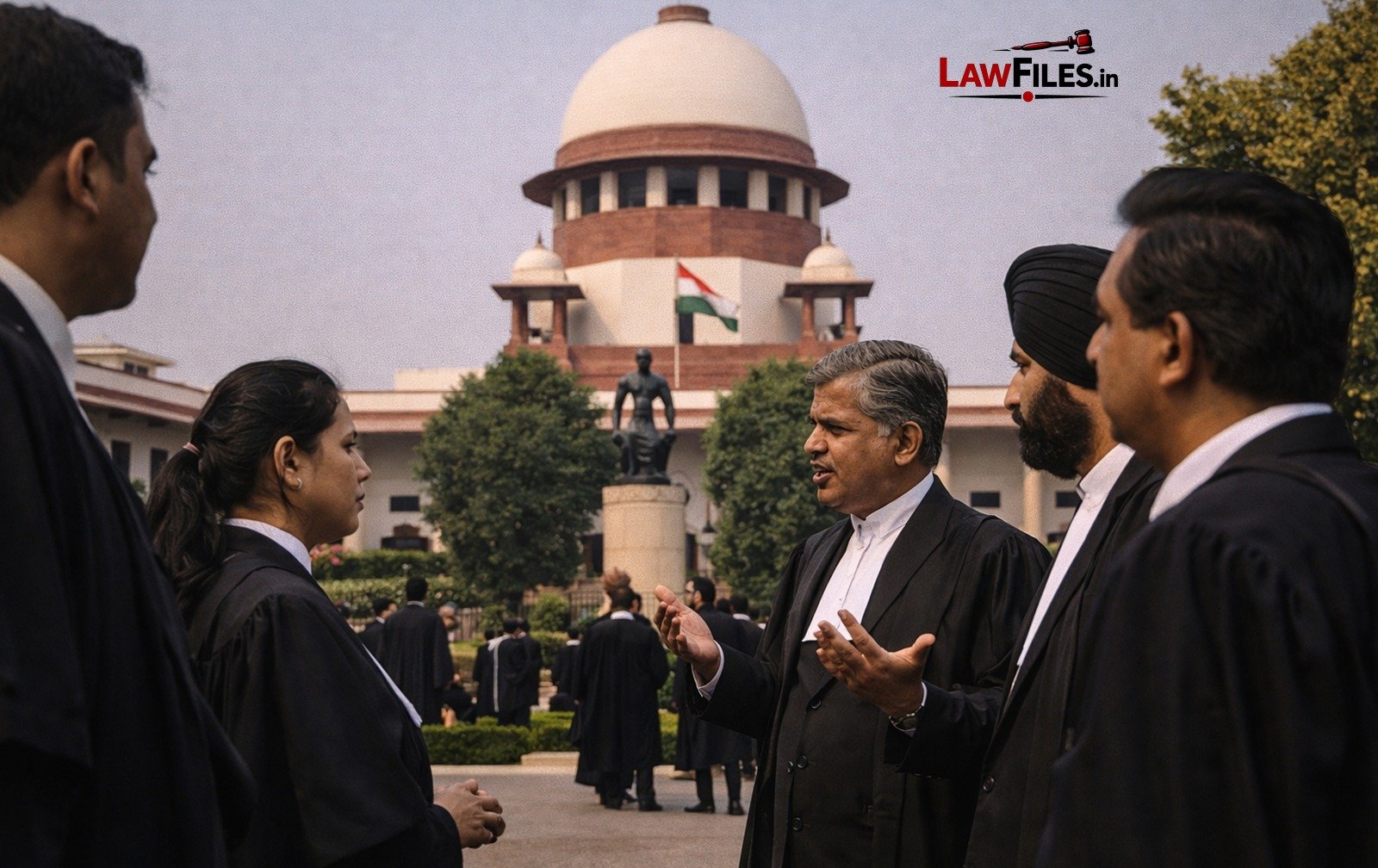
In a significant reaffirmation of equality jurisprudence, the Supreme Court of India has clarified that persons with benchmark disabilities (PwBD) who secure marks above the general category cut-off on their own merit must be considered against unreserved vacancies, rather than being confined to the reserved quota. The ruling, delivered by a Bench of Justices Vikram Nath and Sandeep Mehta, strengthens the doctrine of “upward movement” and aligns disability rights with broader constitutional principles governing reservation and merit.
The case arose from concerns regarding the persistent denial of general category placement to PwBD candidates who had qualified on merit. Despite securing marks comparable to or higher than unreserved candidates, such individuals were often adjusted against reserved disability quotas, effectively diminishing both their individual achievement and the intended scope of reservation. The Court had earlier flagged this anomaly in 2025, observing that such practices defeat the purpose of the Rights of Persons with Disabilities Act, 2016, which is designed to ensure inclusion rather than impose ceilings on advancement.
In the present proceedings, the Union Government placed on record its policy framework through Office Memoranda issued in 2018 and 2022. These clarified that PwBD candidates who qualify without availing relaxed standards such as lower cut-offs, age relaxation, or additional attempts must be treated as general merit candidates and adjusted against unreserved vacancies. Conversely, those availing relaxations would be accommodated within the reserved category. The Court accepted this position, holding that it adequately balances merit with the protective framework of reservation.
A critical aspect of the judgment lies in its nuanced interpretation of what constitutes “relaxed standards.” The Court endorsed the distinction drawn by the Union between substantive relaxations (like lower qualifying marks) and facilitative accommodations (such as scribes or compensatory time). The latter, the Court noted, cannot be treated as concessions that dilute merit, as they merely level the playing field rather than confer an unfair advantage.
Doctrinally, the ruling harmonises disability reservation with the settled principle applicable to other reserved categories namely, that candidates who succeed on merit migrate to the unreserved pool without exhausting quota seats. By extending this logic to PwBD candidates, the Court has corrected a long-standing inconsistency in the application of reservation policy. This approach also ensures that reserved seats remain available for candidates who genuinely require affirmative support, thereby preserving the integrity of horizontal reservation.
The Court’s reasoning is firmly anchored in Articles 14 and 16 of the Constitution, which guarantee equality before law and equal opportunity in public employment. It reinforces the idea that reservation is not a ceiling on merit but a floor to ensure participation. Any administrative practice that prevents a meritorious PwBD candidate from competing in the general category effectively converts a protective measure into a restrictive one an outcome the Constitution does not permit.
Significantly, the Court also widened the scope of its directions beyond recruitment, clarifying that the principle of upward movement applies equally to promotions, including both selection-based and seniority-cum-fitness processes. This extension is crucial, as stagnation in promotional hierarchies has been a recurring issue for persons with disabilities in public service.
However, the judgment is not limited to doctrinal clarification; it also reflects judicial concern over systemic non-compliance. Noting that nearly eight years after the enactment of the 2016 Act, implementation across States and Union Territories remains inconsistent, the Court emphasised the need for stricter adherence. It directed institutional monitoring mechanisms, including the involvement of National Law Universities, to assess compliance and ensure that statutory rights translate into actual outcomes.
From a critical standpoint, the ruling represents a shift from a formalistic understanding of reservation toward a more substantive equality framework. It recognises that true inclusion requires not only allocation of quotas but also the removal of structural distortions that penalise merit within disadvantaged groups. At the same time, the Court has been careful to preserve the functional role of reservation by ensuring that upward mobility does not erode the availability of reserved seats.
In conclusion, the Supreme Court’s endorsement of the “own merit” principle for PwBD candidates marks an important step in the evolution of disability rights jurisprudence in India. By affirming that merit cannot be negated on account of disability, the Court has reinforced the constitutional vision of an inclusive public employment system one where equality is not merely formal, but meaningfully realised through fair and rational policy implementation.
