


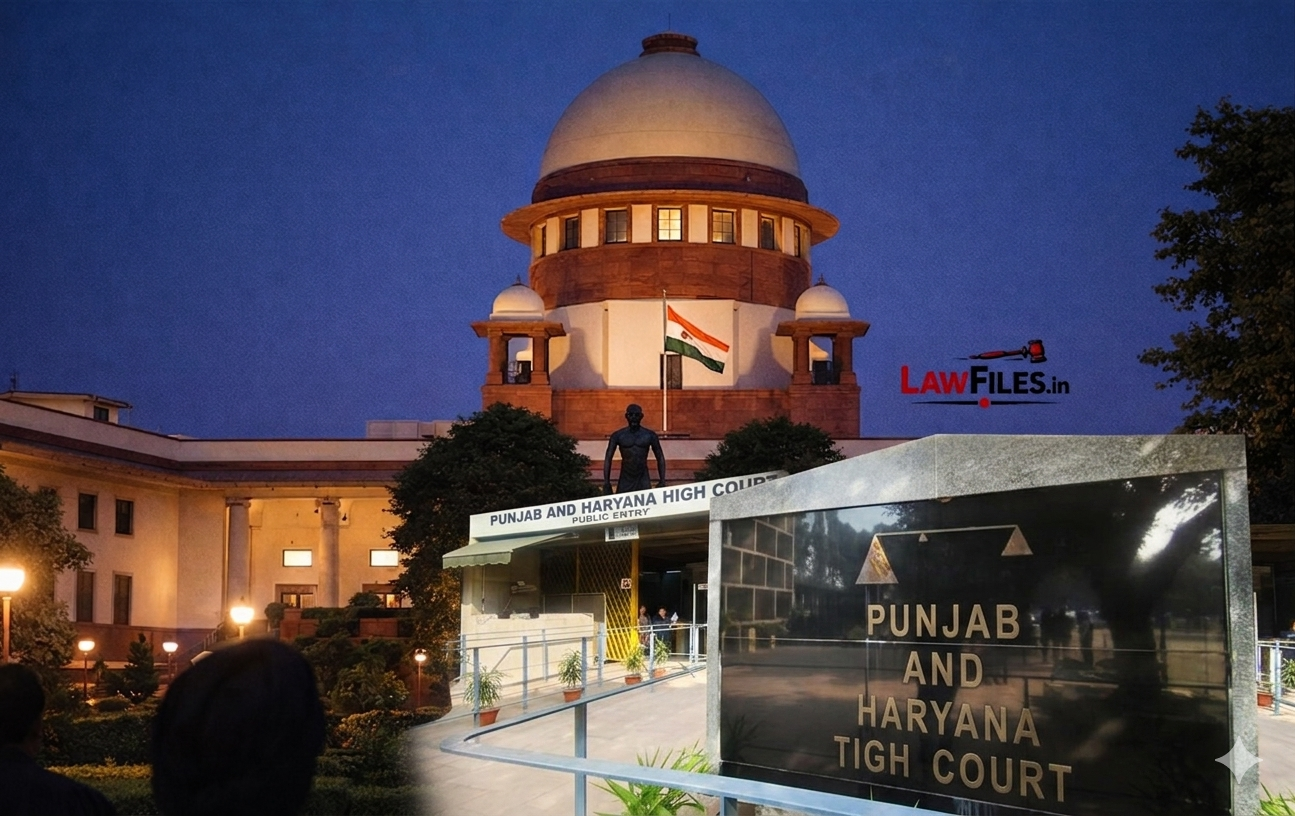
The Supreme Court Collegium has recently recommended the elevation of ten advocates as judges of the Punjab and Haryana High Court, marking a notable development in the ongoing effort to strengthen judicial capacity in one of India’s busiest constitutional courts. This move comes at a time when High Courts across the country continue to grapple with substantial vacancies, directly affecting the speed and quality of justice delivery.
The recommended candidates comprise a mix of experienced practitioners from the Bar, including senior advocates and the sitting Advocate General of Haryana. Their selection reflects an institutional preference for individuals with extensive litigation exposure and subject-matter expertise. Such appointments from the Bar are often seen as a way to infuse the Bench with practical courtroom experience, particularly in areas like constitutional law, commercial disputes, and service matters, which frequently arise before the Punjab and Haryana High Court.
This development must be understood against the backdrop of the High Court’s persistent shortage of judges. With a sanctioned strength significantly higher than its current working strength, the court has long struggled with a heavy docket. The Collegium’s decision to recommend multiple names in one instance appears to be a strategic attempt to address this imbalance in a more comprehensive manner, rather than through incremental or piecemeal appointments.
At the same time, the recommendation highlights the continuing dominance of the Bar-to-Bench route in judicial appointments. While advocates bring with them rich litigation experience and professional maturity, their transition to the Bench is not without challenges. Unlike members of the judicial service, advocates may initially lack experience in judicial administration and case management. However, over time, many such appointees evolve into highly effective judges, often contributing significantly to constitutional jurisprudence.
Another noteworthy aspect of the recommendation is the inclusion of women advocates, indicating a gradual, though still limited, shift toward greater gender representation on the Bench. While the numbers remain far from balanced, such inclusions reflect a growing recognition within the Collegium of the need for a more diverse judiciary that better represents the society it serves.
The Collegium system itself continues to remain under scrutiny. Although it ensures judicial primacy in appointments, concerns about transparency and the absence of publicly articulated selection criteria persist. In this instance, however, the absence of reported controversy around the recommended names suggests a degree of consensus and institutional stability in the selection process.
Ultimately, the effectiveness of this recommendation will depend on the speed with which the executive acts upon it. Delays in appointment after Collegium approval have been a recurring issue, often undermining the very objective of filling vacancies. If processed promptly, these appointments have the potential to significantly enhance the court’s functioning and reduce pendency.
In conclusion, the recommendation of ten advocates to the Punjab and Haryana High Court represents more than a routine administrative exercise. It is a reflection of the judiciary’s attempt to recalibrate its strength, maintain institutional efficiency, and respond to increasing demands on the justice delivery system. At the same time, it keeps alive broader debates on judicial appointments, particularly concerning transparency, diversity, and the balance between experience and institutional training in shaping an effective judiciary.
