


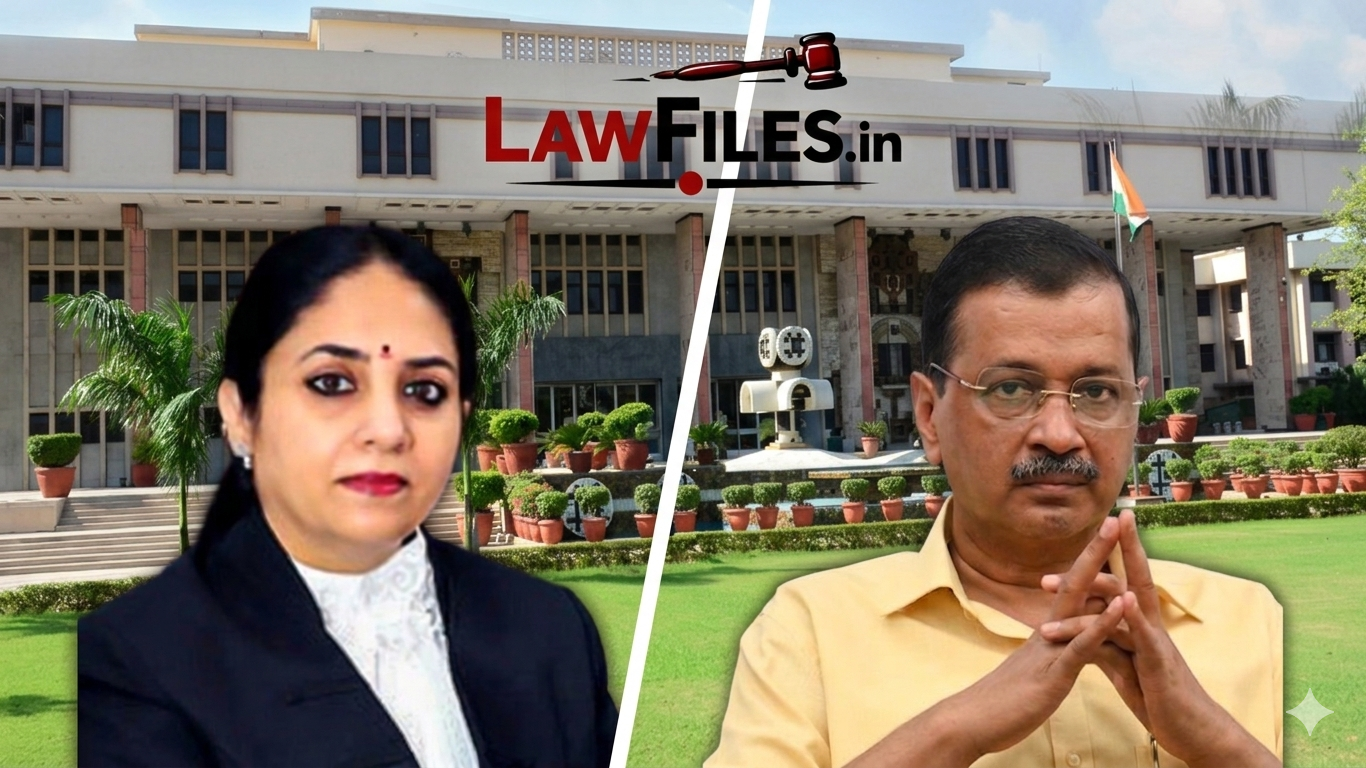
In a development that underscores the complex intersection of criminal procedure, judicial propriety, and litigant autonomy, the Delhi High Court has moved to appoint senior advocates as amicus curiae in the ongoing excise policy case involving Arvind Kejriwal and Manish Sisodia. The decision follows an unprecedented boycott by the accused leaders, who declined to participate in proceedings before Justice Swarana Kanta Sharma, raising deeper constitutional questions about fair trial guarantees and the limits of litigant dissent.
The controversy originates from the Central Bureau of Investigation’s appeal challenging the trial court’s discharge of Kejriwal, Sisodia, and others in the Delhi excise policy case. During the High Court proceedings, both leaders communicated their refusal to appear either personally or through legal counsel before the Bench, effectively withdrawing from the adjudicatory process. This move followed the Court’s earlier rejection of their plea seeking recusal of the presiding judge, thereby intensifying the procedural impasse.
Faced with this unusual situation, the High Court indicated that it would appoint independent senior lawyers as amicus curiae to assist the Court and represent the interests of the accused. The rationale, as articulated by the Bench, was to ensure that the adjudication does not proceed in a vacuum and that the principles of natural justice particularly the right to representation are not compromised merely because a party chooses to abstain. The Court’s approach reflects a nuanced balancing act: respecting litigant autonomy while safeguarding the institutional integrity of the judicial process.
The role of an amicus curiae in such circumstances assumes particular significance. Traditionally conceived as a neutral “friend of the court,” the amicus does not substitute the litigant but assists in presenting legal arguments, clarifying issues, and ensuring that adjudication remains informed and balanced. In the present case, however, the amicus is effectively stepping into a quasi-representational role, raising doctrinal questions about whether such appointment can adequately substitute adversarial participation.
The boycott itself introduces a novel dimension to Indian criminal procedure. While the right to legal representation is well-established, the converse whether an accused can strategically refuse representation to challenge perceived judicial bias remains less clearly defined. By invoking what they described as a form of principled protest, reportedly drawing inspiration from “satyagraha,” the accused have sought to convert a procedural dispute into a broader critique of judicial impartiality.
However, the judiciary has historically resisted attempts to allow litigants to dictate the composition of the Bench. Earlier, Justice Sharma had declined to recuse herself, emphasising that judicial impartiality is presumed and cannot be undermined solely on the basis of subjective apprehensions. This reflects a settled principle of law: recusal is an exception grounded in demonstrable bias, not a mechanism to be invoked at the discretion of parties dissatisfied with judicial outcomes.
Analytically, the High Court’s decision to appoint amicus curiae can be viewed as an assertion of institutional continuity over litigant withdrawal. Courts cannot permit proceedings especially in criminal matters with significant public implications to be stalled by strategic non-participation. At the same time, the move ensures that the adjudicatory process retains its adversarial character, even in the absence of formal defence counsel.
The episode also raises broader concerns about the politicisation of judicial proceedings. The excise policy case has already been marked by allegations of investigative overreach, conflicting judicial findings, and competing narratives of accountability. The boycott adds yet another layer, transforming the courtroom into a site of constitutional contestation over fairness, bias, and procedural legitimacy.
Critically examined, the Court’s intervention underscores the limits of procedural protest within the legal system. While dissent against perceived bias is not alien to constitutional litigation, its translation into a complete withdrawal from proceedings risks undermining the very right to be heard. By appointing amicus curiae, the Court has effectively neutralised this strategy, ensuring that adjudication proceeds within the framework of law rather than political symbolism.
At a doctrinal level, the case may have lasting implications for the jurisprudence on recusal, fair trial rights, and the scope of judicial intervention in ensuring representation. It reinforces the principle that courts are not passive forums but active custodians of procedural fairness, empowered to take necessary measures to prevent derailment of justice.
In conclusion, the proceedings before the Delhi High Court reflect a critical moment in Indian constitutional practice, where questions of judicial neutrality, litigant autonomy, and institutional authority converge. By stepping in to appoint amicus curiae, the Court has reaffirmed a foundational proposition: the administration of justice cannot be held hostage to strategic abstention, and the rule of law must prevail over procedural brinkmanship.
