


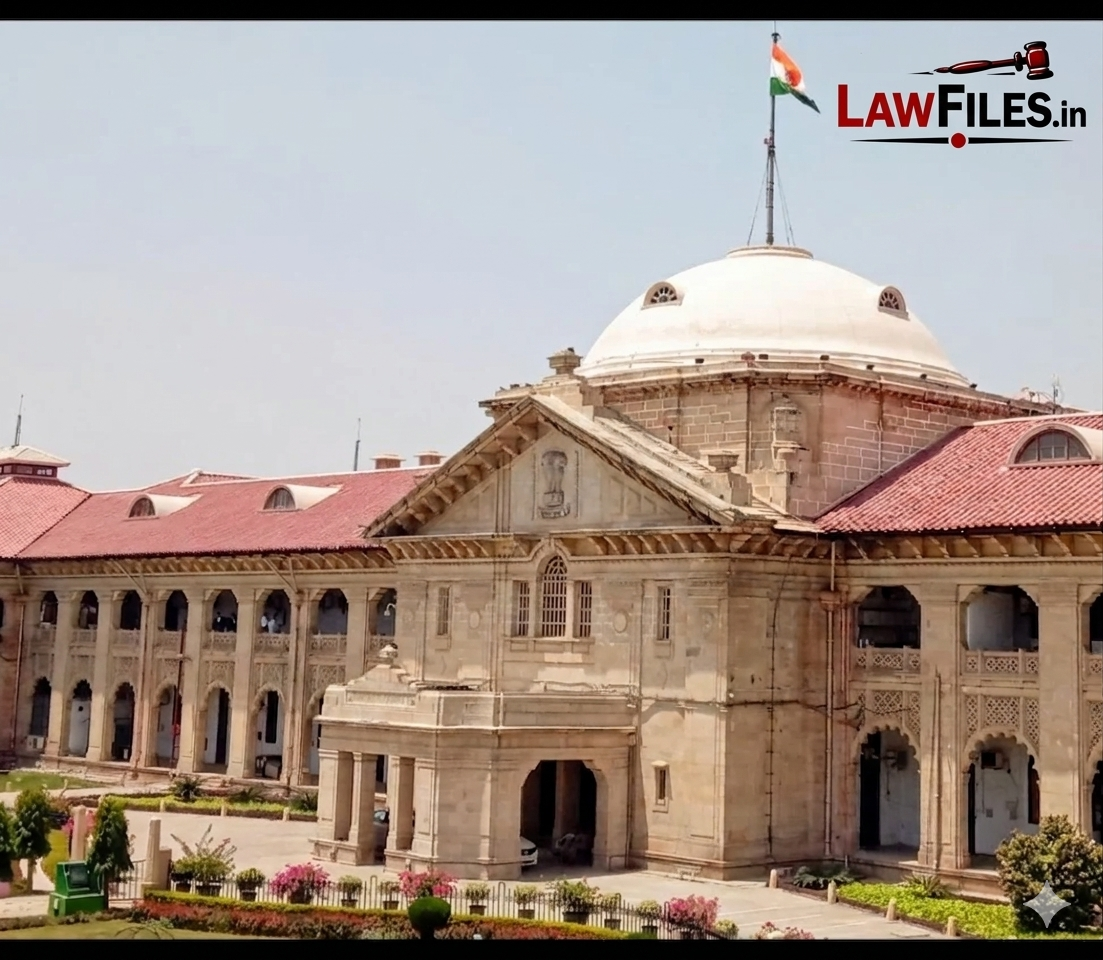
In a strongly worded intervention addressing recurring stampede-like incidents in Mathura, the Allahabad High Court has expressed serious concern over the absence of a coherent policy framework governing crowd management and the proliferation of unauthorized constructions in the city’s temple zones. The Court’s observations emerge from proceedings that have gradually expanded beyond individual grievances to encompass systemic failures in urban planning and public safety.
The matter was initially triggered by a petition alleging arbitrary demolition actions by the Mathura Vrindavan Development Authority (MVDA). However, during the course of hearing, the Court widened the scope of inquiry, taking judicial notice of recent stampede-like situations during religious gatherings, particularly around prominent temple sites. The Court noted that these incidents have resulted in injuries and casualties, thereby raising pressing questions regarding the preparedness of district authorities in handling large congregations of devotees.
A central concern articulated by the Court relates to the absence of a comprehensive crowd and crisis management policy. The Bench sought detailed disclosures from the administration on whether any structured framework exists to manage high-density gatherings, including standard operating procedures, stakeholder coordination mechanisms, and institutional capacity-building measures. It specifically questioned whether any scientific studies or expert analyses on crowd behaviour had been conducted, and if so, whether their findings had been implemented in practice.
The Court’s scrutiny also extended to the role of unauthorized constructions in exacerbating public safety risks. It observed that encroachments and illegal structures in and around temple areas not only contribute to congestion but also obstruct emergency response and evacuation during crises. By seeking data on demolition proceedings and enforcement patterns over the past several years, the Court indicated concern over selective or inconsistent regulatory action.
From a constitutional perspective, the Court’s intervention highlights the State’s obligation under Article 21 to safeguard the right to life, which encompasses the duty to ensure safe public spaces, especially during mass gatherings. The absence of a structured policy framework, coupled with unregulated urban development, raises issues of arbitrariness under Article 14, particularly where enforcement actions appear selective or uneven.
Analytically, the case reflects a shift from event-specific adjudication to systemic governance review. Rather than merely addressing the aftermath of individual incidents, the Court is probing the underlying administrative architecture responsible for preventing such occurrences. This approach aligns with a broader judicial trend where courts increasingly demand proactive governance, especially in contexts involving recurring public safety hazards.
The Court’s insistence on institutional accountability is particularly significant in the context of religious tourism hubs like Mathura, where seasonal surges in footfall are both predictable and substantial. The failure to anticipate and manage such influxes, despite repeated incidents, suggests not merely administrative oversight but a deeper structural deficiency in planning and coordination.
At the same time, the proceedings reveal the complex interplay between development control and enforcement discretion. Allegations of “pick and choose” demolition actions raise concerns about regulatory arbitrariness, while the continued existence of unauthorized constructions points to weak enforcement mechanisms. The Court’s demand for a uniform and transparent policy framework seeks to address both dimensions ensuring consistency in regulation while enhancing overall safety.
Critically examined, the Court’s intervention underscores the limitations of reactive governance. Stampede incidents, often treated as isolated tragedies, are here being reframed as consequences of systemic neglect. By linking crowd management failures with urban planning lapses, the Court situates the issue within a broader governance deficit rather than as a matter of isolated administrative failure.
However, the effectiveness of such judicial oversight ultimately depends on compliance by executive authorities. The requirement to file comprehensive affidavits detailing policies, studies, and enforcement actions may catalyse reform, but sustained implementation remains the real challenge. Without institutional follow-through, even the most detailed judicial directions risk remaining aspirational.
In conclusion, the proceedings before the Allahabad High Court represent a significant moment of judicial engagement with public safety governance. By foregrounding the absence of policy, the dangers of unregulated construction, and the need for scientific crowd management strategies, the Court has moved beyond episodic intervention to demand systemic accountability. The outcome of this case may well shape the future framework for managing large-scale religious gatherings, not only in Mathura but across similarly situated urban centres in India.
