

Close Menu
LawFilesLawFiles

    Subscribe to Updates

    Get the latest creative news from FooBar about art, design and business.

    What's Hot

    Supreme Court Suggests Reconsidering Colonial-Era Rule Under Section 306 of Succession Act: Should Civil Liability Die With the Wrongdoer?

    May 20, 2026

    Massive Expansion for Madras High Court: Supreme Court Collegium Recommends 19 New Judges Amid Growing Judicial Backlog

    May 20, 2026

    Supreme Court Clarifies Limits of Reassessment Under Income Tax Act: ‘Reason to Believe’ Cannot Become a Tool for Endless Tax Scrutiny

    May 18, 2026
    Facebook X (Twitter) Instagram Threads
    Wednesday, May 20
    LawFilesLawFiles
    Facebook X (Twitter)
    • Home
      • Who We Are
      • Our Mission
      • Advisory board
      • Contact US
    • Supreme Court
    • High Courts
      • Gujarat High Court
      • Jharkhand High Court
      • Rajasthan High Court
      • Karnataka High Court
      • Andhra Pradesh High Court
      • Allahabad High Court
      • Himachal Pradesh High Court
      • Chhattisgarh High Court
      • Jammu & Kashmir and Ladakh High Court
      • Kerala High Court
      • Punjab and Haryana High Court
      • Patna High Court
      • Madhya Pradesh High Court
      • Madras High Court
      • Bombay High Court
      • Orissa High Court
      • Calcutta High Court
      • Meghalaya High Court
      • Delhi High Court
      • Manipur High Court
      • Gauhati High Court
    • Corporate
    • Taxation Laws
      • Income Tax
      • GST
      • Customs & Excise
    • Global Affairs
    • Articles
      • Sitting Judge’s’ Views
      • Senior Advocate
      • Policy Analysis
      • Tax Expert
    • PILS
      • Free/Affordable Legal Aid
      • PIL Cell
      • Law student Volunteer Cell (research & Drafting)
      • NGO & Legal services Authority Tie-ups
      • Online Legal Formats
      • Online Legal Help Form
    Subscribe Premium
    LawFilesLawFiles
    Home»Careers»Breaking: Supreme Court Suspends AoR Exam for 2026, Signals Shift in Entry Regulation to Apex Bar
    Careers

    Breaking: Supreme Court Suspends AoR Exam for 2026, Signals Shift in Entry Regulation to Apex Bar

    Anvita DwivediBy Anvita DwivediApril 30, 2026No Comments4 Mins Read
    WhatsApp Facebook Twitter Copy Link
    Share
    Facebook Twitter Pinterest Copy Link WhatsApp

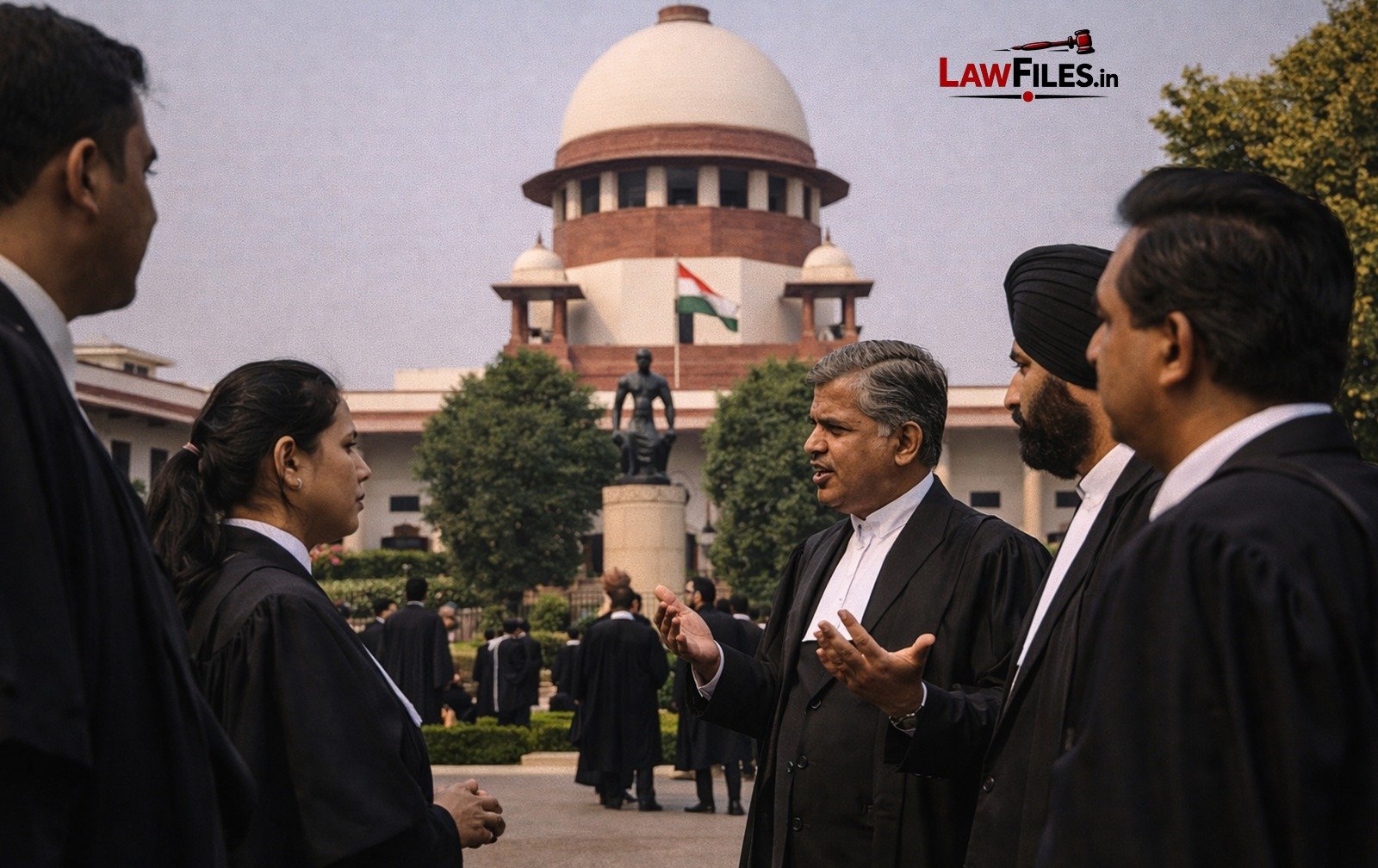
    In a notable administrative decision with significant implications for the legal profession, the Supreme Court of India has announced that the Advocates-on-Record (AoR) Examination will not be conducted in 2026, with the next cycle tentatively scheduled for 2027. This departure from the Court’s established annual examination practice signals a rare moment of institutional recalibration within one of the most exclusive entry points to Supreme Court practice.

    The decision, communicated through a notification issued by the Registrar and Secretary of the Board of Examiners, rests on a pragmatic consideration the “overall strength” of existing Advocates-on-Record. As of April 2026, the Court recorded approximately 3,791 registered AoRs, with an additional 205 advocates recently inducted. This numerical sufficiency appears to have persuaded the Court that an additional intake in 2026 is neither necessary nor administratively optimal.

    To appreciate the significance of this move, one must situate it within the unique framework governing AoRs. Under the Supreme Court Rules, 2013, only Advocates-on-Record are authorized to file pleadings and act on behalf of parties before the apex court; a restriction that creates a tightly regulated professional class within the Bar. The AoR examination, conducted annually, is therefore not merely a qualifying test but a structural gateway to Supreme Court litigation, often marked by a low pass percentage and rigorous training requirements.

    Against this backdrop, the suspension of the 2026 examination raises critical questions. At one level, the decision reflects administrative prudence: the Court appears to be managing the supply of AoRs in proportion to institutional demand, thereby avoiding an oversaturated bar that could dilute professional opportunities or strain procedural efficiency. Such calibration is not unfamiliar in regulated professions where entry is controlled to maintain standards and functional balance.

    However, the decision also exposes deeper tensions within the architecture of legal access. The AoR system, while justified on grounds of procedural expertise and institutional discipline, has long attracted criticism for creating an exclusivist layer within the legal profession. By deferring the examination, the Court effectively postpones the entry of a new cohort of advocates, potentially exacerbating concerns about gatekeeping and limited access to apex court practice.

    From a policy perspective, this raises an uncomfortable but necessary question: should entry into Supreme Court practice be determined by periodic administrative discretion, or ought it to follow a predictable, rule-based framework? The absence of a clear normative standard governing such decisions risks introducing uncertainty for aspiring advocates, many of whom invest years in training and preparation specifically for this examination.

    Moreover, the decision must be analysed in light of broader developments in legal professional regulation. Recent judicial interventions such as reforms in the All India Bar Examination have emphasised reducing procedural delays and expanding access to the profession. In contrast, the suspension of the AoR exam reflects a more restrictive impulse, prioritising institutional equilibrium over individual opportunity. This divergence underscores the fragmented nature of regulatory philosophy within the Indian legal system.

    Another dimension worth examining is the implicit linkage between the number of AoRs and the Court’s functional capacity. While the Court’s reasoning invokes “overall strength,” it does not articulate a clear benchmark for what constitutes optimal capacity. Without transparent criteria, such decisions risk appearing opaque, even if substantively justified.

    Critically, the move also highlights the continuing centrality of the AoR system itself. In an era where questions of access to justice and democratization of legal processes are gaining prominence, the retention and now selective contraction of an exclusive class of practitioners invites renewed scrutiny. Whether the AoR framework continues to serve its intended purpose, or whether it requires structural reform, remains an open question.

    In conclusion, the Supreme Court’s decision to forgo the 2026 AoR examination is more than an administrative adjustment; it is a moment that invites reflection on the balance between institutional efficiency and professional accessibility. While the Court’s rationale may be grounded in pragmatic considerations, its broader implications for the legal profession and for the future of Supreme Court practice are likely to provoke sustained debate in the years ahead.

    Breaking: Supreme Court Suspends AoR Exam for 2026 Signals Shift in Entry Regulation to Apex Bar
    Share. WhatsApp Facebook Twitter Pinterest Email
    Anvita Dwivedi

    Related Posts

    Supreme Court Suggests Reconsidering Colonial-Era Rule Under Section 306 of Succession Act: Should Civil Liability Die With the Wrongdoer?

    May 20, 2026

    Massive Expansion for Madras High Court: Supreme Court Collegium Recommends 19 New Judges Amid Growing Judicial Backlog

    May 20, 2026

    Supreme Court Clarifies Limits of Reassessment Under Income Tax Act: ‘Reason to Believe’ Cannot Become a Tool for Endless Tax Scrutiny

    May 18, 2026
    Add A Comment
    Leave A Reply Cancel Reply

    Demo
    Top Posts

    Wrongful Claim Rejection Amounts to Deficiency in Service: Delhi Consumer Commission Holds Star Health Liable

    March 16, 202667 Views

    Bombay High Court Quashes POCSO Case, Directs Accused to Fund MacBook for Victim’s Education

    February 28, 202650 Views

    Siyahat Meri Syahi Se: A Journey That Transforms Travel into Thought and Entrepreneurship

    March 18, 202641 Views

    Supreme Court Notice on Muslim Personal Law: Reopening the Constitutional Debate on Gender Equality and Faith

    April 16, 202624 Views
    Don't Miss

    Supreme Court Suggests Reconsidering Colonial-Era Rule Under Section 306 of Succession Act: Should Civil Liability Die With the Wrongdoer?

    By Anvita DwivediMay 20, 2026

    In a legally significant and intellectually consequential observation, the Supreme Court has recommended that the…

    Massive Expansion for Madras High Court: Supreme Court Collegium Recommends 19 New Judges Amid Growing Judicial Backlog

    May 20, 2026

    Supreme Court Clarifies Limits of Reassessment Under Income Tax Act: ‘Reason to Believe’ Cannot Become a Tool for Endless Tax Scrutiny

    May 18, 2026

    Supreme Court Says Tenant’s Defence Cannot Be Struck Off Without Determining Whether Rent Default Was Wilful

    May 18, 2026
    Stay In Touch
    • Facebook
    • Twitter

    Subscribe to Updates

    Get the latest creative news from SmartMag about art & design.

    Top Posts

    Wrongful Claim Rejection Amounts to Deficiency in Service: Delhi Consumer Commission Holds Star Health Liable

    March 16, 202667 Views

    Bombay High Court Quashes POCSO Case, Directs Accused to Fund MacBook for Victim’s Education

    February 28, 202650 Views

    Siyahat Meri Syahi Se: A Journey That Transforms Travel into Thought and Entrepreneurship

    March 18, 202641 Views
    Don't Miss

    Supreme Court Suggests Reconsidering Colonial-Era Rule Under Section 306 of Succession Act: Should Civil Liability Die With the Wrongdoer?

    By Anvita DwivediMay 20, 2026

    In a legally significant and intellectually consequential observation, the Supreme Court has recommended that the…

    Massive Expansion for Madras High Court: Supreme Court Collegium Recommends 19 New Judges Amid Growing Judicial Backlog

    May 20, 2026

    Supreme Court Clarifies Limits of Reassessment Under Income Tax Act: ‘Reason to Believe’ Cannot Become a Tool for Endless Tax Scrutiny

    May 18, 2026

    Supreme Court Says Tenant’s Defence Cannot Be Struck Off Without Determining Whether Rent Default Was Wilful

    May 18, 2026
    Stay In Touch
    • Facebook
    • YouTube
    • TikTok
    • Instagram
    Top Trending
    About Us
    About Us

    LawFiles.in is a comprehensive legal news platform delivering real-time updates from the Supreme Court, High Courts, Tribunals, Corporate and Tax law, Regulators, Politics, Crime, Consumer cases, and Global Affairs.

    Email Us: lawfilesoffical@gmail.com
    Contact: +91 8800026066

    Contact Us:
    India International Centre
    40, Max Mueller Marg
    Lodhi Estate, New Delhi-110003

    Facebook X (Twitter)
    Our Picks

    Supreme Court Suggests Reconsidering Colonial-Era Rule Under Section 306 of Succession Act: Should Civil Liability Die With the Wrongdoer?

    May 20, 2026

    Massive Expansion for Madras High Court: Supreme Court Collegium Recommends 19 New Judges Amid Growing Judicial Backlog

    May 20, 2026

    Supreme Court Clarifies Limits of Reassessment Under Income Tax Act: ‘Reason to Believe’ Cannot Become a Tool for Endless Tax Scrutiny

    May 18, 2026

    Supreme Court Says Tenant’s Defence Cannot Be Struck Off Without Determining Whether Rent Default Was Wilful

    May 18, 2026

    Bartering the Girl Child: The Rajasthan High Court’s Decisive Strike Against ‘Atta-Satta’ Marriages

    May 18, 2026
    Most Popular

    ED Can Arrest Even If FIRs Are Added to ECIR Later: Punjab & Haryana High Court

    January 30, 20260 Views

    Non-Disclosure Of QCBS Criteria In Tender Alone Not Enough To Allege Malafides: Gauhati High Court

    January 31, 20260 Views

    January 2026 Monthly Digest: Important Rulings of the Jammu & Kashmir and Ladakh High Court

    February 2, 20260 Views

    Custodial Death and State Liability : A Critical Analysis of the Allahabad High Court’s ₹10 Lakh Compensation Judgment

    February 22, 20260 Views

    SC Reopens Debate on 3-Year Practice Rule for Judicial Service

    February 22, 20260 Views
    © 2026 LawFiles. Owned by Varta24 Media.
    • Articles
    • Careers
    • Corporate
    • Global Affairs
    • Law Firms & Lawyers
    • PILS
    • Regulatory

    Type above and press Enter to search. Press Esc to cancel.