

Close Menu
LawFilesLawFiles

    Subscribe to Updates

    Get the latest creative news from FooBar about art, design and business.

    What's Hot

    Supreme Court Suggests Reconsidering Colonial-Era Rule Under Section 306 of Succession Act: Should Civil Liability Die With the Wrongdoer?

    May 20, 2026

    Massive Expansion for Madras High Court: Supreme Court Collegium Recommends 19 New Judges Amid Growing Judicial Backlog

    May 20, 2026

    Supreme Court Clarifies Limits of Reassessment Under Income Tax Act: ‘Reason to Believe’ Cannot Become a Tool for Endless Tax Scrutiny

    May 18, 2026
    Facebook X (Twitter) Instagram Threads
    Wednesday, May 20
    LawFilesLawFiles
    Facebook X (Twitter)
    • Home
      • Who We Are
      • Our Mission
      • Advisory board
      • Contact US
    • Supreme Court
    • High Courts
      • Gujarat High Court
      • Jharkhand High Court
      • Rajasthan High Court
      • Karnataka High Court
      • Andhra Pradesh High Court
      • Allahabad High Court
      • Himachal Pradesh High Court
      • Chhattisgarh High Court
      • Jammu & Kashmir and Ladakh High Court
      • Kerala High Court
      • Punjab and Haryana High Court
      • Patna High Court
      • Madhya Pradesh High Court
      • Madras High Court
      • Bombay High Court
      • Orissa High Court
      • Calcutta High Court
      • Meghalaya High Court
      • Delhi High Court
      • Manipur High Court
      • Gauhati High Court
    • Corporate
    • Taxation Laws
      • Income Tax
      • GST
      • Customs & Excise
    • Global Affairs
    • Articles
      • Sitting Judge’s’ Views
      • Senior Advocate
      • Policy Analysis
      • Tax Expert
    • PILS
      • Free/Affordable Legal Aid
      • PIL Cell
      • Law student Volunteer Cell (research & Drafting)
      • NGO & Legal services Authority Tie-ups
      • Online Legal Formats
      • Online Legal Help Form
    Subscribe Premium
    LawFilesLawFiles
    Home»Corporate»Administrative Overreach Under Scrutiny: Allahabad High Court Questions NCLT’s Dual-Bench Filing Regime for Lack of Legal Basis
    Corporate

    Administrative Overreach Under Scrutiny: Allahabad High Court Questions NCLT’s Dual-Bench Filing Regime for Lack of Legal Basis

    Anvita DwivediBy Anvita DwivediApril 28, 2026No Comments4 Mins Read
    WhatsApp Facebook Twitter Copy Link
    Share
    Facebook Twitter Pinterest Copy Link WhatsApp

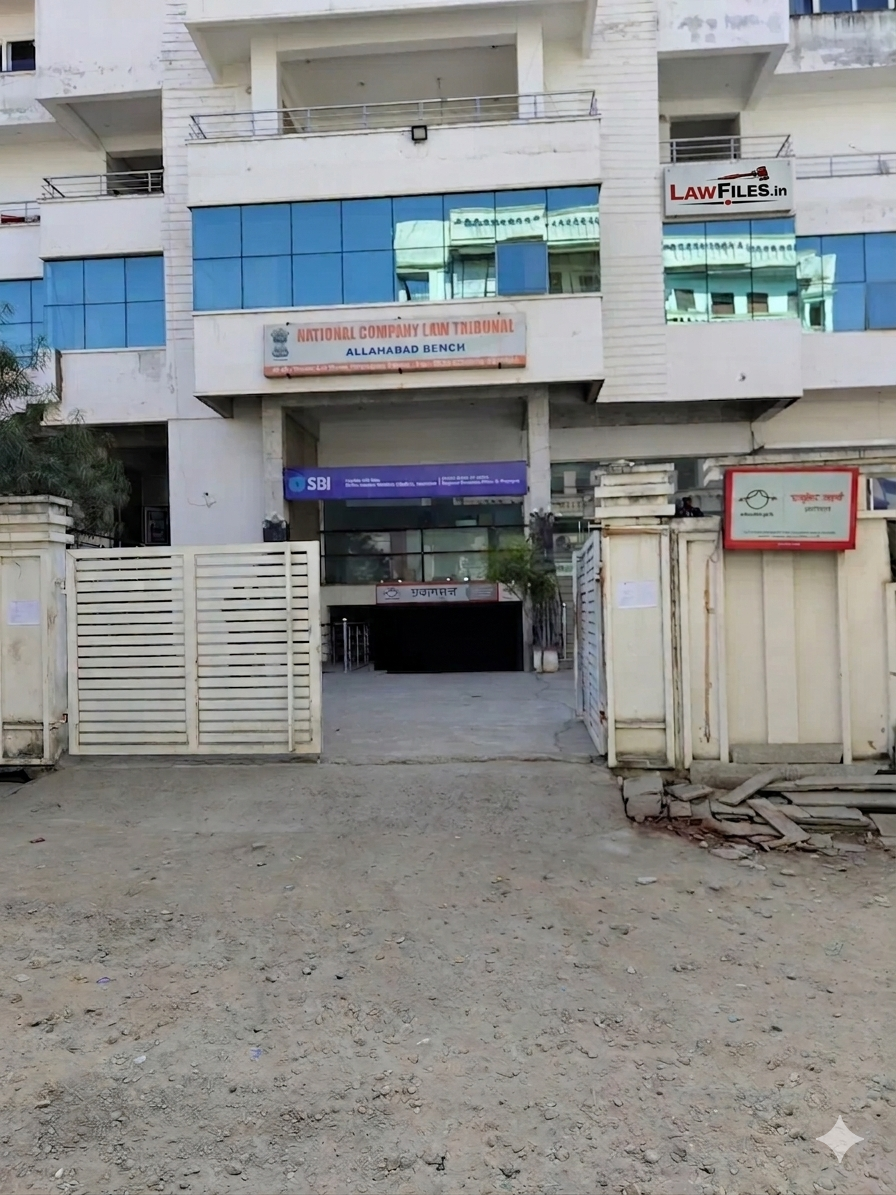
    In a significant intervention concerning the functioning of tribunal administration under the Insolvency and Bankruptcy regime, the Allahabad High Court has questioned the legality and necessity of a directive issued by the National Company Law Tribunal (NCLT) Principal Bench, New Delhi, mandating “joint scrutiny” of filings made before the NCLT Allahabad Bench. The Court’s observations terming the directive as having “prima facie no justification” highlight deeper concerns around administrative overreach, decentralisation of tribunals, and procedural efficiency within the insolvency framework.

    The controversy stems from an order dated 27 February 2026 issued by the Registrar of the NCLT Principal Bench directing that petitions filed before the Allahabad Bench be scrutinised jointly by both the Principal Bench in New Delhi and the Allahabad Bench. This effectively created a dual-layer scrutiny mechanism, altering the standard practice where local benches undertake scrutiny of filings independently.

    The Company Law Tribunal Bar Association challenged this directive before the High Court, contending that the arrangement led to delays, repeated defect objections, and procedural inefficiencies. It was argued that filings made at Allahabad were being subjected to scrutiny in Delhi without statutory backing, thereby undermining the autonomy of the local bench and creating unnecessary administrative hurdles.

    Hearing the matter, a Division Bench of Justice Ajit Kumar and Justice Swarupama Chaturvedi examined records placed before it, including data provided by the Union Government. The Court noted that, according to official charts dated 23 February and 2 March 2026, there was no pendency of cases under scrutiny at the Allahabad Bench at the relevant time. In light of this factual position, the Court observed that the joint scrutiny directive lacked any apparent administrative necessity.

    The Court further recorded that adequate staffing was available at the Allahabad Bench, including a Deputy Registrar and Assistant Registrar, who were already handling scrutiny work. This finding directly undermined the justification advanced by the authorities—that joint scrutiny was required due to capacity constraints or to streamline processes.

    Analytically, the case raises a crucial question about the limits of administrative control exercised by centralised tribunal authorities. While the NCLT Principal Bench may issue procedural directions, such directions must be grounded in demonstrable necessity and must not disrupt the statutory scheme of decentralised adjudication. The High Court’s prima facie view suggests that administrative convenience cannot override institutional structure without clear legal backing.

    The dispute also highlights the tension between centralisation and functional autonomy within India’s tribunal system. The Insolvency and Bankruptcy Code envisages geographically distributed benches to ensure accessibility and efficiency. A system where filings in one bench are effectively controlled or scrutinised by another risks diluting this decentralised design, potentially leading to forum imbalances and procedural bottlenecks.

    From a procedural standpoint, the joint scrutiny mechanism appears to have introduced duplication rather than efficiency. The Bar Association’s grievance that defects were repeatedly raised by the Principal Bench registry without resolution points to the dangers of multi-layered administrative intervention without clear accountability. Such practices can delay insolvency proceedings, where timelines are statutorily critical.

    The High Court’s approach also reflects a broader judicial trend of scrutinising tribunal administration to ensure adherence to rule of law principles. While tribunals operate with a degree of administrative flexibility, their procedures must remain consistent with statutory mandates, fairness, and efficiency. Any deviation—especially one affecting litigants’ access to justice invites constitutional scrutiny under Article 226.

    Importantly, the Union of India, through the Additional Solicitor General, submitted that the joint scrutiny arrangement was intended as a temporary measure to streamline processes and would be withdrawn once systems stabilised. However, the Court’s observations indicate that even temporary administrative measures must withstand scrutiny on grounds of necessity and proportionality.

    The case also underscores the importance of data-driven administrative decision-making. The Court’s reliance on official charts showing zero pendency demonstrates that policy interventions must be based on empirical need rather than presumptive inefficiencies. In the absence of such data, administrative directives risk being characterised as arbitrary.

    In conclusion, the Allahabad High Court’s prima facie finding against the NCLT’s joint scrutiny directive marks a significant assertion of judicial oversight over tribunal administration. The ruling signals that efficiency cannot be pursued at the cost of procedural integrity and institutional balance. As the matter progresses, it may have wider implications for how centralised authorities within tribunal systems exercise their administrative powers particularly in a regime like insolvency law, where procedural timelines and decentralised functioning are foundational to effectiveness.

    Administrative Overreach Under Scrutiny: Allahabad High Court Questions NCLT’s Dual-Bench Filing Regime for Lack of Legal Basis
    Share. WhatsApp Facebook Twitter Pinterest Email
    Anvita Dwivedi

    Related Posts

    Supreme Court Suggests Reconsidering Colonial-Era Rule Under Section 306 of Succession Act: Should Civil Liability Die With the Wrongdoer?

    May 20, 2026

    Massive Expansion for Madras High Court: Supreme Court Collegium Recommends 19 New Judges Amid Growing Judicial Backlog

    May 20, 2026

    Supreme Court Clarifies Limits of Reassessment Under Income Tax Act: ‘Reason to Believe’ Cannot Become a Tool for Endless Tax Scrutiny

    May 18, 2026
    Add A Comment
    Leave A Reply Cancel Reply

    Demo
    Top Posts

    Wrongful Claim Rejection Amounts to Deficiency in Service: Delhi Consumer Commission Holds Star Health Liable

    March 16, 202667 Views

    Bombay High Court Quashes POCSO Case, Directs Accused to Fund MacBook for Victim’s Education

    February 28, 202650 Views

    Siyahat Meri Syahi Se: A Journey That Transforms Travel into Thought and Entrepreneurship

    March 18, 202641 Views

    Supreme Court Notice on Muslim Personal Law: Reopening the Constitutional Debate on Gender Equality and Faith

    April 16, 202624 Views
    Don't Miss

    Supreme Court Suggests Reconsidering Colonial-Era Rule Under Section 306 of Succession Act: Should Civil Liability Die With the Wrongdoer?

    By Anvita DwivediMay 20, 2026

    In a legally significant and intellectually consequential observation, the Supreme Court has recommended that the…

    Massive Expansion for Madras High Court: Supreme Court Collegium Recommends 19 New Judges Amid Growing Judicial Backlog

    May 20, 2026

    Supreme Court Clarifies Limits of Reassessment Under Income Tax Act: ‘Reason to Believe’ Cannot Become a Tool for Endless Tax Scrutiny

    May 18, 2026

    Supreme Court Says Tenant’s Defence Cannot Be Struck Off Without Determining Whether Rent Default Was Wilful

    May 18, 2026
    Stay In Touch
    • Facebook
    • Twitter

    Subscribe to Updates

    Get the latest creative news from SmartMag about art & design.

    Top Posts

    Wrongful Claim Rejection Amounts to Deficiency in Service: Delhi Consumer Commission Holds Star Health Liable

    March 16, 202667 Views

    Bombay High Court Quashes POCSO Case, Directs Accused to Fund MacBook for Victim’s Education

    February 28, 202650 Views

    Siyahat Meri Syahi Se: A Journey That Transforms Travel into Thought and Entrepreneurship

    March 18, 202641 Views
    Don't Miss

    Supreme Court Suggests Reconsidering Colonial-Era Rule Under Section 306 of Succession Act: Should Civil Liability Die With the Wrongdoer?

    By Anvita DwivediMay 20, 2026

    In a legally significant and intellectually consequential observation, the Supreme Court has recommended that the…

    Massive Expansion for Madras High Court: Supreme Court Collegium Recommends 19 New Judges Amid Growing Judicial Backlog

    May 20, 2026

    Supreme Court Clarifies Limits of Reassessment Under Income Tax Act: ‘Reason to Believe’ Cannot Become a Tool for Endless Tax Scrutiny

    May 18, 2026

    Supreme Court Says Tenant’s Defence Cannot Be Struck Off Without Determining Whether Rent Default Was Wilful

    May 18, 2026
    Stay In Touch
    • Facebook
    • YouTube
    • TikTok
    • Instagram
    Top Trending
    About Us
    About Us

    LawFiles.in is a comprehensive legal news platform delivering real-time updates from the Supreme Court, High Courts, Tribunals, Corporate and Tax law, Regulators, Politics, Crime, Consumer cases, and Global Affairs.

    Email Us: lawfilesoffical@gmail.com
    Contact: +91 8800026066

    Contact Us:
    India International Centre
    40, Max Mueller Marg
    Lodhi Estate, New Delhi-110003

    Facebook X (Twitter)
    Our Picks

    Supreme Court Suggests Reconsidering Colonial-Era Rule Under Section 306 of Succession Act: Should Civil Liability Die With the Wrongdoer?

    May 20, 2026

    Massive Expansion for Madras High Court: Supreme Court Collegium Recommends 19 New Judges Amid Growing Judicial Backlog

    May 20, 2026

    Supreme Court Clarifies Limits of Reassessment Under Income Tax Act: ‘Reason to Believe’ Cannot Become a Tool for Endless Tax Scrutiny

    May 18, 2026

    Supreme Court Says Tenant’s Defence Cannot Be Struck Off Without Determining Whether Rent Default Was Wilful

    May 18, 2026

    Bartering the Girl Child: The Rajasthan High Court’s Decisive Strike Against ‘Atta-Satta’ Marriages

    May 18, 2026
    Most Popular

    ED Can Arrest Even If FIRs Are Added to ECIR Later: Punjab & Haryana High Court

    January 30, 20260 Views

    Non-Disclosure Of QCBS Criteria In Tender Alone Not Enough To Allege Malafides: Gauhati High Court

    January 31, 20260 Views

    January 2026 Monthly Digest: Important Rulings of the Jammu & Kashmir and Ladakh High Court

    February 2, 20260 Views

    Custodial Death and State Liability : A Critical Analysis of the Allahabad High Court’s ₹10 Lakh Compensation Judgment

    February 22, 20260 Views

    SC Reopens Debate on 3-Year Practice Rule for Judicial Service

    February 22, 20260 Views
    © 2026 LawFiles. Owned by Varta24 Media.
    • Articles
    • Careers
    • Corporate
    • Global Affairs
    • Law Firms & Lawyers
    • PILS
    • Regulatory

    Type above and press Enter to search. Press Esc to cancel.