


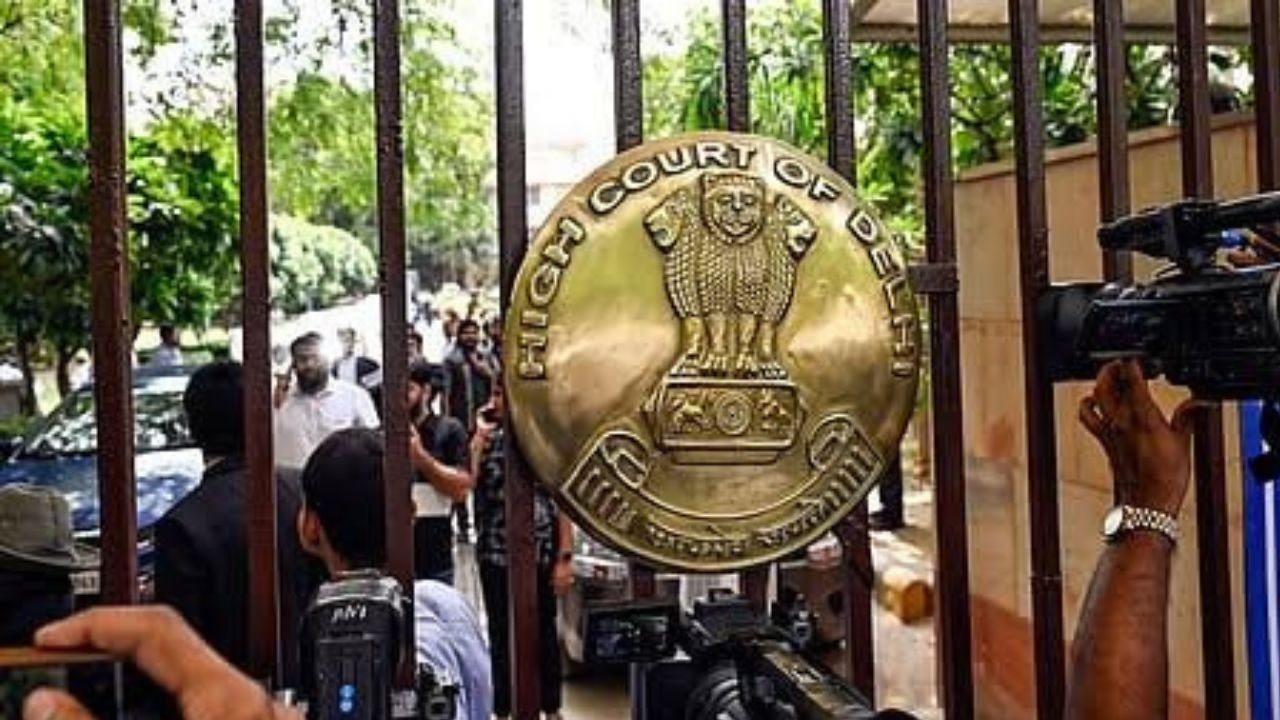
New Delhi: The Delhi High Court has ruled that a senior citizen seeking eviction of his children from his self-acquired property is not required to establish harassment or physical and mental abuse as a precondition for obtaining relief. The court observed that demonstrating the need to protect the property and ensure a peaceful and dignified life can be sufficient grounds for ordering eviction under the Maintenance and Welfare of Parents and Senior Citizens Act, 2007.
Justice Amit Mahajan set aside orders passed by the District Magistrate and the Divisional Commissioner, which had rejected the eviction plea of an 85-year-old man seeking to remove his eldest son and daughter-in-law from his house in Masjid Moth, South Delhi.
Directing the couple to vacate the property within four weeks, the court also instructed the concerned Station House Officer (SHO) to extend all necessary police assistance to the senior citizen to ensure implementation of the order, if required.
The court observed that an elderly person cannot be forced to share his own home with children against his wishes, particularly when relations have deteriorated to the extent that legal proceedings and police intervention have become necessary.
At 85, the court said, the petitioner is entitled to enjoy his own property and live there in peace and dignity.
Ownership of Property Was Not in Dispute
The High Court noted that the petitioner was the absolute owner of the disputed property, while his son and daughter-in-law had not asserted any independent ownership rights over the house. Their occupation was based solely on their relationship with the senior citizen.
Justice Mahajan observed that the authorities had adopted an incorrect legal approach by insisting that the petitioner establish harassment through clear and convincing evidence before an eviction order could be considered.
The court clarified that neither the Senior Citizens Act nor the Delhi Maintenance and Welfare of Parents and Senior Citizens Rules, 2009, prescribe such a mandatory requirement.
By introducing an additional condition that was not contemplated under the law, the authorities had committed an error in deciding the petition, the court held.
Court: Harassment Inside Homes Can Be Difficult to Prove
The High Court highlighted the practical difficulties senior citizens often face when attempting to establish harassment by family members.
It observed that incidents of ill-treatment frequently occur within the privacy of homes, making independent evidence difficult to obtain.
The court further pointed out that proceedings under the 2007 Act are summary in nature. Therefore, authorities dealing with such complaints cannot insist upon the same standard of proof applicable in a regular civil or criminal trial.
The objective of the legislation, the court indicated, is to provide effective protection to elderly citizens and safeguard their right to live peacefully.
Police Complaints and Earlier Intervention Taken into Account
The court also considered the multiple police complaints filed by the petitioner since 2022. It took note of its earlier directions asking the police to provide him with all possible assistance in addressing the threats he had allegedly faced from his son and daughter-in-law.
The High Court rejected the reasoning that a business dispute between the petitioner’s sons could undermine the credibility of his grievance.
It observed that the existence of a commercial or family business dispute, by itself, could not be treated as sufficient grounds to dismiss a senior citizen’s request for protection under the Act.
Court Questions SDM’s Inquiry Reports
The High Court also examined the inquiry reports submitted by the Sub-Divisional Magistrate (SDM) and found significant shortcomings in their assessment.
The first report, dated February 25, 2023, merely stated that the genuineness of the senior citizen’s harassment allegations could not be established. The court observed that such an inconclusive assessment could not be treated as proof that the allegations were false.
The second inquiry report, dated September 17, 2025, recorded the submissions made by both parties and referred to a visit to the property. However, it failed to explain the evidence examined or document the actual observations made during the visit.
The court criticised the report for reaching a conclusion that harassment had not been established without providing any meaningful reasons.
Justice Mahajan observed that a conclusion unsupported by reasons cannot be treated as a proper finding.
Supreme Court Judgment Cited by High Court
In reaching its decision, the High Court relied on the Supreme Court’s August 2026 judgment in Ravi Kant Gupta v. State of Uttar Pradesh.
The Supreme Court had recognised the power of a Maintenance Tribunal to direct the eviction of children from a senior citizen’s property where such action is necessary and expedient for the elderly person’s maintenance and protection.
The High Court also referred to its earlier ruling in Pritam Singh v. Government of NCT of Delhi. That judgment clarified that a senior citizen seeking eviction need not necessarily prove ill-treatment by a son or another legal heir. It can be sufficient to demonstrate that the property requires protection.
How the Legal Dispute Began
The petitioner had acquired the property from the Delhi Development Authority (DDA) in 1980 and converted it into freehold ownership in 2000.
In 2022, he approached the competent authorities under the Senior Citizens Act, seeking eviction of his eldest son and daughter-in-law.
He alleged that despite being asked to arrange alternative accommodation, the couple refused to vacate the house and their behaviour towards him had deteriorated over time.
The District Magistrate initially rejected his application in August 2023, observing that the allegations of harassment had not been established and that the dispute appeared to stem from business-related differences between his sons.
Following a remand for fresh consideration, the District Magistrate again dismissed the petition in October 2025. The Divisional Commissioner upheld that decision on April 28, 2026, leaving the senior citizen to approach the High Court.
High Court Sets Aside Orders, Grants Four Weeks to Vacate
Allowing the petition, the Delhi High Court quashed the District Magistrate’s order dated October 28, 2025, and the Divisional Commissioner’s order dated April 28, 2026.
The court directed the son and daughter-in-law to vacate the property within four weeks and instructed the local police to provide the necessary assistance to the petitioner for enforcement of the order.
The ruling reinforces the legal protection available to senior citizens seeking peaceful possession and enjoyment of their self-acquired properties.
Lawyers Appearing in the Case
Senior Advocate Madhav Khurana represented the petitioner, assisted by advocates Riya Arora, Ayush Kumar, Ananya Saxena, Garima Rai Singhania, Shashank Dewan, Uttam Kumar and Hardik Arora.
Senior Advocate Anurag Ahluwalia appeared for the son. Nitika Bhutani, Panel Counsel, represented the Delhi government, while Puja S. Kalra, Central Government Standing Counsel, appeared for the Union of India.
