


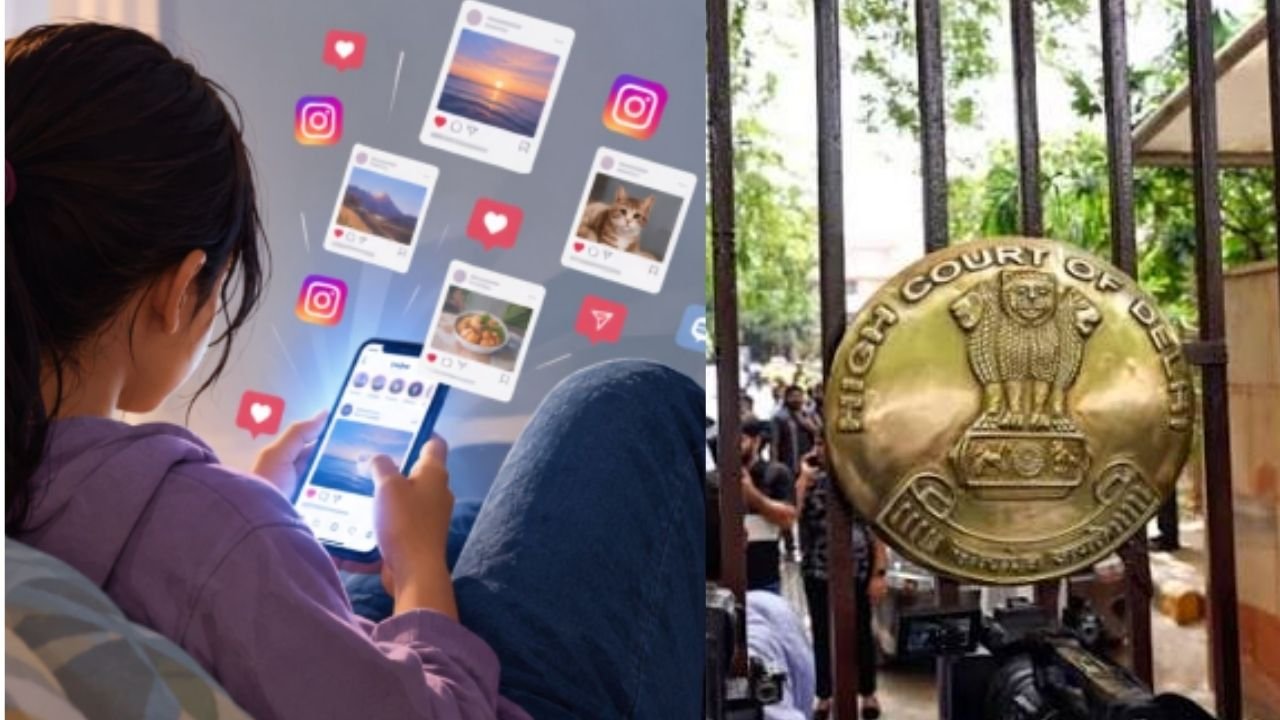
New Delhi: The Delhi High Court had sought the Central government’s response to a petition challenging the restriction of the Instagram account @bring_back__ballot in India. The account is associated with the ‘Bring Back Ballot’ campaign launched by Mission Save Constitution and its National Convenor, advocate Mehmood Pracha.
Justice Amit Mahajan issued notice to the Centre and the concerned authorities, seeking their response to the plea. The court has scheduled the next hearing for November 6. The petition challenges the restriction imposed on October 10, 2026, the day the campaign organisers held a protest at Jantar Mantar in New Delhi. Advocate Amee Rana appeared for Meta Platforms and accepted notice on its behalf. Central Government Standing Counsel Ashish Dixit accepted notice for the Ministry of Home Affairs, the Ministry of Electronics and Information Technology, and the designated officer concerned. The petition was filed through advocate Nikhil Guliani, while advocate Sanawar Chaudhary represented the petitioners before the court.
Account Restricted on Day of Jantar Mantar Protest
According to the petition, the Instagram handle became inaccessible in India on October 10, displaying the message: “Account not available in India. This is because we complied with a legal request to restrict this content.” The petitioners have alleged that they were not served any prior notice, given an opportunity to be heard, or provided with reasons or a copy of the order behind the restriction.
The plea states that the account was used to campaign for a return to paper ballots in Indian elections under the slogan ‘EVM Hatao Desh Bachao’. It also served as a platform to mobilise citizens for the peaceful protest held at Jantar Mantar on October 10. The petitioners said they had informed Delhi Police about the proposed demonstration on October 9.
Petition Invokes Constitutional Right to Free Speech
Arguing against the restriction, the petitioners have contended that advocating a change in the voting system constitutes political expression protected under Article 19(1)(a) of the Constitution. The plea maintains that the account’s content did not attract any of the grounds for restricting free speech under Article 19(2) of the Constitution or Section 69A(1) of the Information Technology Act, 2000. It further alleges that the action was taken without following the notice and hearing procedure prescribed under Rule 8 of the relevant rules.
Petition Questions Proportionality of Restriction
The petitioners have argued that restricting the entire account, which they say had more than 50,000 followers, was disproportionate when compared with action directed at any specific post or piece of content. They have also claimed that the absence of a communicated order or stated reasons has left them without an effective means of challenging the restriction. The plea raises a broader concern over the lack of a publicly available policy, standard operating procedure or guidelines governing government directions to Instagram and other online intermediaries to restrict entire accounts. According to the petitioners, restrictions affecting fundamental rights cannot be imposed under an undisclosed policy that does not qualify as law under Article 19(2) of the Constitution.
The High Court has sought the government’s response to the challenge. The allegations regarding the legality and proportionality of the restriction remain the petitioners’ contentions and are yet to be adjudicated.
