


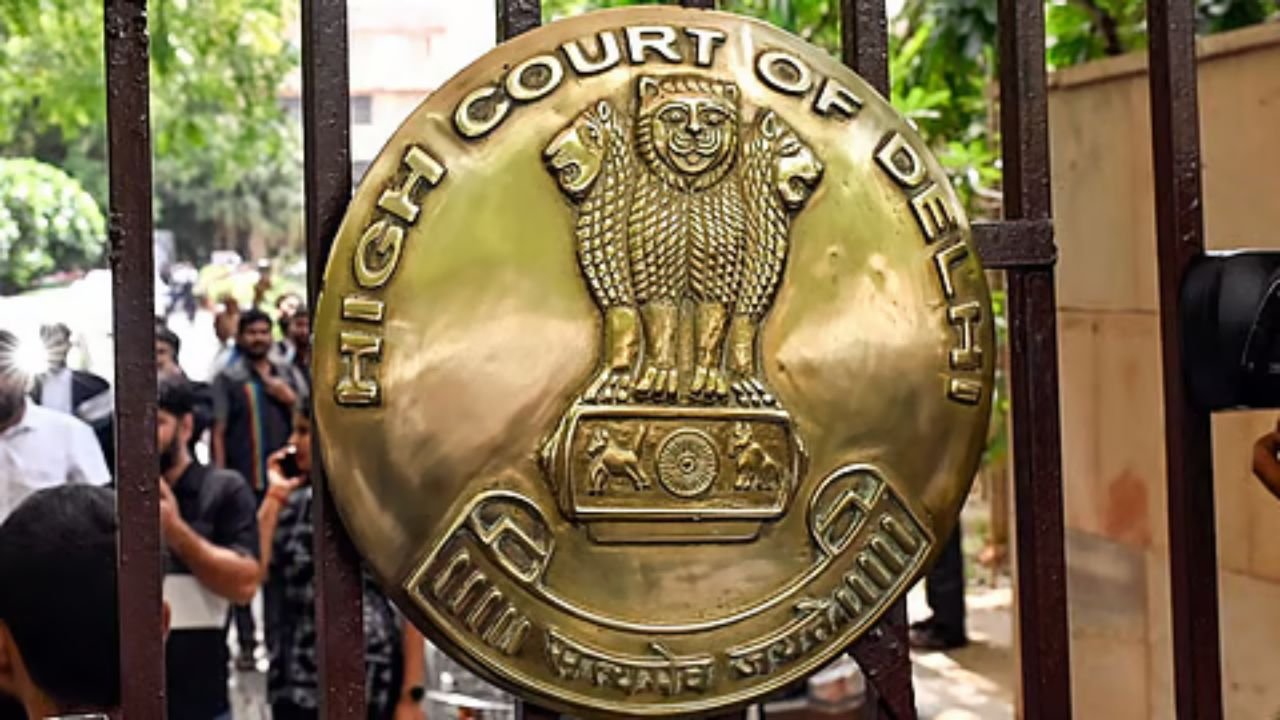
New Delhi: The Delhi High Court has ruled that marrying an Indian citizen does not automatically grant a foreign national the right to obtain an Entry (X-1) Visa or continue residing in India. The Court observed that the admission and continued stay of foreign nationals in the country are matters governed by the sovereign discretion of the State.
Justice Amit Mahajan passed the ruling while dismissing a petition filed by a US citizen seeking conversion of her existing e-Tourist Visa into a spouse visa following her marriage to an Indian national.
The Court found the explanation submitted by immigration authorities satisfactory, holding that the suspicion surrounding the possibility of a marriage of convenience was supported by the circumstances placed on record.
In their response before the Court, immigration authorities clarified that their assessment was not based solely on the age difference between the petitioner and her husband. They had also considered her previous marriages, extended stay in India, earlier attempts to obtain immigration benefits through matrimonial relationships, residential arrangements and the explanations provided regarding her income and financial support.
According to the authorities’ counter-affidavit, the petitioner had previously married an Overseas Citizen of India (OCI) cardholder, through whom she had obtained OCI status. Following the dissolution of that marriage in July 2021, her OCI status was cancelled in November 2023.
Subsequently, she entered into another matrimonial relationship in December 2022 and applied for visa conversion and extension on that basis. However, her applications did not result in the immigration benefits sought due to deficiencies in the supporting documents. Her second marriage also ended in November 2025.
The authorities pointed out that the present marriage was her third and raised concerns after examining her immigration history and the surrounding circumstances.
The Court was further informed that the petitioner had been residing as a tenant in a property owned by her present husband even before their marriage. Records also indicated that he had accompanied her during the period when she was pursuing immigration benefits through her previous matrimonial relationship.
Considering these circumstances collectively, the competent authority formed a prima facie view that the present marriage could potentially be one of convenience. It also stated that the possibility of financial or contractual arrangements intended to secure immigration benefits could not be ruled out.
Accepting the explanation furnished by the authorities, Justice Mahajan observed, “This Court finds that the explanation furnished by the Respondents in the Counter Affidavit is satisfactory and the suspicion is well-founded.”
Marriage Does Not Create an Automatic Right to Visa
The High Court emphasised that a foreign national does not possess an inherent or legally enforceable right to enter or continue staying in India. Marriage to an Indian citizen, by itself, does not create an automatic entitlement to convert an existing visa into an Entry (X-1) Visa.
Referring to the Immigration and Foreigners Act, 2025, the Court noted that the grant, conversion and extension of visas, along with the regulation of foreign nationals’ stay in India, fall within the jurisdiction of the competent authorities.
The Court also relied on the Supreme Court’s ruling in Louis De Raedt v. Union of India. It reiterated that foreigners are entitled to constitutional protection under Article 21, which safeguards life and personal liberty, but cannot claim the right to reside and settle in India under Article 19(1)(e), a right available exclusively to Indian citizens.
Additionally, the High Court referred to its earlier decision in Randa Chehab v. Union of India, reiterating that entry into or continued residence in India is not an enforceable right against the State but falls within its sovereign discretion.
Marriage Certificate Not Conclusive for Immigration Benefits
The petitioner had relied on a marriage certificate issued under the Special Marriage Act, 1954, following the solemnisation of her marriage before the Marriage Officer on March 18, 2026. The couple had also solemnised their marriage according to Muslim rites and customs on December 7, 2025.
However, the High Court clarified that the issuance of a marriage certificate does not prevent immigration authorities from examining the surrounding circumstances or independently assessing an applicant’s eligibility for the visa sought.
The Court also noted that the petitioner’s husband had not filed an affidavit supporting her claims regarding their matrimonial relationship, cohabitation and the circumstances of their marriage.
At the same time, it clarified that the absence of such an affidavit, by itself, could not determine whether the marriage was genuine.
Observing the limits of judicial review in immigration matters, Justice Mahajan stated, “It is not the function of this Court, in exercise of judicial review, to substitute its own assessment for that of the competent authority in a matter concerning admission of a foreign national.”
Petitioner Had Sought Protection Against Deportation
The petitioner had approached the High Court under Article 226 of the Constitution, alleging that immigration authorities had subjected her and her husband to repeated inquiries and had failed to process her spouse visa application favourably despite the submission of the requisite documents.
She had sought protection against deportation and other coercive action, a personal hearing in the presence of her advocate, and compensation of Rs 5 lakh for alleged harassment and financial losses.
Dismissing the petition along with the pending applications, the High Court made it clear that it had not examined or ruled upon the validity or genuineness of the marriage itself.
The Court clarified that its observations were limited to the petitioner’s claim for immigration benefits and the assessment undertaken by the authorities.
It further directed that any representation already pending or submitted by the petitioner in the future must be considered and decided by the competent authorities in accordance with the law.
(ANI)
