

Close Menu
LawFilesLawFiles

    Subscribe to Updates

    Get the latest creative news from FooBar about art, design and business.

    What's Hot

    From Political Satire to Intellectual Property Dispute: The Curious Case of the ‘Cockroach Janata Party’ Trademark

    June 12, 2026

    Global Businesses, Local Laws: The Urgent Case for Cross-Border Insolvency in India

    June 12, 2026

    Supreme Court Clarifies Arbitration Limitation Law: Section 34 Challenge Period Begins Only After Disposal of Section 33 Proceedings

    June 12, 2026
    Facebook X (Twitter) Instagram Threads
    Saturday, June 13
    LawFilesLawFiles
    Facebook X (Twitter)
    • Home
      • Who We Are
      • Our Mission
      • Advisory board
      • Contact US
    • Supreme Court
    • High Courts
      • Gujarat High Court
      • Jharkhand High Court
      • Rajasthan High Court
      • Karnataka High Court
      • Andhra Pradesh High Court
      • Allahabad High Court
      • Himachal Pradesh High Court
      • Chhattisgarh High Court
      • Jammu & Kashmir and Ladakh High Court
      • Kerala High Court
      • Punjab and Haryana High Court
      • Patna High Court
      • Madhya Pradesh High Court
      • Madras High Court
      • Bombay High Court
      • Orissa High Court
      • Calcutta High Court
      • Meghalaya High Court
      • Delhi High Court
      • Manipur High Court
      • Gauhati High Court
    • Corporate
    • Taxation Laws
      • Income Tax
      • GST
      • Customs & Excise
    • Global Affairs
    • Articles
      • Sitting Judge’s’ Views
      • Senior Advocate
      • Policy Analysis
      • Tax Expert
    • PILS
      • Free/Affordable Legal Aid
      • PIL Cell
      • Law student Volunteer Cell (research & Drafting)
      • NGO & Legal services Authority Tie-ups
      • Online Legal Formats
      • Online Legal Help Form
    Subscribe Premium
    LawFilesLawFiles
    Home»Top News»Boycott as Strategy or Challenge to Process? Kejriwal’s Refusal to Appear Before Delhi High Court Raises Constitutional Questions on Judicial Authority
    Top News

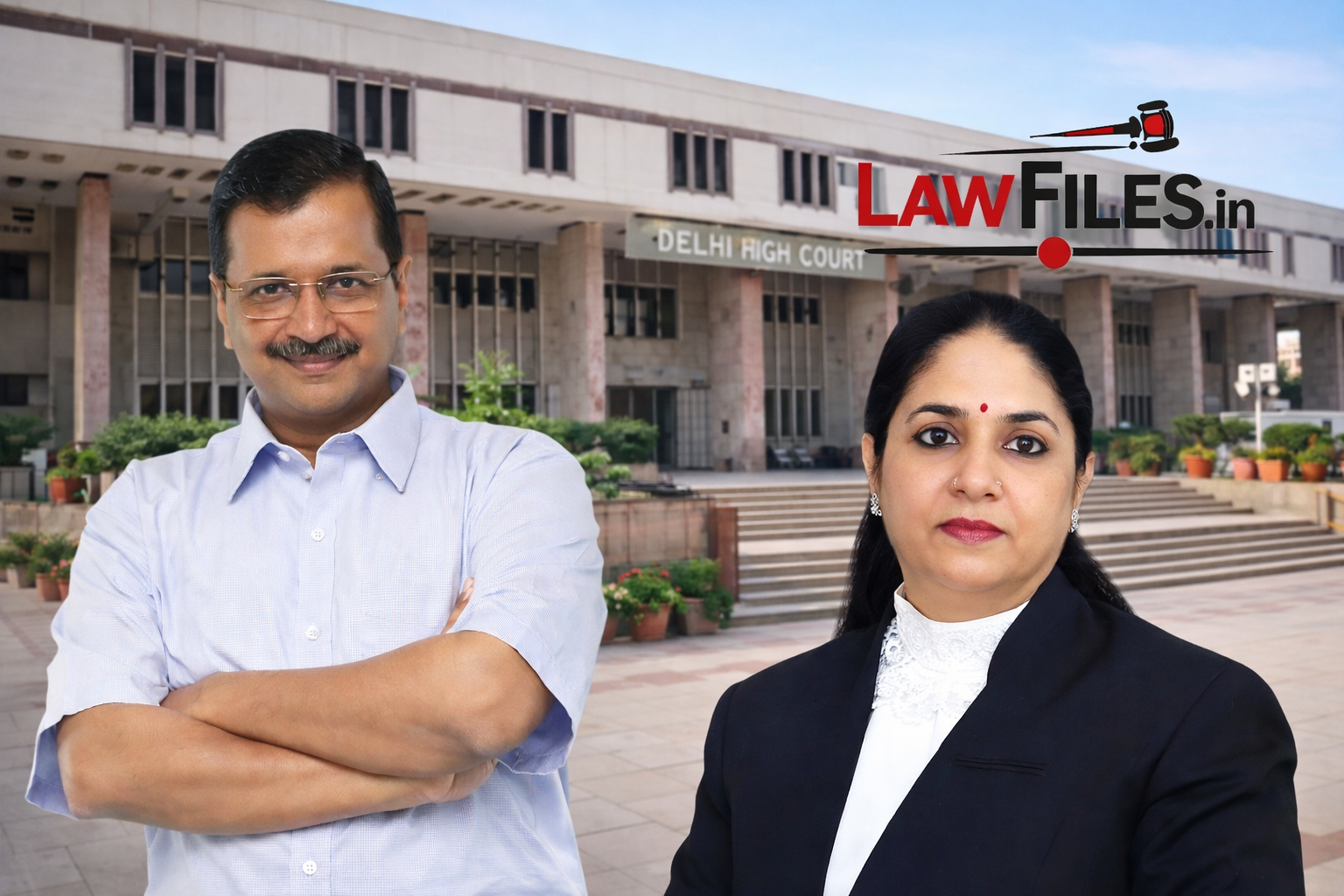
    Boycott as Strategy or Challenge to Process? Kejriwal’s Refusal to Appear Before Delhi High Court Raises Constitutional Questions on Judicial Authority

    Anvita DwivediBy Anvita DwivediApril 27, 2026No Comments4 Mins Read
    WhatsApp Facebook Twitter Copy Link
    Share
    Facebook Twitter Pinterest Copy Link WhatsApp

    In a development that adds a new dimension to the already contentious Delhi excise policy litigation, Arvind Kejriwal has formally refused to participate in further proceedings before the Delhi High Court in the matter pending before Justice Swarana Kanta Sharma. The decision, communicated through a letter to the Court, marks an unusual moment in Indian legal practice where a litigant consciously withdraws from the adjudicatory process while the proceedings remain active.

    Kejriwal’s refusal follows the dismissal of his recusal plea, in which he had sought the judge’s withdrawal on grounds of alleged bias. After the Court rejected these allegations, holding them to be speculative and legally untenable, Kejriwal chose not to pursue the case further before the same Bench. He invoked what he described as “Gandhian satyagraha,” asserting a loss of confidence in the fairness of the proceedings and indicating his willingness to face any legal consequences of his decision.

    At a procedural level, the move is highly unconventional. Indian legal proceedings are premised on participation, representation, and adversarial engagement. A party’s refusal to appear either personally or through counsel does not stall proceedings; rather, it exposes the party to the risk of adverse orders being passed in their absence. Courts retain the authority to proceed ex parte, and such absence is generally interpreted not as protest, but as forfeiture of the opportunity to be heard.

    The development also raises a deeper constitutional question: can a litigant unilaterally disengage from the judicial process while continuing to contest its legitimacy? The doctrine of rule of law requires that grievances against judicial orders be addressed through established remedies appeal, review, or curative jurisdiction not through boycott. By stepping outside this framework, the act shifts from legal strategy to a form of political expression within a judicial setting.

    Analytically, Kejriwal’s invocation of satyagraha introduces a tension between constitutionalism and moral resistance. While civil disobedience has a recognised place in political theory, its transplantation into ongoing judicial proceedings creates institutional friction. Courts function on the presumption of compliance with their processes; a refusal to participate challenges not merely a particular judge or order, but the procedural legitimacy of adjudication itself.

    The context of the boycott further amplifies its implications. The refusal comes in the immediate aftermath of a strongly worded order rejecting the recusal plea, where the Court emphasised that judicial impartiality cannot be questioned on conjecture and that litigants cannot be permitted to choose benches based on perceived outcomes. This judicial assertion of independence forms the backdrop against which the boycott must be understood not as an isolated act, but as part of a broader contest over judicial authority and litigant autonomy.

    From a doctrinal perspective, the episode also touches upon the limits of recusal jurisprudence. The law recognises “reasonable apprehension of bias” as a ground for recusal, but this standard requires objective material, not subjective dissatisfaction. Once the Court has adjudicated upon such a plea, the appropriate course is to challenge the decision before a higher forum. Refusal to participate thereafter does not strengthen the claim of bias; rather, it risks undermining procedural discipline.

    There is also a broader institutional concern. If litigants particularly in high-profile or politically sensitive cases begin to disengage from proceedings upon adverse orders, it may create a precedent that weakens the authority of courts. Judicial processes depend not only on legal enforceability but also on institutional respect and voluntary compliance. Acts of boycott, even when framed as protest, can blur this distinction.

    At the same time, the episode reflects the increasing politicisation of legal proceedings in contemporary India. High-stakes litigation often operates simultaneously in courtrooms and in the public domain, where narratives of fairness, bias, and legitimacy are contested. The decision to boycott proceedings can thus be seen as both a legal act and a political signal aimed as much at public perception as at the judicial forum itself.

    Ultimately, the legal consequences of the boycott are likely to be straightforward: the Court may proceed in Kejriwal’s absence, and any adverse orders would have to be challenged through appellate mechanisms. The larger significance, however, lies in the precedent it sets and the questions it raises about the relationship between litigants and the judicial process.

    In conclusion, the episode underscores a critical constitutional principle: the legitimacy of courts rests not only on their authority to decide, but also on the willingness of parties to submit to that authority within the framework of law. When that framework is disrupted, even symbolically, it invites a deeper reflection on the balance between dissent and discipline in a constitutional democracy.


    Boycott as Strategy or Challenge to Process? Kejriwal’s Refusal to Appear Before Delhi High Court Raises Constitutional Questions on Judicial Authority
    Share. WhatsApp Facebook Twitter Pinterest Email
    Anvita Dwivedi

    Related Posts

    From Political Satire to Intellectual Property Dispute: The Curious Case of the ‘Cockroach Janata Party’ Trademark

    June 12, 2026

    Global Businesses, Local Laws: The Urgent Case for Cross-Border Insolvency in India

    June 12, 2026

    Supreme Court Clarifies Arbitration Limitation Law: Section 34 Challenge Period Begins Only After Disposal of Section 33 Proceedings

    June 12, 2026
    Add A Comment
    Leave A Reply Cancel Reply

    Demo
    Top Posts

    Wrongful Claim Rejection Amounts to Deficiency in Service: Delhi Consumer Commission Holds Star Health Liable

    March 16, 202669 Views

    Bombay High Court Quashes POCSO Case, Directs Accused to Fund MacBook for Victim’s Education

    February 28, 202652 Views

    Siyahat Meri Syahi Se: A Journey That Transforms Travel into Thought and Entrepreneurship

    March 18, 202645 Views

    Supreme Court Quashes FIR Over ‘Improved’ Second Complaint: A Reminder That Criminal Law Cannot Be Built on Shifting Narratives

    June 4, 202638 Views
    Don't Miss

    From Political Satire to Intellectual Property Dispute: The Curious Case of the ‘Cockroach Janata Party’ Trademark

    By Anvita DwivediJune 12, 2026

    The filing of trademark applications for the phrase “Cockroach Janata Party” has transformed what began…

    Global Businesses, Local Laws: The Urgent Case for Cross-Border Insolvency in India

    June 12, 2026

    Supreme Court Clarifies Arbitration Limitation Law: Section 34 Challenge Period Begins Only After Disposal of Section 33 Proceedings

    June 12, 2026

    Supreme Court Reinforces IBC’s Strict Timelines: Delay in Re-Filing Defective Appeal Cannot Be Condoned Beyond Statutory Limits

    June 12, 2026
    Stay In Touch
    • Facebook
    • Twitter

    Subscribe to Updates

    Get the latest creative news from SmartMag about art & design.

    Top Posts

    Wrongful Claim Rejection Amounts to Deficiency in Service: Delhi Consumer Commission Holds Star Health Liable

    March 16, 202669 Views

    Bombay High Court Quashes POCSO Case, Directs Accused to Fund MacBook for Victim’s Education

    February 28, 202652 Views

    Siyahat Meri Syahi Se: A Journey That Transforms Travel into Thought and Entrepreneurship

    March 18, 202645 Views
    Don't Miss

    From Political Satire to Intellectual Property Dispute: The Curious Case of the ‘Cockroach Janata Party’ Trademark

    By Anvita DwivediJune 12, 2026

    The filing of trademark applications for the phrase “Cockroach Janata Party” has transformed what began…

    Global Businesses, Local Laws: The Urgent Case for Cross-Border Insolvency in India

    June 12, 2026

    Supreme Court Clarifies Arbitration Limitation Law: Section 34 Challenge Period Begins Only After Disposal of Section 33 Proceedings

    June 12, 2026

    Supreme Court Reinforces IBC’s Strict Timelines: Delay in Re-Filing Defective Appeal Cannot Be Condoned Beyond Statutory Limits

    June 12, 2026
    Stay In Touch
    • Facebook
    • YouTube
    • TikTok
    • Instagram
    Top Trending
    About Us
    About Us

    LawFiles.in is a comprehensive legal news platform delivering real-time updates from the Supreme Court, High Courts, Tribunals, Corporate and Tax law, Regulators, Politics, Crime, Consumer cases, and Global Affairs.

    Email Us: lawfilesoffical@gmail.com
    Contact: +91 8800026066

    Contact Us:
    India International Centre
    40, Max Mueller Marg
    Lodhi Estate, New Delhi-110003

    Facebook X (Twitter)
    Our Picks

    From Political Satire to Intellectual Property Dispute: The Curious Case of the ‘Cockroach Janata Party’ Trademark

    June 12, 2026

    Global Businesses, Local Laws: The Urgent Case for Cross-Border Insolvency in India

    June 12, 2026

    Supreme Court Clarifies Arbitration Limitation Law: Section 34 Challenge Period Begins Only After Disposal of Section 33 Proceedings

    June 12, 2026

    Supreme Court Reinforces IBC’s Strict Timelines: Delay in Re-Filing Defective Appeal Cannot Be Condoned Beyond Statutory Limits

    June 12, 2026

    Revocation of Probate and the Law of Limitation: Supreme Court Clarifies the Reach of Article 137

    June 12, 2026
    Most Popular

    Custodial Death and State Liability : A Critical Analysis of the Allahabad High Court’s ₹10 Lakh Compensation Judgment

    February 22, 20260 Views

    Gujarat High Court Commutes Death Sentence in Child Rape-Murder; Reinforces Capital Sentencing Standards in Light of MP High Court Precedent

    February 23, 20260 Views

    Delhi Family Court Rules Against Enforcement of Australian Property Orders in Shikhar Dhawan Matrimonial Dispute

    February 25, 20260 Views

    Madhya Pradesh High Court Examines Plea to Extend NRI Quota to Stray Vacancy Round in Medical Admissions

    February 26, 20260 Views

    Supreme Court Rules Limitation Period Under CrPC Starts When Offender’s Identity Is Known, Not From First Complaint

    February 27, 20260 Views
    © 2026 LawFiles. Owned by Varta24 Media.
    • Articles
    • Careers
    • Corporate
    • Global Affairs
    • Law Firms & Lawyers
    • PILS
    • Regulatory

    Type above and press Enter to search. Press Esc to cancel.