


The Union Government’s proposal to amend the Constitution to expand the Lok Sabha from 543 to 850 seats, while also permitting delimitation prior to the post-2026 Census, marks one of the most significant structural interventions in India’s representative democracy in recent decades. Though presented as an administrative and reform-oriented step, the proposal carries far-reaching implications for federal balance, electoral equity, and the future architecture of parliamentary representation.
At its core, the proposed amendment seeks to fundamentally alter the framework governing delimitation. Under the existing constitutional scheme, particularly Article 82, delimitation is to be undertaken only after the first Census conducted following 2026. This provision was part of a carefully constructed constitutional compromise, aimed at ensuring that states which successfully implemented population control measures were not penalised in terms of political representation. By proposing to remove this restriction, the amendment would allow delimitation to proceed immediately, likely based on older census data, thereby breaking from a long-standing equilibrium that has shaped Indian federalism.
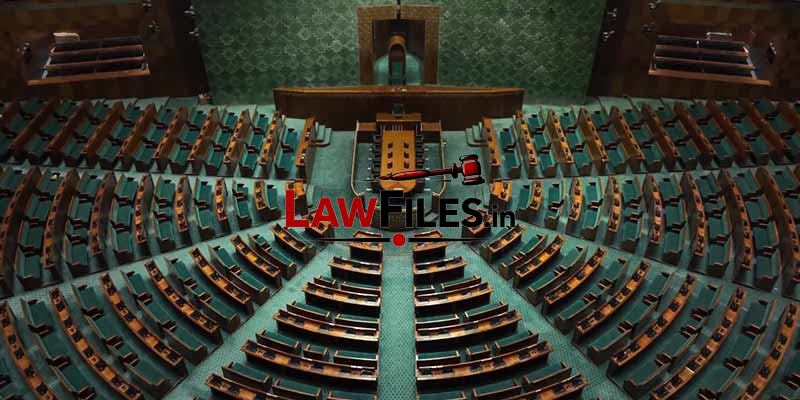
The proposal also includes a dramatic expansion of the Lok Sabha’s strength to 850 members, with the bulk of these seats allocated to states and a smaller portion to Union Territories. While on the surface this appears to enhance representational capacity, the consequences of such an expansion are more complex. Increasing the number of seats may indeed reduce the population-to-representative ratio, thereby making parliamentary representation more granular and potentially more responsive. However, it also raises questions about the functionality of an already strained parliamentary system, including legislative efficiency, coordination, and the manageability of debate within a significantly larger House.
A key justification offered by the government for advancing delimitation ahead of the next Census is the need to correct existing demographic imbalances. Over time, population growth and internal migration have resulted in constituencies of vastly unequal sizes, undermining the principle of electoral equality. From this perspective, delimitation appears necessary to restore balance. However, the decision to rely on outdated census data introduces its own set of complications. Demographic patterns in India have evolved significantly since the last Census, and any exercise based on older data risks misrepresenting current realities, thereby compromising the very objective of equitable representation.
Perhaps the most contentious aspect of the proposal lies in its potential impact on India’s federal structure. A population-based redistribution of seats would likely benefit states with higher population growth, particularly in the northern and central regions, while relatively reducing the influence of southern states that have successfully stabilised population growth. This creates a paradox where states that performed better on key governance indicators could find themselves politically disadvantaged. Such an outcome raises serious concerns about the erosion of cooperative federalism, a principle that has been recognised as part of the Constitution’s basic structure.
The proposal is also closely linked to the implementation of women’s reservation in legislatures. The 106th Constitutional Amendment, which provides for 33% reservation for women, is contingent upon delimitation. By advancing the delimitation process, the government seeks to operationalise this long-pending reform more quickly. While this objective is undoubtedly progressive, it raises an important question: should a structural reconfiguration of representation be driven by the need to implement another reform, however desirable? The intertwining of these two objectives introduces a layer of political complexity that cannot be ignored.
From a constitutional standpoint, the amendment opens up several areas of potential contestation. The reconfiguration of parliamentary representation may be challenged on grounds that it disturbs the federal balance, which has been held to be a basic feature of the Constitution. Additionally, reliance on outdated population data could raise concerns about arbitrariness and violation of the principle of equality under Article 14. While Parliament has wide powers to amend the Constitution, these powers are not unlimited, and any amendment that significantly alters the basic structure may invite judicial scrutiny.
The broader concern, however, is not merely legal but philosophical. The proposal reflects a shift towards a more arithmetic understanding of democracy, where representation is determined primarily by population size. While this aligns with the principle of “one person, one vote,” it does not fully account for India’s unique socio-political context, where diversity, regional balance, and historical compromises have played a crucial role in maintaining national cohesion. Democracy, in this sense, is not just about numbers, but about ensuring that all regions and communities retain a meaningful voice in the national discourse.
In conclusion, the proposed constitutional amendment represents a critical moment in India’s democratic evolution. It offers an opportunity to modernise representation and address genuine imbalances, but it also carries the risk of unsettling the delicate federal compact that underpins the Constitution. The challenge lies in striking a balance between demographic fairness and federal equity, between efficiency and legitimacy. As this proposal moves forward, it will require not just legislative approval, but a deeper constitutional reflection on what representation means in a country as complex and diverse as India.
