


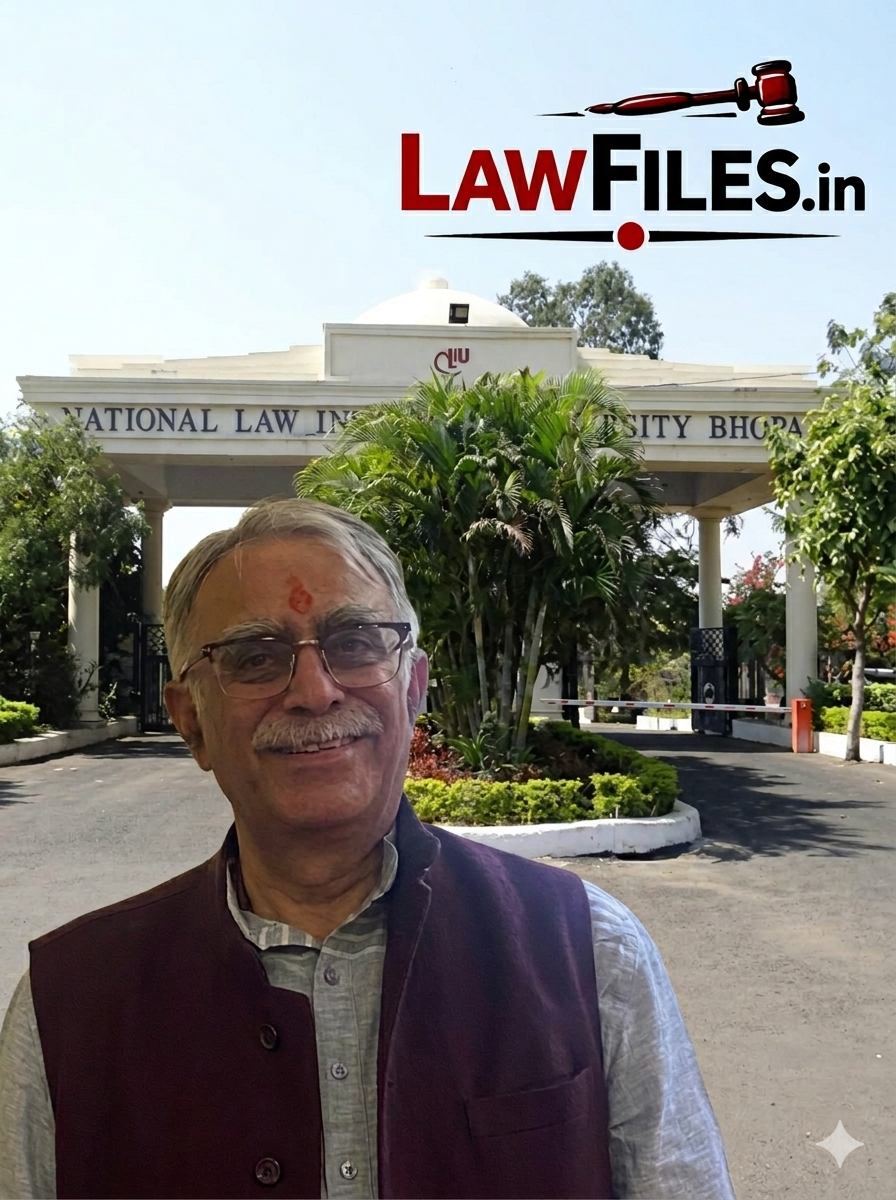
In a thought-provoking address that has sparked introspection within India’s legal fraternity, Justice Sanjay Karol highlighted a growing disconnect between aspirations of law students and the realities of India’s justice system. Speaking at an event at the National Law Institute University (NLIU), Bhopal, the judge observed that many students today aspire to emulate the polished, corporate-style lawyers seen in popular series like Suits, rather than engaging with the grounded realities of Indian legal practice.
Justice Karol candidly remarked that legal education in premier institutions is increasingly seen as a pathway to high-paying corporate careers, often inspired by global portrayals of the legal profession. Suits, with its depiction of fast-paced corporate litigation, has become a symbolic reference for such aspirations.
However, he contrasted this with the Indian context, invoking Mamla Legal Hai as a more realistic portrayal of the challenges embedded in the justice delivery system. According to him, the day-to-day functioning of Indian courts marked by delays, procedural complexities, and socio-economic realities differs sharply from the glamorised narratives often consumed by students.
The judge’s remarks reflect a broader concern about the evolving character of legal education in India. National Law Universities (NLUs), once envisioned as institutions producing socially conscious lawyers committed to constitutional values, are increasingly perceived as feeder systems for corporate law firms and elite litigation chambers.
Justice Karol cautioned that such a shift risks detaching young lawyers from the grassroots realities of justice, where the majority of India’s population engages with the legal system not in boardrooms, but in overcrowded trial courts and administrative forums. Emphasising the constitutional role of lawyers, Justice Karol reminded students that the legal profession carries a public duty that transcends individual career ambitions. He urged aspiring lawyers to view their role as one of transforming lives and ensuring access to justice for all sections of society, particularly the marginalised.
He underscored that the Constitution is not merely a theoretical document but a living framework that must guide everyday conduct. Students, he said, should internalise the values enshrined in Part III (Fundamental Rights), Part IV (Directive Principles of State Policy) and Part IV-A (Fundamental Duties)
and treat them as guiding principles in both professional and personal life. Another striking aspect of the address was the caution against what may be termed “performative lawyering” where young advocates focus more on visibility, courtroom theatrics, or validation rather than substance.
Justice Karol observed that the tendency to “showcase skills” for attention or recognition runs contrary to the true purpose of the profession. Instead, he advocated for depth, discipline, and commitment to justice, qualities often overshadowed in popular representations of legal practice.
The remarks also implicitly raise a systemic issue the gap between legal education and real-world practice. While law schools emphasise moot courts, corporate internships and international exposure. The everyday challenges of litigation such as procedural delays, client realities, and infrastructural limitations often remain underexplored. Justice Karol’s reference to grounded narratives like Mamla Legal Hai and even rural-centric depictions such as Panchayat suggests a need to reorient legal education toward experiential understanding of India’s socio-legal fabric.
Importantly, the judge did not dismiss corporate law as a legitimate career path. Instead, his message was one of balance urging students to ensure that professional ambition does not eclipse the constitutional responsibility of the legal profession.
He also encouraged students to pursue judicial internships and broader exposure, noting that engagement with courts provides a more nuanced understanding of how law operates in practice. Justice Karol’s observations come at a time when India’s legal profession is undergoing rapid transformation, driven by globalisation of legal services, rise of corporate law firms and increasing digitisation of courts
In this context, his remarks serve as a reminder that the legitimacy of the legal system ultimately rests on its ability to deliver justice at the grassroots level, not merely on its efficiency in commercial disputes. The speech by Justice Sanjay Karol is more than a critique of student aspirations it is a reflection on the evolving identity of the Indian legal profession itself.
By juxtaposing the glamour of Suits with the grounded realism of Mamla Legal Hai, he has highlighted a crucial truth: law, at its core, is not about style or spectacle it is about service, substance, and the pursuit of justice in its most human form. As India’s next generation of lawyers steps into the profession, the challenge will be to reconcile ambition with responsibility, and aspiration with constitutional purpose.
