


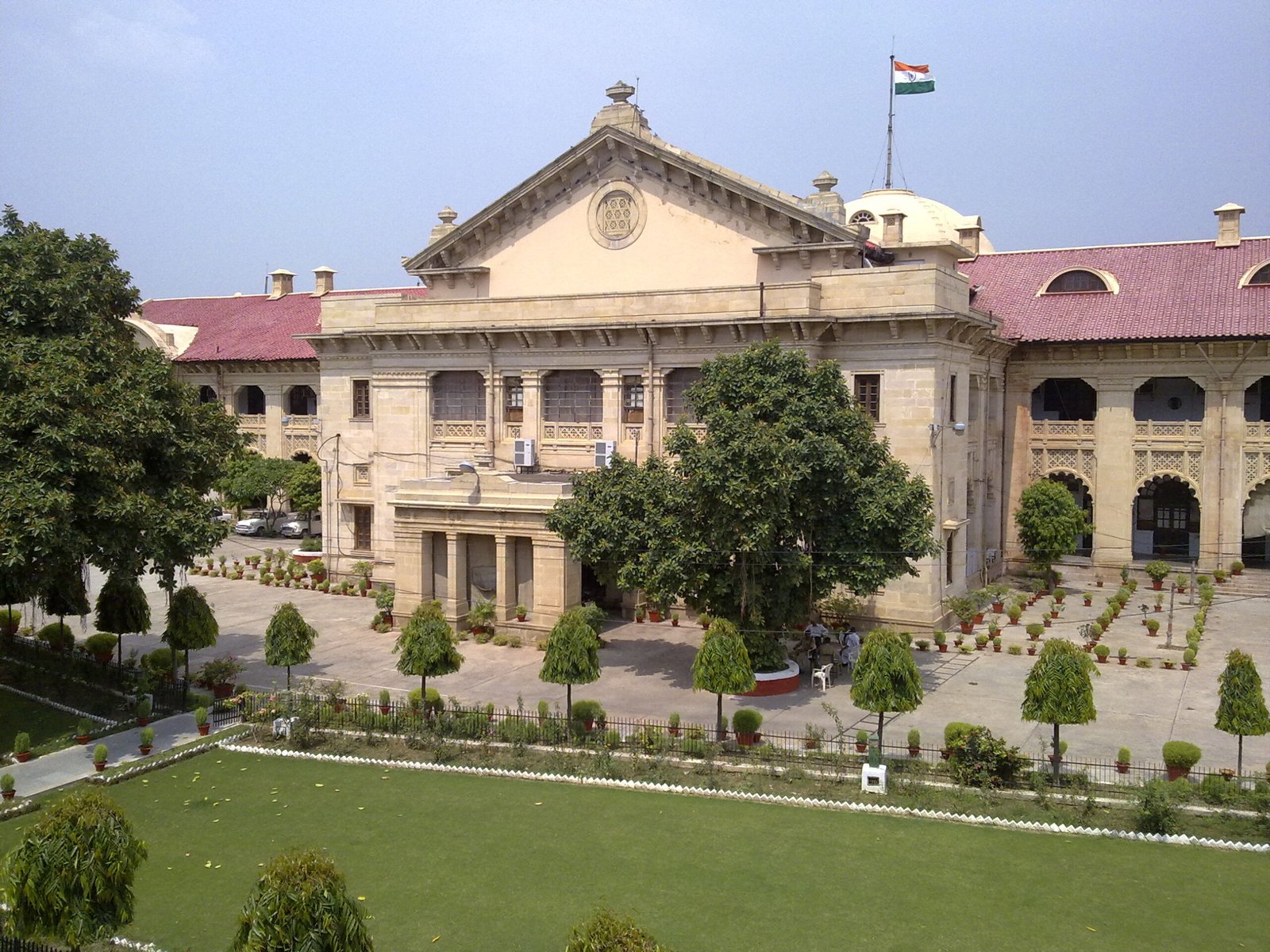
In a significant ruling at the intersection of free speech, religion, and criminal law, the Allahabad High Court has refused to quash proceedings under Section 295A of the Indian Penal Code (IPC), holding that claiming one religion to be the “only true religion” can prima facie amount to disparagement of other faiths.
The judgment, delivered by Justice Saurabh Srivastava, underscores the constitutional commitment to secularism and religious plurality, while clarifying the legal threshold for offences relating to outraging religious sentiments.
The case arose from a 2023 FIR registered in Mau district, Uttar Pradesh, against a Christian priest who was accused of making repeated statements during prayer meetings that Christianity is the only true religion, allegedly hurting the sentiments of members of another faith.
The accused approached the High Court seeking quashing of the chargesheet filed in 2024. The cognizance order passed by the trial court
He argued that he had been falsely implicated. No illegal conversion activity had been found during investigation. The case amounted to an abuse of process of law
Rejecting the plea, the High Court made a strong constitutional observation that in a secular country like India, claiming one religion to be the “only true religion” inherently implies disparagement of other faiths.
The Court noted that India is a pluralistic society where multiple faiths coexist that assertions of exclusivity may undermine this constitutional balance. Such statements, depending on context, can fall within the ambit of Section 295A IPC
This provision penalises deliberate and malicious acts intended to outrage religious feelings.
The Court held that based on the FIR and material on record that the allegations disclose intent capable of outraging religious sentiments. The conduct alleged falls within the statutory framework of Section 295A. Therefore, it cannot be said that no prima facie case exists
Importantly, the Court did not determine guilt but merely found that the case deserves to proceed to trial for proper adjudication.
Reiterating settled criminal law principles, the Court emphasised that at the stage of cognizance, courts only assess whether a prima facie case exists. They are not required to conduct a detailed evaluation of evidence. Questions raised by the accused involved disputed facts, which must be tested at trial
The Court relied on established Supreme Court precedents to reiterate that quashing jurisdiction cannot be used to prematurely terminate prosecution in cases involving factual disputes.
The ruling reflects a delicate constitutional balancing exercise:
Individuals are entitled to express religious beliefs, including evangelism and propagation. However, such expression is subject to restrictions in the interest of public order and communal harmony.
The Court implicitly reaffirmed that state neutrality toward all religions requires mutual respect among faiths, and not assertions that may provoke disharmony. The ruling clarifies that not only overt insults, but also claims of exclusive religious superiority, may attract scrutiny if they disparage other beliefs. Courts will not interfere at an early stage where allegations disclose intent and factual controversy requiring trial. The judgment signals that religious discourse must remain within the bounds of constitutional respect for diversity.
The decision comes amid increasing litigation involving religious speeches and conversions, allegations of hurt sentiments under Section 295A IPC and conflicts between free speech and communal harmony
Courts across India have been called upon to define the limits of religious expression in a plural democracy, making this ruling particularly relevant.
The Allahabad High Court’s decision marks an important clarification in Indian criminal and constitutional law. Freedom of religion and speech does not extend to expressions that prima facie demean or delegitimise other faiths in a secular society.
By refusing to quash the case, the Court has reinforced that questions of intent, impact, and context must be examined through a full trial, rather than dismissed at the threshold.
At a broader level, the ruling reflects the judiciary’s continuing effort to balance individual liberty with collective harmony, a balance that lies at the heart of India’s constitutional framework
