


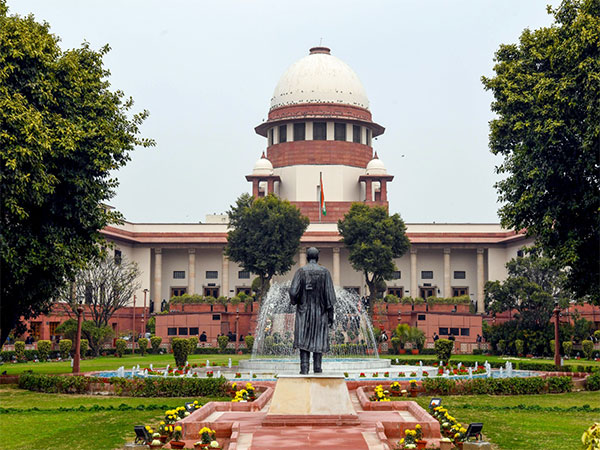
In a significant step that could reshape the contours of labour jurisprudence in India, the Supreme Court of India has notified the composition of a nine-judge Constitution Bench to examine the scope of the term “industry” under the Industrial Disputes Act, 1947. The bench is set to reconsider the expansive interpretation laid down in the landmark judgment of Bangalore Water Supply and Sewerage Board v. A. Rajappa (1978), a precedent that has long governed labour law disputes across the country.
The Constitution Bench will be headed by the Chief Justice of India, Surya Kant, and will include Justices B. V. Nagarathna, P. S. Narasimha, Dipankar Datta, Ujjal Bhuyan, Satish Chandra Sharma, Joymalya Bagchi, Alok Aradhe and Vipul M. Pancholi. The matter has been listed for hearing beginning 17 March 2026, with the Court scheduling two days of arguments to address the reference.
The issue concerns the interpretation of the word “industry” under Section 2(j) of the Industrial Disputes Act, 1947, which determines the scope of labour protections available to workers and employees. In the 1978 judgment authored by Justice V. R. Krishna Iyer in Bangalore Water Supply, a seven-judge bench adopted an expansive interpretation of the term. The Court held that any systematic activity organised through cooperation between employer and employee for the production or distribution of goods or services could qualify as an “industry,” even if profit-making was not the primary objective.
This broad interpretation significantly widened the reach of labour law by bringing a large number of institutions such as government departments, hospitals, educational institutions, and charitable organisations within the ambit of the Industrial Disputes Act.
However, over the years the judgment has been the subject of intense legal debate, with employers and governments arguing that the definition is overly expansive and creates uncertainty regarding the applicability of labour laws to several non-commercial activities.
The controversy over the definition of “industry” has been pending before the Supreme Court for decades. In 2005, the issue was referred to a larger bench in State of Uttar Pradesh v. Jai Bir Singh after conflicting interpretations emerged in subsequent judgments. Eventually, the Court determined that the matter required authoritative reconsideration by a nine-judge Constitution Bench, one of the largest possible judicial formations under the Court’s rules.
The forthcoming hearing is therefore expected to finally settle the debate that has persisted for more than four decades in Indian labour law.
Key Legal Questions Before the Bench
The Constitution Bench is expected to examine several important issues, including:
- Whether the expansive interpretation of “industry” in the Bangalore Water Supply judgment reflects the correct legal position.
- Whether government welfare schemes and activities undertaken by public authorities should fall within the ambit of industrial activity.
- How to distinguish sovereign functions of the State from commercial or service-oriented activities that may attract labour law obligations.
The Court may also consider whether subsequent legislative developments including amendments to labour laws and the introduction of new labour codes have any bearing on the interpretation of the term.
Legal experts believe the outcome of this reference could have far-reaching consequences for labour regulation in India. The definition of “industry” determines whether employees of an organisation can invoke protections under labour statutes, including the right to approach labour courts and seek remedies for unfair labour practices.
If the Court narrows the scope of the definition, many institutions particularly government-run welfare bodies, educational establishments, and charitable organisations may fall outside the ambit of labour adjudication under the Industrial Disputes Act. Conversely, reaffirming the expansive interpretation could continue extending labour protections to a wide range of workers employed in public and private sectors.
The constitution of the nine-judge bench marks one of the most significant labour law developments in recent years. By revisiting the Bangalore Water Supply precedent, the Supreme Court is poised to deliver a ruling that could redefine the legal understanding of “industry” and influence labour relations across India for decades to come.
The proceedings beginning on 17 March are therefore expected to attract close attention from labour unions, employers, policymakers, and legal scholars, given the potential impact of the judgment on the structure of labour rights and industrial regulation in the country.
