


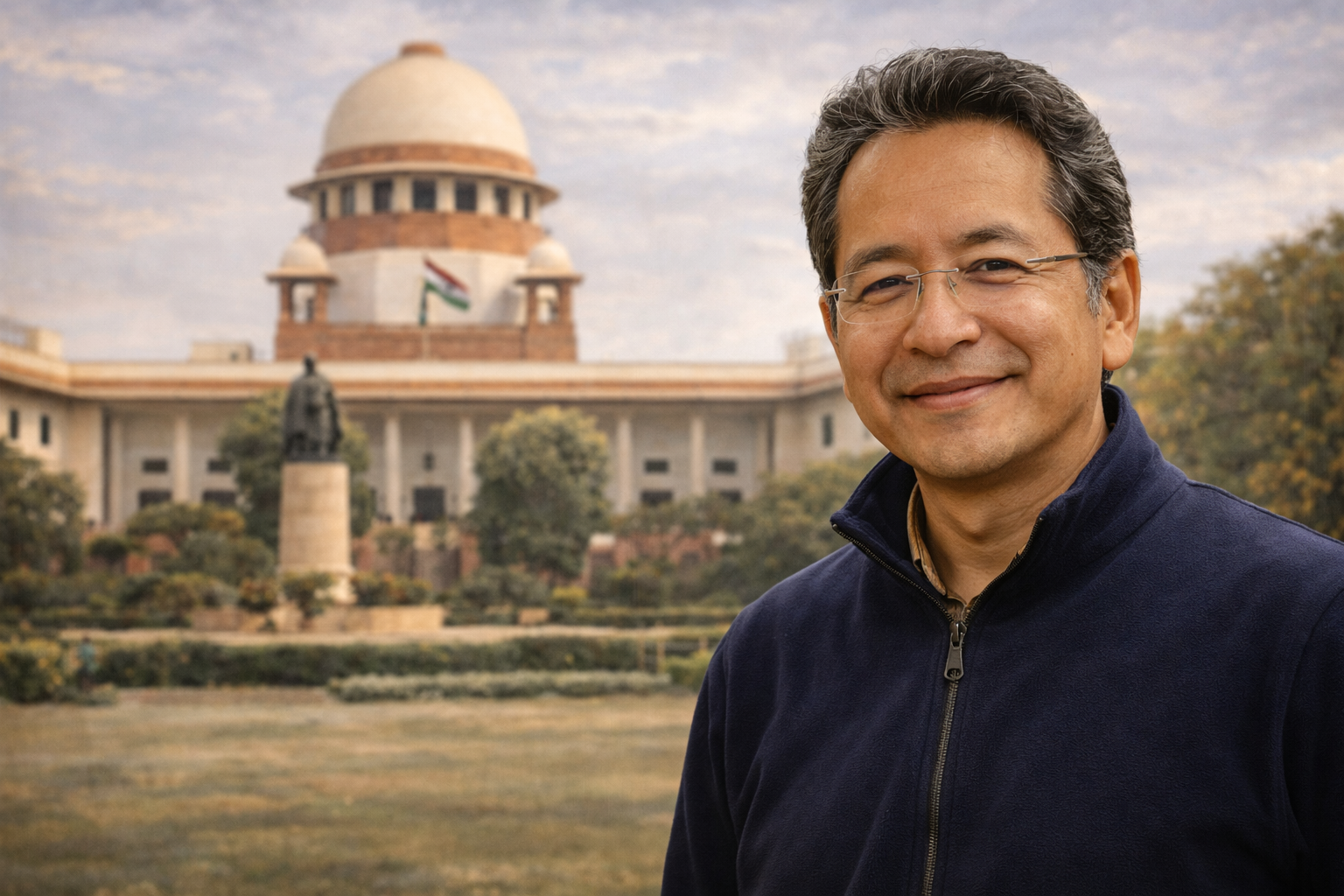
In a significant development concerning the use of preventive detention powers, the Union Government has revoked the detention order issued against Ladakh-based climate activist and education reformer Sonam Wangchuk under the National Security Act, 1980 (NSA). The decision, communicated through the Ministry of Home Affairs, brings an end to Wangchuk’s detention months after he was taken into custody following protests and unrest in the Union Territory of Ladakh.
The revocation order has been issued with immediate effect after the Central Government reviewed the circumstances surrounding the detention. The development effectively terminates the preventive detention proceedings that had been initiated under the NSA framework.
Wangchuk was detained in September 2025 pursuant to an order issued by the District Magistrate of Leh under the provisions of the NSA. The detention followed protests in Ladakh linked to demands for constitutional safeguards for the region, including calls for statehood and inclusion of Ladakh under the Sixth Schedule of the Constitution.
Authorities had alleged that the protests resulted in disturbances to public order and that preventive detention was necessary to prevent further escalation of the situation. The administration invoked the NSA, a statute that allows the executive to detain individuals without trial for a specified period if their actions are considered prejudicial to public order or national security.
Following the detention order, Wangchuk was shifted to a prison facility outside Ladakh, where he remained in custody while the legality of the detention was being challenged before the courts.
The detention order was subsequently challenged before the Supreme Court of India through a petition filed under Article 32 of the Constitution. The plea questioned the legality and proportionality of invoking preventive detention against a civil society activist, contending that the action violated fundamental rights guaranteed under Articles 19 and 21 of the Constitution.
During the proceedings, the Court was examining the materials relied upon by the authorities in issuing the detention order, including statements and evidence relating to the protests in Ladakh.
The government’s decision to revoke the detention order comes while the matter was pending consideration before the Supreme Court.
The National Security Act, 1980 empowers the Central and State Governments to detain individuals without trial if they are satisfied that such detention is necessary to prevent acts prejudicial to national security, public order, or the maintenance of essential services. Under the statute, a person may be detained for up to twelve months, subject to periodic review by an advisory board.
However, preventive detention laws have frequently been the subject of judicial scrutiny due to their impact on personal liberty. Courts have consistently held that such extraordinary powers must be exercised strictly in accordance with procedural safeguards laid down by the Constitution and the statute.
The revocation of the detention order effectively nullifies the preventive custody imposed on Wangchuk and may render the pending constitutional challenge before the Supreme Court infructuous. Legal observers note that the decision reflects the executive’s power to reconsider preventive detention orders upon review of the prevailing circumstances.
At the same time, the episode has renewed debate on the use of preventive detention statutes in cases involving political dissent or civil society activism. Critics of such laws argue that they must be invoked sparingly and only in situations involving genuine threats to public order or national security.
Wangchuk, widely known for his educational initiatives and environmental advocacy in the Himalayan region, has been a prominent voice in campaigns seeking constitutional protections and ecological safeguards for Ladakh. The developments surrounding his detention and its subsequent revocation have drawn national attention to the political aspirations of the region as well as the legal limits of preventive detention in a constitutional democracy.
With the detention order now withdrawn, the focus is likely to shift toward renewed dialogue between the government and stakeholders in Ladakh regarding the region’s administrative and constitutional demands.
