


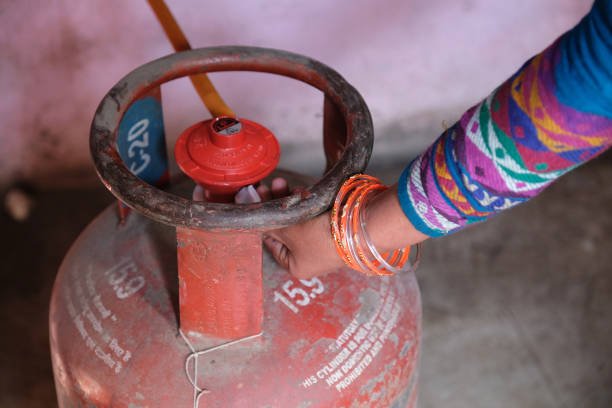
When Iran shut the Strait of Hormuz on March 1, 2026, most Indians were still asleep. But by the time kitchens lit up across the country — or tried to — the geopolitical earthquake halfway around the world had already begun rattling pots and pans from the hills of Himachal Pradesh to the bustling restaurant lanes of Bengaluru and Chennai. A distant war had crashed through the front door of everyday Indian life, and it arrived as a gas shortage. The Centre’s Assurance — And the Legal Architecture Behind It On March 11, Joint Secretary Sujata Sharma of the Ministry of Petroleum and Natural Gas walked up to the podium at the National Media Centre in New Delhi with a message the nation needed to hear: India’s crude oil supply is secure.
The country now draws crude from roughly 40 nations, and around 70% of those imports bypass the Strait of Hormuz altogether — a significant jump from the 55% dependency a few years ago. With daily consumption of approximately 55 lakh barrels, the volumes secured today exceed what would have arrived through the now-choked Hormuz corridor. But even as crude flows held, a quieter storm was gathering around LPG. India imports about 60% of its liquefied petroleum gas, and nearly 90% of those imports once flowed through Hormuz. That pipeline is now effectively severed. In a decisive legal move, the government invoked the Essential Commodities Act, 1955, issuing a Natural Gas Control Order on March 9, 2026. Under this framework, domestic piped cooking gas and CNG for vehicles continue at full supply; industrial consumers receive around 80% of their previous allocation; fertiliser plants get approximately 70%; while refineries and petrochemical units absorb a 35% reduction. The message was clear: hierarchy of need, backed by statute. Violations of these directives could attract action under the Essential Commodities Act and the Petroleum Products (Maintenance of Production, Storage and Supply) Order, 1999 — laws with teeth that include imprisonment.
In parallel, the government directed domestic refineries to divert all output of propane, butane, propylene, and butene exclusively toward LPG production, giving the order force of law over private and public producers alike. Himachal Pradesh: When Hills Reach for Firewood AgainUp in the Himalayan valleys of Himachal Pradesh, the crisis takes a more primal shape. Himachal Pradesh Revenue Minister Jagat Singh Negi voiced what many hill families were already quietly contemplating: if LPG rationing persists, rural households will have no choice but to return to firewood and traditional chulhas. It is a regression nobody wanted. Historically, nearly 80% of rural households in the state have relied on fuelwood for heating during winter months, with forest dependency running deep across the Himalayan belt. The LPG revolution under schemes like Pradhan Mantri Ujjwala Yojana had gradually changed that — but only partially. A return to firewood does not just mean inconvenience. It means deforestation pressure, indoor air pollution, health burdens falling disproportionately on women, and a legal gray zone: collection of dry firewood from forest commons carries rights, but commercial extraction does not. Neighbouring Uttarakhand, taking no chances, has already directed the Uttarakhand Forest Development Corporation to stockpile wood for commercial establishments — a contingency measure that underscores just how real this threat has become.
Bengaluru Dark, Chennai Pleading: India’s Restaurant Economy Teeters In Bengaluru, the morning of March 10 brought an unfamiliar silence to thousands of kitchens. The Bangalore Hotels Association — representing over 3,000 eateries — announced that commercial LPG deliveries had stopped without warning, despite oil companies having pledged 70 days of uninterrupted supply. Hotels and restaurants shuttered, or slashed their menus to tea and coffee. Students in hostels, IT professionals, hospital patients, and daily-wage workers who depend on affordable thalis found empty counters. Black-market cylinders reportedly surfaced at Rs. 2,500 each — nearly double the official rate. In Chennai, the picture was equally dire. The city’s more than 10,000 hotels, eateries, and tea shops consume at least five commercial cylinders per outlet every day. With supplies drying up, the Chennai Hotels Association wrote directly to Prime Minister Narendra Modi on March 9, urging him to treat LPG as an essential commodity for the food sector. Popular establishments like Adyar Ananda Bhavan and Sangeetha displayed notices about a fortnight’s worth of reserves — with little clarity on what comes after. Across Mumbai, up to 20% of hotels had already scaled back or shut, with fears of 50% closures looming.
The ripple touched Pune, Hyderabad, Kolkata, Mysuru, and beyond. The Legal Battleground: Rights, Assurances, and Liability The crisis raises uncomfortable legal questions. Oil companies had provided written assurances to hospitality bodies of stable supply for up to 70 days. The abrupt cutoff, argued hotel associations, constituted a breach of those commitments, even if the force majeure of an international conflict complicates the legal picture. As hoteliers scheduled meetings with Petroleum Minister Hardeep Singh Puri, lawyers quietly noted that supply commitments, even informal ones from state-run entities, carry legal weight under contract and consumer protection frameworks. The government responded by constituting a high-priority committee of three Executive Directors from Indian Oil, BPCL, and HPCL to evaluate and prioritise non-domestic
