


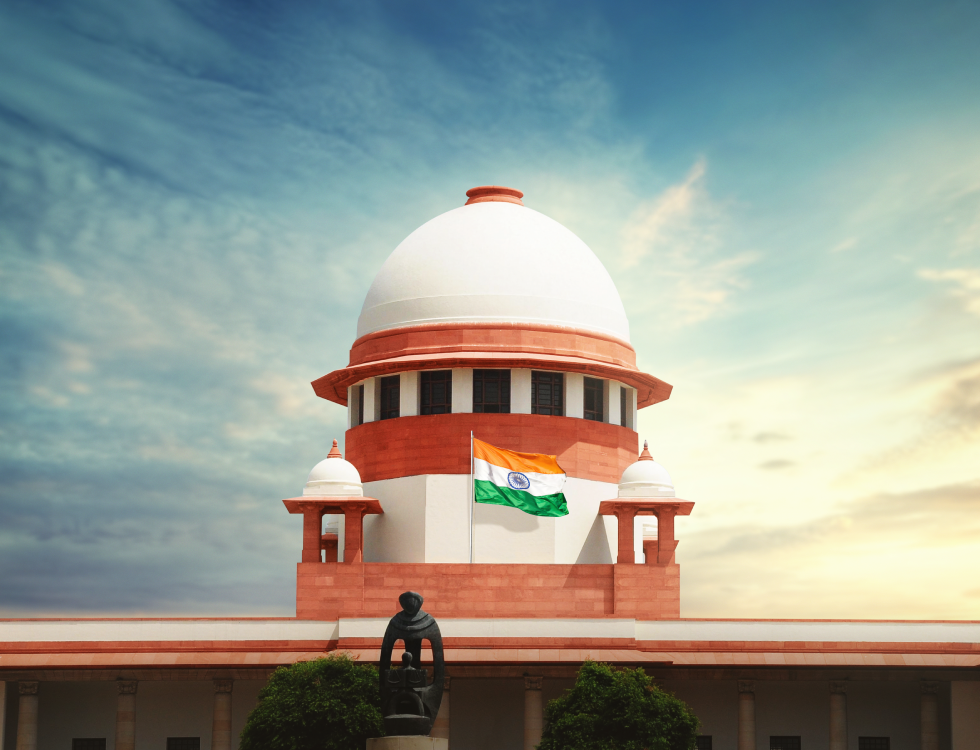
For thirteen long years, Harish Rana has existed somewhere between life and death — a 32-year-old man whose body breathes but whose mind has long ceased to respond. His parents have not slept peacefully in over a decade. His father has haunted hospitals, courtrooms, and corridors of power, carrying a grief too heavy for words. On Wednesday, the Supreme Court of India finally heard him — and in doing so, made legal history.
In a watershed ruling, a bench comprising Justice JB Pardiwala and Justice KV Viswanathan granted India’s first-ever judicially approved passive euthanasia order, permitting the withdrawal of all life-sustaining treatment — including artificially administered nutrition — for Harish, who has been in a permanent vegetative state since an accidental fall from a building in his early twenties.
A Decade of Waiting
Harish’s ordeal began when he fell from the fourth floor of his paying guest accommodation, sustaining a traumatic brain injury that left him entirely unresponsive. Diagnosed with Persistent Vegetative State (PVS) and total quadriplegia, he has since been kept alive through surgically implanted PEG tubes delivering Clinically Administered Nutrition (CAN) and a tracheostomy tube for breathing. Medical photographs placed before the court revealed severe bedsores — a silent testament to years of invisible suffering.
His father first approached the Delhi High Court in 2024, pleading for his son’s release from this twilight existence. The High Court dismissed the petition in July 2024, reasoning that Harish was not terminally ill in the conventional sense. The Supreme Court, too, initially stepped back in August 2024 — directing Uttar Pradesh to bear treatment costs rather than entertaining the euthanasia plea. But the father did not give up. He returned, armed with worsening medical reports, and this time the Court chose to listen.
The Legal Foundation: Seven Years in the Making
The legal scaffolding for Wednesday’s ruling was laid in 2018, when a Constitution Bench of the Supreme Court, in the landmark Common Cause v. Union of India judgment, formally recognised the right to die with dignity as a fundamental right under Article 21 of the Constitution. The Court had devised a framework — involving Primary and Secondary Medical Boards — to evaluate and approve withdrawal of life support on a case-by-case basis. These guidelines were further refined in January 2023 to make the process less cumbersome for families already drowning in grief.
The Harish Rana matter is now the first instance where this carefully crafted judicial framework has actually been invoked and applied. Both the Primary Medical Board and the AIIMS-constituted Secondary Medical Board unanimously concluded that Harish’s condition was irreversible and that continuing treatment served no therapeutic purpose — only prolonging biological existence without any prospect of recovery or meaningful life.
Crucially, the Court settled a significant legal question: CAN — the tube-delivered nutrition keeping Harish alive — constitutes a form of medical treatment, not merely basic sustenance. This distinction matters enormously, as it means such nutrition falls within the category of treatment that can lawfully be withheld or withdrawn. The bench also clarified that once both boards unanimously certify in favour of withdrawal, there is no compulsory requirement to approach the judiciary first. The Court’s involvement here was warranted solely because it was a first.
What the Court Directed
The bench issued precise, wide-reaching directions. AIIMS is to immediately admit Harish to its palliative care centre and facilitate his transfer from home. The standard 30-day reconsideration period has been waived. The withdrawal itself must follow what the Court described as a “tailored plan” — ensuring that dignity is preserved at every stage of the process.
The ruling carries systemic significance well beyond this one family. All High Courts have been asked to direct Judicial Magistrates across their jurisdictions to receive intimations from hospitals whenever medical boards reach a unanimous decision on withdrawal, creating an institutional pipeline for future cases. The Union Government was additionally called upon to maintain district-level panels of registered medical practitioners for secondary board appointments — and was strongly urged to enact comprehensive legislation on the subject, filling a glaring gap in India’s statutory law.
A Family’s Quiet Courage
Amid the legal architecture and procedural directions, the bench paused to acknowledge the human heart of the case. Justice Pardiwala, who authored the main judgment, recorded the court’s special appreciation for Harish’s parents — noting that they never left their son’s side across thirteen years of pain. His concurring colleague Justice Viswanathan echoed the sentiment. Together, they reflected that to love someone is to care for them even in the darkest of times — and that sometimes, the deepest form of care is knowing when to let go.
India has long wrestled with where the law ends and compassion begins. Wednesday’s ruling does not resolve every question in that conversation — but it places a deeply human stake in the ground. For a family that spent over a decade fighting for their son’s peace, the Supreme Court has finally said: he has earned it.
