


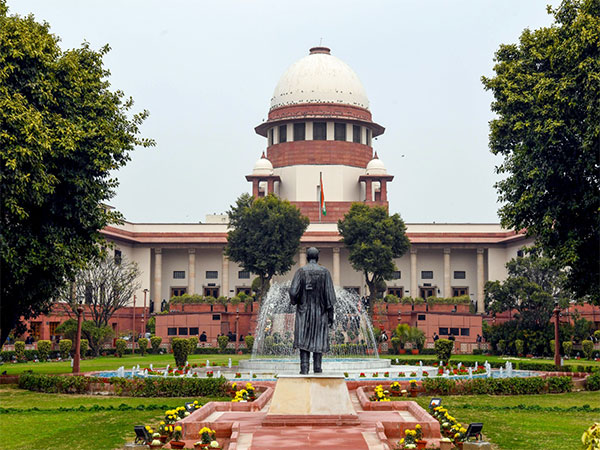
New Delhi, 28 February 2026: The Supreme Court of India has temporarily stayed a copyright litigation involving competing claims to the audio rights of musical sound recordings from seven classic South Indian films, including the Kamal Haasan-starrer Salangai Oli, Saagara Sangamam, Sankarabharanam, Seetha Kokila Chiluka, Sithara and Thayaramma Bangariah. The top court’s order halts the Madras High Court’s November 2025 decision that had revived portions of the long-running lawsuit between Sreedevi Video Corporation and Saregama India Limited.
This dispute titled Saregama India Ltd. v. Sreedevi Video Corporation stems from conflicting claims over copyright ownership in the sound recordings of the seven films. In 2014, Sreedevi Video Corporation filed a commercial suit seeking a declaratory judgment that it held absolute copyright in the audio recordings of the films based on assignment agreements executed in July 2008 with the production entities Poornodaya Movie Creations and Poornodaya Art Creations. It also sought a permanent injunction restraining Saregama India Ltd. from exploiting or profiting from these recordings.
Saregama, on the other hand, insists that the copyrights were lawfully assigned to it decades earlier. The company says that agreements entered into in 1978 and 1979 had transferred the recording and mechanical reproduction rights for these films to Sea Records for a 60-year term. These rights were later assigned to Saregama (formerly The Gramophone Company of India Ltd.) in 2000 for ₹1.10 crore on a perpetual basis. Saregama also points to a cease-and-desist notice issued in 2010 asserting its copyright ownership and rejecting Sreedevi’s later claim.
At the Madras High Court, a single judge initially dismissed Sreedevi’s lawsuit in 2022, holding that the claim for a declaration of title was time-barred under the statute of limitations since the right to sue arose in 2010 but the complaint was filed only in 2014. A Division Bench upheld the limitation finding for the title claim but controversially allowed the lawsuit to proceed on a narrow question of whether a perpetual injunction could still be granted against Saregama despite the title suit being time-barred.
Saregama challenged this reasoning before the Supreme Court, arguing that the High Court’s decision to delink the injunction claim from the title declaration was legally flawed. According to its petition, since the right to seek a title declaration had been lost by limitation, there was no enforceable legal right left that could support an injunction. Allowing an injunction to proceed independent of a valid title declaration, it argued, would effectively allow the plaintiff to “have its cake and eat it too” by indirectly re-litigating ownership.
Saregama also contended that the 2008 assignment agreements relied upon by Sreedevi to assert title were invalid because the transferors had already divested the rights to Saregama’s predecessor decades earlier, and thus had no authority to assign the same rights again.
On Thursday, a bench of Justice BV Nagarathna and Justice Ujjal Bhuyan stayed the operation of the Madras High Court’s order as it relates to reviving the injunction claim pending further hearings. The stay effectively halts all further proceedings in the suit for the time being, preserving the status quo until the top court can examine the core legal issues at a future date. The matter is now listed for further hearing in April 2026.
The case highlights recurring challenges in Indian copyright jurisprudence surrounding assignment of rights, derivative exploitation and the interplay between limitation and injunctive relief. Where ownership of rights is disputed, courts must carefully navigate whether ancillary remedies like injunctions can stand independently of foundational title determinations a question that lies at the heart of this appeal before the Supreme Court.
Copyright law in India requires that rights holders or their assignees have clear and enforceable title before seeking protective relief. If the Supreme Court ultimately agrees with Saregama’s position, it could emphasise that injunctions cannot be decoupled from declarations of ownership when the latter are barred by limitation, especially in cases involving complex chains of assignment.
As the litigation unfolds, stakeholders in the Indian music and film industries will be watching closely, given the potential ripple effects on how historical assignments and rights transfers are litigated particularly for classic films whose music continues to be commercially relevant decades after release.
