


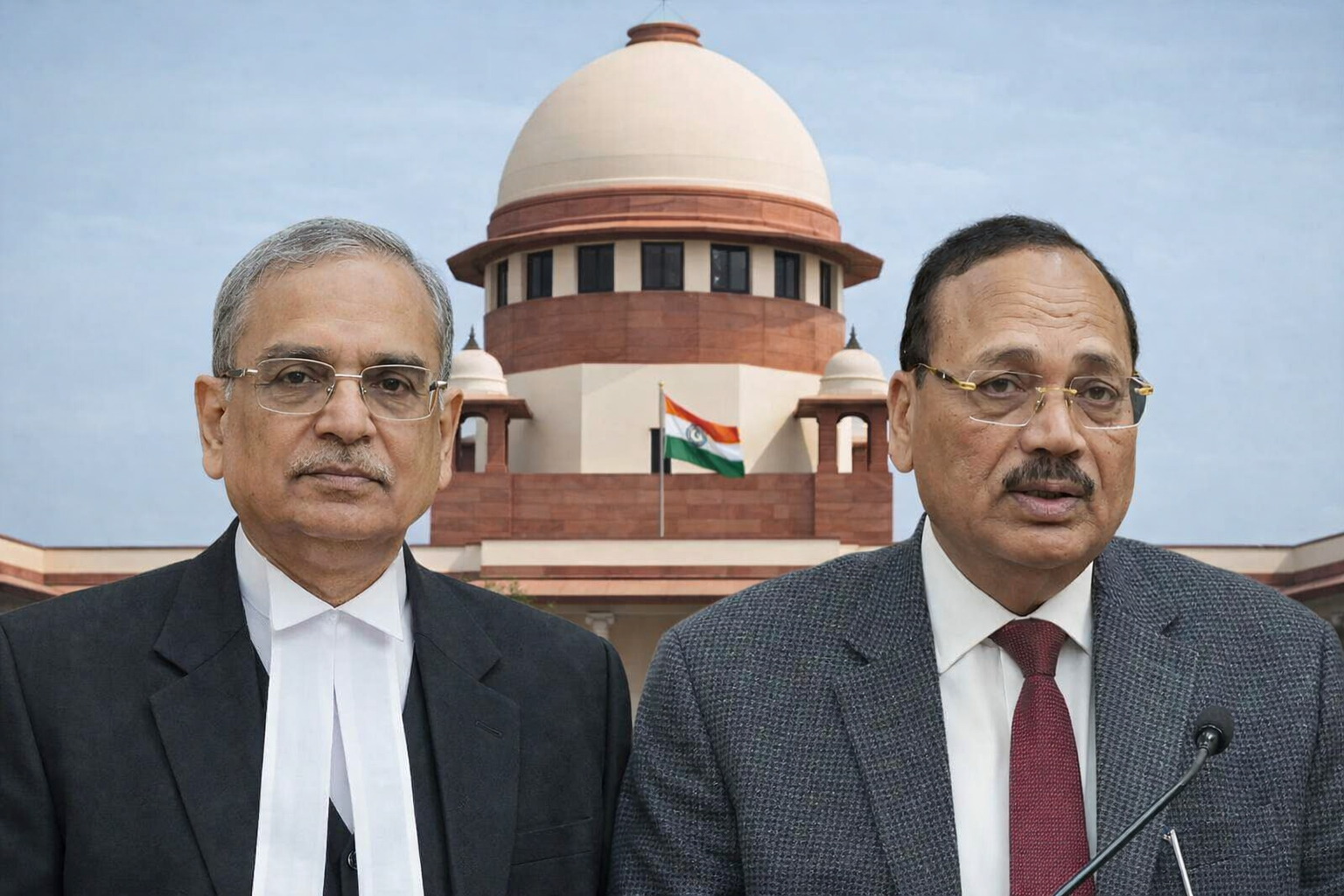
The Supreme Court of India on Friday delivered a strong rebuke to a practising advocate who had filed a petition seeking the registration of a First Information Report (FIR) against Narendra Modi and Amit Shah along with other political leaders in connection with the enactment of the Citizenship (Amendment) Act, 2019 (CAA). The Court declined to entertain the petition and stayed a cost order from the Rajasthan High Court, while warning the advocate against filing similar suits in the future.
The matter originated from a petition filed by advocate Puran Chander Sen, who urged the Rajasthan High Court to direct the registration of an FIR against the Prime Minister, the Home Minister and the then Law Minister including Ravi Shankar Prasad for their roles in enacting the CAA, 2019. The petitioner alleged that the enactment of the law had led to widespread protests, loss of life, injuries, public disorder and arrests across the country. Relying on this narrative, he sought FIRs under multiple criminal provisions of the Indian Penal Code (IPC) including Sections 302 (murder), 153A (promoting enmity), 409 (criminal breach of trust), 120B (criminal conspiracy), among others, along with Sections 193 and 195.
After local magistrates and sessions judges declined to order FIRs on the constitutionally sensitive claims, Sen approached the Rajasthan High Court, which dismissed the plea as frivolous and an abuse of process, and imposed ₹50,000 in costs on him.
A Bench of Chief Justice of India Surya Kant and Justice Joymalya Bagchi heard the appeal in the Supreme Court. At the outset, the Court questioned the very premise of filing an FIR against elected constitutional functionaries for enacting a statute, asking how criminal liability could flow from passing a law that may, at most, be challenged on constitutional grounds not treated as a crime.
Justice Bagchi pointedly told the advocate that mere disagreement with a political or ideological position does not constitute a criminal offence, asking rhetorically whether Parliament passing an allegedly unconstitutional law would itself amount to a crime. The Bench also remarked on the responsibilities of legal professionals, cautioning that filing such petitions undermines public trust in the legal fraternity.
In a stern observation, the CJI even quipped about the advocate’s professional conduct, questioning “who committed the mistake of giving you a licence to practise?” underscoring the bench’s displeasure at a senior member of the Bar pursuing what it viewed as baseless litigation.
Although the Supreme Court refused to entertain the petition or revive the High Court proceedings on merit, it stayed the ₹50,000 cost order imposed by the Rajasthan High Court on condition that the advocate undertake not to file similar petitions in future. The Court recorded the petitioner’s undertaking that he had realised his mistake and would not file any such complaint, application or petition in any forum going forward.
The Bench warned that if the advocate breached this undertaking, the cost order would be automatically revived and could be enhanced.
Legal analysts say the Supreme Court’s order serves two key messages:
Political or ideological disagreement cannot be translated into criminal prosecution: Critics of a law must utilise constitutional remedies such as judicial review under Article 32 or writ petitions challenging a statute’s validity, rather than seeking FIRs on criminal charges against legislators or executive functionaries.
Judicial pushback against frivolous litigation by members of the Bar: The Court’s remarks reflect judicial intolerance for petitions that lack legal substance and risk abusing court processes, particularly when initiated by legal professionals entrusted with upholding the integrity of the system.
