


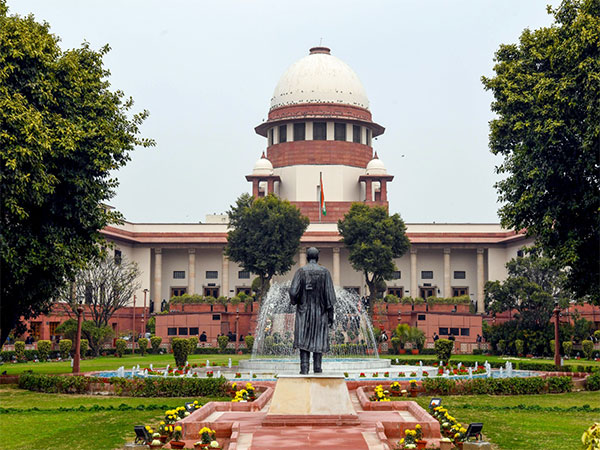
New Delhi, 25 February 2026: The Supreme Court of India today dismissed a petition seeking to ban or change the title of the upcoming Hindi film Yadav Ji Ki Love Story, holding that the film’s name does not cast the Yadav community in a negative light and therefore does not warrant judicial interference.
A bench comprising Justices B.V. Nagarathna and Ujjal Bhuyan heard the writ petition filed by the chief of the Vishwa Yadav Parishad, who contended that the movie’s title offended community sentiments and propagated a derogatory stereotype. The petitioner argued that linking a community name with “Love Story” could be interpreted as implying moral turpitude or social impropriety and sought directions to either ban the film’s release or compel the filmmakers to change its title.
After perusing the material on record, the Supreme Court rejected these contentions, observing that the phrase “Yadav Ji Ki Love Story” contained no adjective or expression that attaches any adverse meaning to the Yadav community. The bench emphasised that mere reference to a community name without any derogatory qualifier does not constitute a negative portrayal or defamation under the Constitution.
In its order, the Court distinguished this case from an earlier controversy involving another film (Ghooskhor Pandat), where the title included the word “ghooskhor” — literally implying corrupt behaviour — and was considered prima facie offensive to a religious group. In contrast, there was no linguistic or contextual basis to infer that the title in Yadav Ji Ki Love Story denigrated a caste or community, and thus none of the reasonable restrictions under Article 19(2) of the Constitution were attracted.
The bench also treated the film as a fictional work, noting that speculative grievances about its content — which has not yet been released — were unripe for adjudication. During the hearing, the Court reportedly remarked that concerns over inter-community relationships portrayed in the film did not justify judicial suppression of creative expression, underscoring the need for a degree of “thick skin” in a pluralistic society.
Legal experts say this judgment reinforces the principle that freedom of speech and expression, guaranteed under Article 19(1)(a) of the Constitution, includes artistic expression and cinematic titles, and that judicial restraint is warranted unless a title or content clearly violates constitutional limits such as public order, decency or incitement to hatred. The Supreme Court’s rejection of the plea signals a threshold that mere discomfort or subjective offence to community sentiment does not automatically justify censorship or prohibition by the judiciary.
The film, directed by Ankit Bhadana and produced by Sandeep Tomar, stars Pragati Tiwari and Vishal Mohan, and is scheduled for nation-wide release on 27 February 2026. While some community groups and protestors had earlier objected to the title and raised concerns about social harmony, the Supreme Court’s order clears the way for its public exhibition.
Legal analysts note that today’s decision may shape how courts approach future challenges to creative works on grounds of alleged community insult: context, language and direct association with derogatory meaning will be pivotal in determining whether constitutional freedoms yield to claims of hurt sentiments.
