

Close Menu
LawFilesLawFiles

    Subscribe to Updates

    Get the latest creative news from FooBar about art, design and business.

    What's Hot

    Supreme Court Declines To Extend Pawan Khera’s Transit Anticipatory Bail: Reasserting Jurisdictional Discipline in Bail Law

    April 17, 2026

    Dowry Law and Victim Protection: Supreme Court Clarifies Immunity for Wife and Her Family

    April 17, 2026

    Women’s Reservation Law Notified: Reform Realised or Deferred Constitutional Promise?

    April 17, 2026
    Facebook X (Twitter) Instagram Threads
    Friday, April 17
    LawFilesLawFiles
    Facebook X (Twitter)
    • Home
      • Who We Are
      • Our Mission
      • Advisory board
      • Contact US
    • Supreme Court
    • High Courts
      • Gujarat High Court
      • Jharkhand High Court
      • Rajasthan High Court
      • Karnataka High Court
      • Andhra Pradesh High Court
      • Allahabad High Court
      • Himachal Pradesh High Court
      • Chhattisgarh High Court
      • Jammu & Kashmir and Ladakh High Court
      • Kerala High Court
      • Punjab and Haryana High Court
      • Patna High Court
      • Madhya Pradesh High Court
      • Madras High Court
      • Bombay High Court
      • Orissa High Court
      • Calcutta High Court
      • Meghalaya High Court
      • Delhi High Court
      • Manipur High Court
      • Gauhati High Court
    • Corporate
    • Taxation Laws
      • Income Tax
      • GST
      • Customs & Excise
    • Global Affairs
    • Articles
      • Former Judge’s’ Views
      • Senior Advocate
      • Policy Analysis
      • Tax Expert
    • PILS
      • Free/Affordable Legal Aid
      • PIL Cell
      • Law student Volunteer Cell (research & Drafting)
      • NGO & Legal services Authority Tie-ups
      • Online Legal Formats
      • Online Legal Help Form
    Subscribe Premium
    LawFilesLawFiles
    Home»Articles»Supreme Court to Examine Plea for OBC Reservation for Pasmanda Muslims; Strategic Legal Questions Take Centre Stage
    Articles

    Supreme Court to Examine Plea for OBC Reservation for Pasmanda Muslims; Strategic Legal Questions Take Centre Stage

    Anvita DwivediBy Anvita DwivediFebruary 23, 2026No Comments5 Mins Read
    WhatsApp Facebook Twitter Copy Link
    Share
    Facebook Twitter Pinterest Copy Link WhatsApp

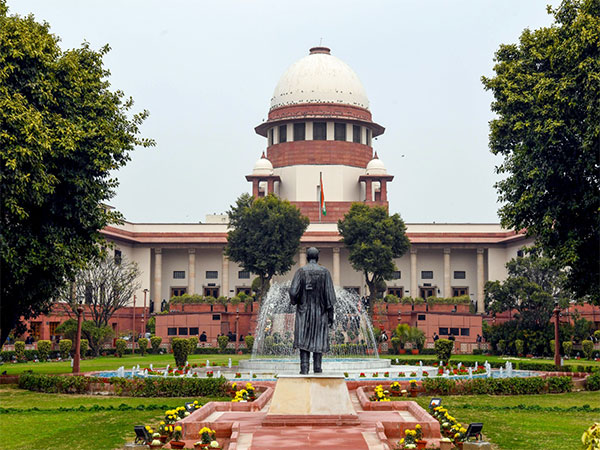
    New Delhi, 23 February 2026: The Supreme Court of India on Monday took up a public interest litigation (PIL) seeking to extend Other Backward Classes (OBC) reservation benefits to Pasmanda Muslims a term used to collectively describe socially and economically marginalised Muslim sub-groups — but refrained from immediate substantive orders, instead posting the matter for detailed hearing after four weeks.

    A Bench led by Chief Justice of India Surya Kant along with Justice Joymalya Bagchi heard the plea, filed by Mohd Waseem Saifi (W.P.(C) No. 230/2026), which urges that Pasmanda Muslims be sub-categorized within the OBC quota and granted a 10 per cent reservation in education and employment in line with recommendations of the Sachar Committee and the Ranganath Misra Commission.

    The petition frames Pasmanda Muslims broadly encompassing Ajlaf (OBC-level) and Arzal (Dalit-like) Muslim communities as historically disadvantaged groups who lag significantly behind in education, employment, and political representation, despite constituting a large share of India’s Muslim population. It refers to the Sachar Committee Report (2006), which documented systemic socio-economic deprivation of Muslim sub-communities, and the Ranganath Misra Commission’s suggestion for targeted affirmative action.

    The reliefs sought include directing the Union and State Governments to implement 10 per cent OBC sub-quota for Pasmanda Muslim, seeking implementation of Sachar Committee recommendations and asking establishment of a statutory commission to identify and monitor backwardness within Muslim communities for affirmative measures.

    During the brief hearing, the CJI posed pointed questions about the criteria for backwardness, underscoring that defining social and economic backwardness is not solely a religious or caste determination, and that the Court must be satisfied such groups are distinctly backward even within the broader OBC classificatory framework. The Bench queried:

    “What about the other Muslim OBCs? … OBC is not only a social status factor, but an economic factor is also there.”

    The Court also noted that reservation policy formulation raises complex constitutional and policy questions, and that merely placing a community within a reserved category demands reliable empirical data demonstrating backwardness, representation gaps, and exclusionary disadvantage.

    Recognising these wider issues, the Bench allowed four weeks’ time for the petitioner to file a detailed note addressing the statistical and legal questions raised by the Court.

    Reservation in India must be grounded in constitutional authority. The Ninety-third Amendment to the Constitution empowers the State to make special provisions for advancement of socially and educationally backward classes under Article 15(5) and Article 16(4), including OBCs.

    However, reservation cannot be granted purely on religious grounds; it is anchored in backwardness, lack of representation, and exclusion as objective criteria. Courts have repeatedly held that classification must be supported by quantifiable evidence of disadvantage and not be arbitrary. Landmark cases such as Indra Sawhney v. Union of India (the Mandal case) established that reservation must be based on backwardness and not religion alone, and that the 50 per cent ceiling acts as a general cap unless exceptional circumstances justify departure.

    In the past, some State decisions to include Muslim communities in OBC lists have faced judicial scrutiny. For instance, the Calcutta High Court’s examination of Muslim OBC inclusion highlighted the constitutional complexity of backward class classification, emphasising objective backwardness assessments rather than community identity alone.

    Reservation for religious minorities, especially within the OBC framework, remains politically and legally sensitive. Critics argue that religion cannot be the sole basis for affirmative action without robust socio-economic data, while proponents maintain that groups like the Pasmandas face systemic discrimination that merits targeted state action. Reports indicate that sub-classifications in reservation categories — including within Scheduled Castes and Tribes have recently been upheld by the Supreme Court in other contexts, suggesting judicial receptivity to nuanced affirmative action models provided they are constitutionally grounded.

    Moreover, the ongoing national discourse on caste enumeration through a caste census has given fresh impetus to calls for data-driven reservation policymaking, which could impact how backward classes are identified and included in constitutional schemes.

    The Supreme Court’s decision to defer detailed consideration rather than dismiss the plea outright reflects the complexities inherent in reservation jurisprudence. The Court has signalled that reservation policy, especially involving sub-classification and inclusion of minority sub-groups, requires careful legal and empirical analysis beyond broad social claims. The plea’s success will likely hinge on presenting convincing data on socio-economic deprivation and representation deficits among Pasmanda Muslims. Any move to extend OBC benefits must conform to Articles 15(5) and 16(4) and established benchmarks of reasoned classification and proportionality.

    The matter now awaits a detailed hearing in which the petitioner will address statistical backwardness, criteria for sub-categorisation, and constitutional permissibility of extending OBC reservation to specific Muslim sub-communities. Given the Supreme Court’s cautious approach, the case could ultimately clarify the interface between affirmative action, backward class identification, and constitutional equality rights under Indian law  potentially setting a precedent for future claims by marginalised groups.

    If you’d like, I can also explain the key constitutional tests applied by Indian courts when deciding whether a class qualifies for reservation benefits.


    criteria for backwardness Other Backward Classes (OBC) reservation benefits to Pasmanda Muslims
    Share. WhatsApp Facebook Twitter Pinterest Email
    Anvita Dwivedi

    Related Posts

    Supreme Court Declines To Extend Pawan Khera’s Transit Anticipatory Bail: Reasserting Jurisdictional Discipline in Bail Law

    April 17, 2026

    Dowry Law and Victim Protection: Supreme Court Clarifies Immunity for Wife and Her Family

    April 17, 2026

    Women’s Reservation Law Notified: Reform Realised or Deferred Constitutional Promise?

    April 17, 2026
    Add A Comment
    Leave A Reply Cancel Reply

    Demo
    Top Posts

    Wrongful Claim Rejection Amounts to Deficiency in Service: Delhi Consumer Commission Holds Star Health Liable

    March 16, 202655 Views

    Bombay High Court Quashes POCSO Case, Directs Accused to Fund MacBook for Victim’s Education

    February 28, 202648 Views

    Siyahat Meri Syahi Se: A Journey That Transforms Travel into Thought and Entrepreneurship

    March 18, 202636 Views

    Welfare or Electoral Strategy? Supreme Court’s Sharp Take on Pre-Poll Cash Schemes

    February 20, 202624 Views
    Don't Miss

    Supreme Court Declines To Extend Pawan Khera’s Transit Anticipatory Bail: Reasserting Jurisdictional Discipline in Bail Law

    By Anvita DwivediApril 17, 2026

    In a fresh setback to Congress leader Pawan Khera, the Supreme Court has declined to…

    Dowry Law and Victim Protection: Supreme Court Clarifies Immunity for Wife and Her Family

    April 17, 2026

    Women’s Reservation Law Notified: Reform Realised or Deferred Constitutional Promise?

    April 17, 2026

    Supreme Court Notice on Muslim Personal Law: Reopening the Constitutional Debate on Gender Equality and Faith

    April 16, 2026
    Stay In Touch
    • Facebook
    • Twitter

    Subscribe to Updates

    Get the latest creative news from SmartMag about art & design.

    Top Posts

    Wrongful Claim Rejection Amounts to Deficiency in Service: Delhi Consumer Commission Holds Star Health Liable

    March 16, 202655 Views

    Bombay High Court Quashes POCSO Case, Directs Accused to Fund MacBook for Victim’s Education

    February 28, 202648 Views

    Siyahat Meri Syahi Se: A Journey That Transforms Travel into Thought and Entrepreneurship

    March 18, 202636 Views
    Don't Miss

    Supreme Court Declines To Extend Pawan Khera’s Transit Anticipatory Bail: Reasserting Jurisdictional Discipline in Bail Law

    By Anvita DwivediApril 17, 2026

    In a fresh setback to Congress leader Pawan Khera, the Supreme Court has declined to…

    Dowry Law and Victim Protection: Supreme Court Clarifies Immunity for Wife and Her Family

    April 17, 2026

    Women’s Reservation Law Notified: Reform Realised or Deferred Constitutional Promise?

    April 17, 2026

    Supreme Court Notice on Muslim Personal Law: Reopening the Constitutional Debate on Gender Equality and Faith

    April 16, 2026
    Stay In Touch
    • Facebook
    • YouTube
    • TikTok
    • Instagram
    Top Trending
    About Us
    About Us

    LawFiles.in is a comprehensive legal news platform delivering real-time updates from the Supreme Court, High Courts, Tribunals, Corporate and Tax law, Regulators, Politics, Crime, Consumer cases, and Global Affairs.

    Email Us: lawfilesoffical@gmail.com
    Contact: +91 8800026066

    Contact Us:
    India International Centre
    40, Max Mueller Marg
    Lodhi Estate, New Delhi-110003

    Facebook X (Twitter)
    Our Picks

    Supreme Court Declines To Extend Pawan Khera’s Transit Anticipatory Bail: Reasserting Jurisdictional Discipline in Bail Law

    April 17, 2026

    Dowry Law and Victim Protection: Supreme Court Clarifies Immunity for Wife and Her Family

    April 17, 2026

    Women’s Reservation Law Notified: Reform Realised or Deferred Constitutional Promise?

    April 17, 2026

    Supreme Court Notice on Muslim Personal Law: Reopening the Constitutional Debate on Gender Equality and Faith

    April 16, 2026

    Free Speech or Incitement? Calcutta High Court Plea Against Suvendu Adhikari Rekindles Debate on Political Speech Limits

    April 16, 2026
    Most Popular

    ED Can Arrest Even If FIRs Are Added to ECIR Later: Punjab & Haryana High Court

    January 30, 20260 Views

    Non-Disclosure Of QCBS Criteria In Tender Alone Not Enough To Allege Malafides: Gauhati High Court

    January 31, 20260 Views

    Anticipatory Bail For Proclaimed Offenders: Evolution Of Law

    January 31, 20260 Views

    January 2026 Monthly Digest: Important Rulings of the Jammu & Kashmir and Ladakh High Court

    February 2, 20260 Views

    Custodial Death and State Liability : A Critical Analysis of the Allahabad High Court’s ₹10 Lakh Compensation Judgment

    February 22, 20260 Views
    © 2026 LawFiles. Owned by Varta24 Media.
    • Articles
    • Careers
    • Corporate
    • Global Affairs
    • Law Firms & Lawyers
    • PILS
    • Regulatory

    Type above and press Enter to search. Press Esc to cancel.