


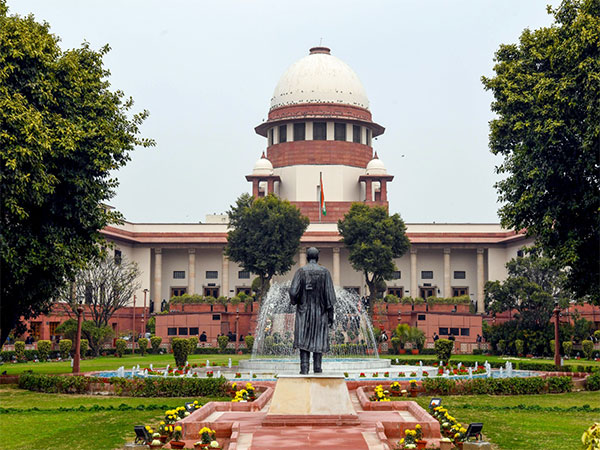
New Delhi, 23 February 2026: The Supreme Court of India on Monday declined to intervene against the Andhra Pradesh Government’s decision to appoint a one-man committee reviewing the investigation into alleged adulteration of ghee used in preparing the iconic Tirupati laddus a prasadam distributed at the Sri Venkateswara Swamy Temple in Tirumala dismissing claims that such an administrative review would interfere with the ongoing criminal probe.
A Bench led by Chief Justice of India Surya Kant along with Justice Joymala Bagchi heard a writ petition by senior politician Dr. Subramanian Swamy, challenging the State’s formation of a committee headed by retired IAS officer Dinesh Kumar. Swamy contended that the committee’s review of the Special Investigation Team (SIT) report instituted by the Supreme Court itself would overshadow and undermine the criminal investigation conducted under Court supervision.
On behalf of the State, senior counsel clarified that the SIT had completed its investigation and submitted its final report earlier this month. The SIT, constituted following the apex court’s order in October 2024, was tasked with probing allegations that adulterated or substandard ghee had been used in laddu preparation. It filed a chargesheet and supplemental materials in January 2026.
Solicitor General Tushar Mehta told the Court that the SIT’s findings included identification of administrative lapses unrelated to the criminal allegations, and that under procedural norms such lapses ought to be communicated to the State for corrective or disciplinary action. The State’s one-man committee is confined to such administrative issues and does not encroach upon criminal adjudication, he argued.
Swamy’s challenge also took aim at public statements made by Chief Minister N. Chandrababu Naidu on the issue comments which the Supreme Court had previously rebuked for being premature and potentially inflammatory before a full investigation was concluded.
Supreme Court’s Reasoning
The Bench refused to stay or quash the government order constituting the one-man committee. CJI Kant explained that the administrative inquiry does not overlap with or derail the criminal proceedings that began with the SIT’s chargesheet. Since the SIT has completed its mandate and submitted its final report, dual inquiries one criminal and one administrative can proceed concurrently without legal conflict.
“There is no conflict of interest or overlapping, and the scope of investigation/enquiry, having been well demarcated, shows that apprehension of the petitioner does not have a solid foundation,” the Court observed, permitting both processes to “continue strictly in accordance with the law.”
The controversy erupted in 2024 when CM Naidu alleged that ghee used for prasadam during the previous government’s tenure was adulterated including claims about the presence of animal fat sparking public outrage and political fallout. The Supreme Court, at an earlier stage, appointed an independent SIT to investigate the matter and reprimanded state leaders for issuing public statements ahead of verified facts.
The SIT’s final report tendered in January 2026 reportedly ruled out the presence of animal fat but documented procedural irregularities in procurement and quality control processes that may have allowed substandard or fake ghee to enter the supply chain. These findings prompted the Andhra Pradesh government to constitute the six-week review committee under retired IAS officer Dinesh Kumar to assess administrative culpability and recommend appropriate action against responsible officials and agencies.
The one-man committee has drawn sharp political criticism, particularly from the YSR Congress Party (YSRCP), which claims the move is a political tactic to derail the SIT’s findings and target opposition figures. Senior YSRCP leader B. Karunakar Reddy described the committee’s formation as tantamount to questioning the Supreme Court’s authority and warned it may serve “diversion politics” rather than genuine administrative accountability.
Meanwhile, debates over the matter have spilled into the Andhra Pradesh Legislative Council, reflecting deep divides over procurement irregularities, supplier links, and the sanctity of temple traditions amidst allegations that nearly ₹250 crore worth of adulterated ghee may have entered the TTD supply chain over multiple years.
The Supreme Court’s refusal to halt the one-man committee underscores a careful line drawn between criminal adjudication and administrative oversight. While the judiciary retains supervisory authority over criminal inquiry under its orders, administrative processes initiated by the State particularly when they are within clearly defined remit and do not conflict with ongoing proceedings may proceed without judicial restraint.
The decision reinforces the principle that overlapping jurisdiction alone does not automatically warrant judicial intervention, especially where parallel processes are properly confined and do not threaten the integrity of court-mandated investigations.
In permitting Andhra Pradesh’s administrative panel to function alongside the SIT’s completed criminal probe, the Supreme Court has balanced institutional autonomy with procedural safeguards. By delineating the respective scopes of inquiry, the apex court has signalled that administrative accountability mechanisms may operate independently so long as they do not intrude upon or dilute the outcomes of criminal justice processes duly instituted under judicial order.
The ruling is likely to shape how state-level administrative reviews of criminal investigations are legally perceived in future cases involving sensitive allegations with both legal and public faith dimensions
