


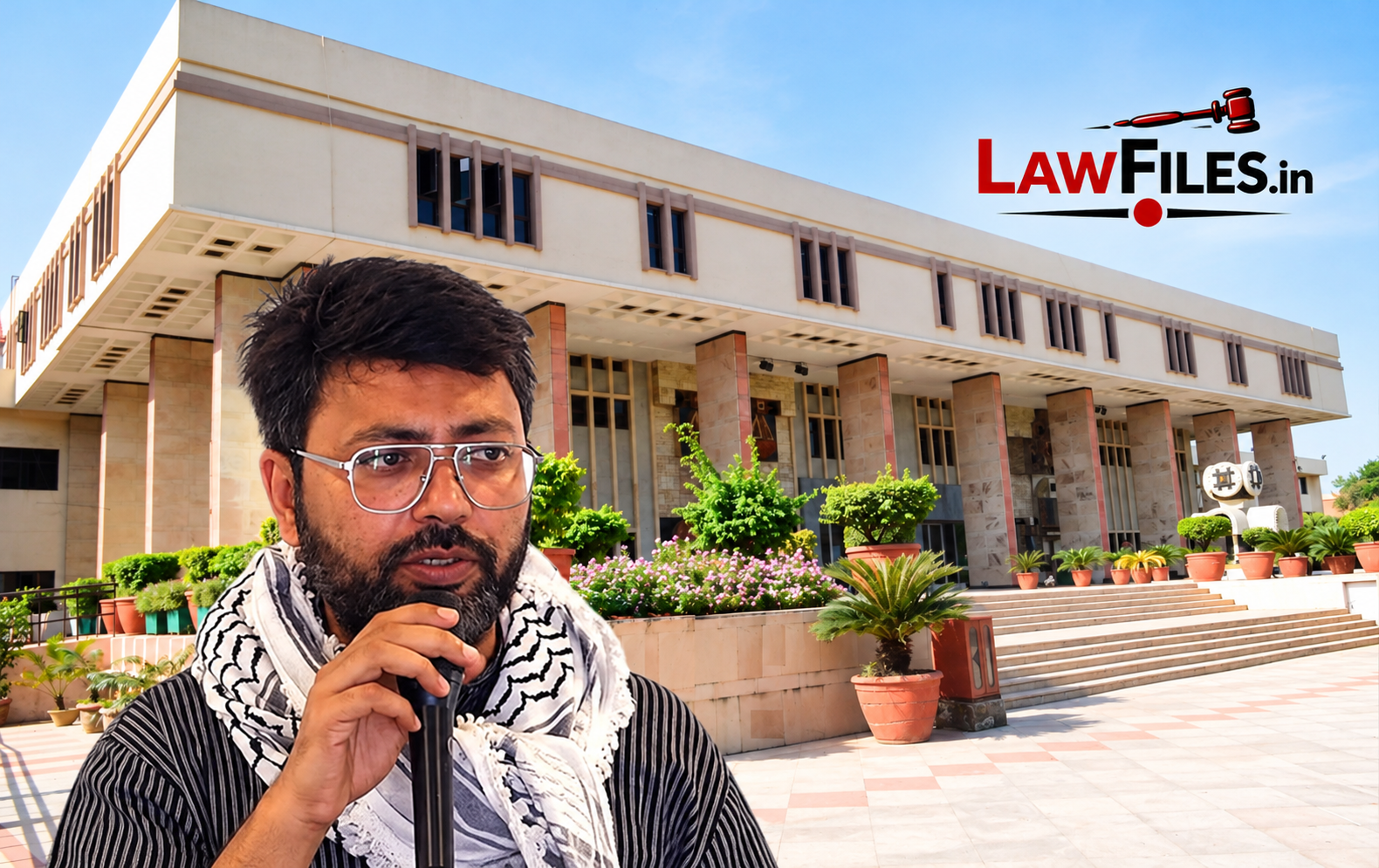
The Delhi High Court on October 12, 2026, questioned the Delhi Police over allegations that civil rights activist Mohammad Wasiq Nadeem Khan was prevented from leaving his residence-cum-office for several hours to stop him from attending a proposed demonstration at Jantar Mantar. While the Bench comprising Acting Chief Justice Nitin Wasudeo Sambre and Justice Sanjay Sharma expressed concern over the legal authority for the police presence at Khan’s premises, the controversy also raises a question that deserves equally careful examination: what happens when the police deny permission for a demonstration on public-order grounds, but receive information that a prospective participant may attend regardless? The legality of the police response cannot be assessed merely by referring to Khan’s status as a civil rights activist, just as the denial of permission cannot automatically legitimise every measure the police may adopt. Both the conduct of the individual concerned and the authority exercised by the State must be tested against the law. The Court issued notice and directed the police to file a status report within two weeks. It has not yet determined whether Khan was unlawfully confined or whether the police action was justified.
Khan, the National Secretary of the Association for Protection of Civil Rights (APCR) and associated with the United Against Hate initiative, approached the High Court alleging that police personnel from Shaheen Bagh Police Station remained at the Jamaat-e-Islami Hind headquarters in Abul Fazal Enclave, where his residence and office are located, from approximately 9:30 a.m. to 5:30 p.m. on September 29. According to his petition, their presence prevented him from attending a proposed demonstration at Jantar Mantar. He alleges that no written detention order was shown to him and that the police did not identify any legal provision under which his movement could be restricted. The petition also raises allegations of subsequent surveillance and repeated telephone calls from police personnel. These claims have prompted judicial scrutiny, but the police’s explanation for the visit and the circumstances in which Khan’s movement was allegedly restricted remain to be examined.
The police, as reported during the hearing, disputed the characterisation of the incident as a formal detention. Their counsel submitted that permission for the protest had been denied and that the police had received information suggesting Khan might nevertheless proceed to the venue. Counsel also stated that officers had remained at the premises but described their presence as an effort to restrict movement rather than an arrest. That explanation is central to the case. If the police believed that an individual intended to disregard a lawful restriction, they were entitled to consider preventive measures available under the law. But they were not entitled to invent an informal power of confinement simply because they anticipated a possible violation. The distinction between a legitimate preventive purpose and a legally authorised method of prevention is fundamental: a public-order objective cannot, by itself, supply a power that the law does not confer.
During the hearing, the Bench questioned the police about the basis for entering the premises and remaining there for several hours. It asked where the authority to confine Khan came from and why the police had not filed a status report despite having received an advance copy of the petition. The Court also recorded the police counsel’s assurance, based on instructions from the Station House Officer, that Khan would not receive further telephone calls from the police. These observations indicate concern about the method adopted by the authorities, but they should not be mistaken for a final finding that every aspect of the police action was unlawful. The Court has sought the police’s explanation precisely because the competing accounts must be examined before responsibility can be determined.
The public-order context, however, should not disappear from the analysis. The dispute arose against the backdrop of proposed demonstrations at Jantar Mantar concerning alleged attacks on religious sites and objections to the Special Intensive Revision (SIR) of electoral rolls. Khan’s petition alleges that he intended to participate in a peaceful demonstration. The police, on the other hand, stated that permission had been refused and that they had information suggesting he might attend despite that refusal. A person’s stated intention to participate in a peaceful protest does not establish that he intends to commit an offence; equally, describing a proposed gathering as peaceful does not eliminate the need to comply with lawful requirements governing the use of public spaces. The relevant facts include the terms of the permission decision, the applicable prohibitory orders, the information available to the police and whether any anticipated violation was supported by credible material.
The denial of permission for a demonstration is not itself proof of misconduct by the organiser or any prospective participant. Nor does it establish that a proposed gathering would necessarily have been unlawful in every respect. The police must act within the Constitution and applicable law when regulating assemblies, and their decisions remain open to judicial review. At the same time, the right to protest does not mean that an individual can unilaterally disregard every lawful condition imposed for public safety, traffic management or prevention of violence. If an organiser believes that a refusal is arbitrary, the appropriate course is to challenge it through available legal remedies, seek clarification or pursue a lawful alternative. The exercise of a fundamental right and compliance with valid procedural requirements are not inherently incompatible.
This is where the case calls for a more comprehensive assessment than a narrow contest over whether Khan was formally arrested. The police’s account suggests that officers acted on information that he might proceed to a demonstration despite the refusal of permission. That explanation must be tested rather than automatically accepted, but it should not be ignored either. The Court should be able to examine what information the police possessed, whether it was credible, whether the restriction was communicated to Khan, and why the officers considered it necessary to remain at his premises for such an extended period. If the police had legitimate grounds for preventive action, they must identify the lawful power under which they acted. If no such power existed, the public-order rationale cannot cure the defect.
The distinction between formal detention and effective restraint is particularly important. The police reportedly maintained that Khan was not arrested and that officers were merely present at the premises. Khan’s case is that their presence prevented him from leaving. The legal inquiry cannot end with the terminology chosen by either side. A person may be deprived of practical freedom of movement without being formally arrested, and the absence of an arrest memo does not automatically answer whether an unlawful restraint occurred. Conversely, the mere presence of police officers outside or within a building does not, without further evidence, conclusively establish confinement. The Court will need to examine whether Khan was expressly or implicitly prevented from leaving, whether officers used force or threats, what instructions they were following and whether their conduct had a coercive effect.
The constitutional framework protects both liberty and public order. Article 21 prohibits deprivation of personal liberty except according to procedure established by law. Articles 19(1)(a) and 19(1)(b) protect freedom of speech and peaceful assembly, while Articles 19(2) and 19(3) permit reasonable restrictions on specified grounds. These provisions do not make protest immune from regulation, but they require the State to justify restrictions through law and apply them proportionately. If the authorities had credible grounds to anticipate disorder, they could consider legally available preventive measures. They could not, however, convert a refusal of permission into an unrestricted power to keep a person inside his home. The constitutional question is therefore twofold: whether the proposed protest was subject to valid restrictions and whether the police response to the anticipated attendance was independently lawful.
The petition also challenges an undated prohibitory order allegedly restricting gatherings of five or more persons, demonstrations, dharnas, speeches and the carrying of banners or placards across the New Delhi District, including Jantar Mantar, without prior written permission. Khan contends that the restrictions are too broad and infringe constitutional freedoms. The legality of the order must be considered separately from the alleged conduct at his premises. A valid general restriction does not necessarily authorise every form of individual restraint, while an unlawful or disproportionate restriction may undermine the basis for enforcement action taken under it. The police must therefore establish not only that restrictions existed, but also that the measures adopted against Khan were permitted by the relevant law.
The broader context of protest management in Delhi also matters. Jantar Mantar has long been used as a designated site for demonstrations, but access is governed by administrative requirements intended to manage crowd size, traffic, security and the competing use of public space. Police authorities have publicly cited advance-notice requirements, previous non-compliance with protest guidelines and public-safety concerns in explaining the refusal of permission for certain recent demonstrations. Such considerations are relevant to the administration of public spaces, but they must be applied consistently and with reasons capable of scrutiny. A denial cannot become an instrument for suppressing a viewpoint, nor should the existence of a constitutional right be treated as permission to disregard every neutral and lawful condition. The rule of law requires both organisers and authorities to operate within the same legal framework.
The question of proportionality is particularly relevant where the police act before an anticipated event. Preventive policing is not inherently unlawful; authorities need not wait for violence to occur before addressing a credible threat. However, the measure adopted must bear a rational relationship to the risk and must not go further than reasonably necessary. If the police believed Khan would attend a demonstration, they needed to explain why monitoring, a lawful notice, a restriction at the venue or another legally available measure would not have been sufficient. If their only basis was the possibility that he might exercise his right to assemble, the justification would be considerably weaker. The evidence and the precise legal power relied upon will therefore be critical.
The allegations of repeated surveillance and telephone calls after September 29 raise a related issue. Khan’s counsel told the Court that he received calls seeking information about his movements, including when he intended to visit his unwell mother. The police denied that a continuing restraint had been imposed and pointed out that Khan had subsequently travelled to Kolkata. The Court recorded an assurance that further calls would not be made. Police inquiries may be legitimate when connected to a lawful investigation or a credible public-order concern, but repeated contact must not become a means of intimidating a person or discouraging lawful participation in public affairs. The purpose, frequency and legal basis of such contact require examination. Equally, the fact that a person is associated with a civil rights organisation does not place every interaction with the police beyond scrutiny; the facts must be assessed on their own merits.
The High Court’s notice-stage intervention should not be portrayed as a final endorsement of Khan’s version or as a finding that the police acted unlawfully. The Court has not yet decided the legality of the prohibitory order, the circumstances of the alleged confinement or the credibility of the police’s stated apprehension. Its oral questions focused on the authority for the police presence and the alleged restriction on movement. The wider questions concerning the protest application, the grounds for refusing permission and the information that prompted the police visit remain relevant to the complete adjudication of the dispute. A fair assessment must avoid treating the activist’s account as conclusive merely because he invokes fundamental rights, just as it must avoid treating the police’s assertion of preventive necessity as conclusive merely because it invokes public order.
Ultimately, the case presents two distinct responsibilities that cannot be collapsed into a single political narrative. Individuals seeking to organise or attend demonstrations must comply with lawful restrictions and pursue legal remedies when permission is refused. The police, for their part, must exercise preventive powers only within the authority granted by law and must not impose informal confinement as a substitute for prescribed legal procedures. The High Court has correctly placed the police’s explanation under scrutiny, but the final assessment must also examine the circumstances that led to the intervention, including the refusal of permission and the information said to indicate that Khan might proceed regardless. The status report due within two weeks should help establish those facts. The governing principle is not that activists are above the law or that the police are free to act on suspicion alone; it is that public order must be maintained through lawful, proportionate and accountable means, while individual conduct must likewise be assessed on evidence rather than assumption.
