


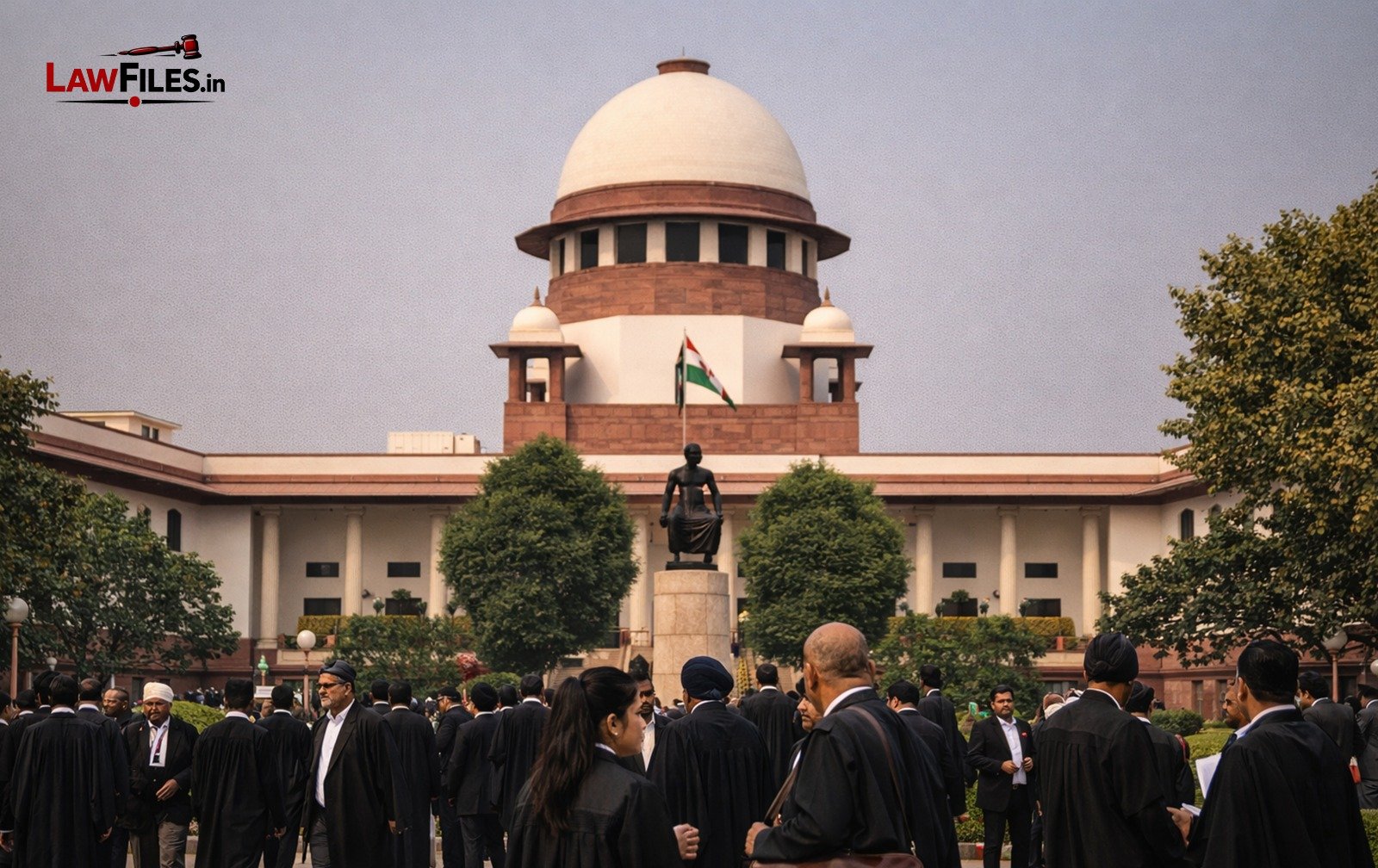
The Supreme Court on Thursday witnessed a pointed discussion on one of the most difficult questions in criminal jurisprudence: how far should judicial compassion extend when the crime is exceptionally brutal and the possibility of rehabilitation is weighed against the demands of deterrence, public safety and the rights of victims. During the hearing of a remission matter, a Bench comprising Justice Dipankar Datta and Justice Sheel Nagu questioned whether the Supreme Court’s repeated willingness to commute death sentences into life imprisonment, even in grave cases, may at times go too far. Justice Datta observed that the Court would eventually have to draw a line, remarking that the “forgiving nature” of the Supreme Court could not continue without limits when the country is confronting an increasing incidence of serious crimes. The observations were made orally during the hearing and do not constitute a new legal rule or a departure from the constitutional doctrine governing capital punishment. Yet they raise a fundamental question about the balance that Indian sentencing law is expected to maintain between the possibility of reforming an offender and the demands of justice in cases involving extreme violence.
The Bench’s concern was expressed while considering a matter concerning remission after conviction for murder. Justice Datta referred to an earlier case involving a father who had raped his elder daughter and murdered her, for which he was sentenced to life imprisonment on the basis of the testimony of the children’s mother. After subsequently coming out on parole, the man allegedly murdered his wife in the presence of the younger daughter, apparently in retaliation for her having testified against him. The subsequent murder case resulted in a death sentence based substantially on the testimony of the younger child. Justice Datta recalled that the Supreme Court nevertheless commuted that death sentence on the reasoning that the accused had not murdered the younger child. It was against this background that the Judge questioned whether the Court’s humanitarian approach could sometimes become disconnected from the continuing danger demonstrated by an offender’s subsequent conduct.
The significance of the observation lies in the fact that Indian death penalty jurisprudence does not treat the question as a simple contest between sympathy and severity. The constitutional position is much more structured. Article 21 protects life and personal liberty, and the Supreme Court has repeatedly held that deprivation of life through capital punishment is constitutionally permissible only within the narrow framework developed through judicial precedent. In Bachan Singh v. State of Punjab, the Constitution Bench upheld the constitutional validity of the death penalty but confined its imposition to the “rarest of rare” cases where the alternative option of life imprisonment is unquestionably foreclosed. The Court subsequently explained the aggravating and mitigating circumstances relevant to that determination in Machhi Singh v. State of Punjab. Capital punishment therefore begins from an exceptional constitutional position rather than from a presumption that every brutal murder deserves death.
That framework itself contains an inherent tension. The “rarest of rare” doctrine requires the Court to consider not merely the brutality of the offence but also the possibility that the offender can be reformed and rehabilitated. The sentencing exercise consequently looks in two directions simultaneously: towards the crime and its impact, and towards the offender and his capacity for transformation. Over the years, the Supreme Court has repeatedly emphasised that a death sentence cannot be imposed merely because the crime has generated public outrage. At the same time, the Court has also recognised that the rights and dignity of victims, the interests of society and the need to protect the public cannot disappear from the sentencing equation simply because the offender presents mitigating circumstances.
The Court’s approach to commutation after a death sentence has been confirmed introduces another layer to this already complex framework. In cases involving prolonged incarceration on death row, undue delay in deciding mercy petitions, mental illness and other supervening circumstances, the Supreme Court has held that a sentence initially found to be constitutionally permissible may subsequently have to be commuted. The three-Judge Bench judgment in Shatrughan Chauhan v. Union of India is particularly important in this regard. It recognised that extraordinary delay in the disposal of mercy petitions can itself become relevant to the constitutional validity of continued execution because prolonged uncertainty and the psychological consequences of remaining under a sentence of death may amount to cruel and inhuman treatment. The doctrine therefore does not reward the crime; it responds to circumstances arising after the original sentencing exercise.
Justice Datta’s observations, however, appear to be directed towards a different concern: whether the humanitarian principle developed to prevent arbitrary or disproportionate executions can sometimes result in an excessive judicial preference for commutation even where the circumstances of the offender and the nature of the crime continue to make the case exceptionally grave. That is a legitimate jurisprudential question, although it must be approached with considerable care. The constitutional commitment to life cannot be diluted simply because crime statistics appear troubling, just as the existence of violent crime cannot by itself justify expanding capital punishment beyond the boundaries laid down by Bachan Singh. The central question must remain whether the sentencing framework is being applied consistently, transparently and with adequate regard to both mitigating and aggravating circumstances.
The distinction between commutation, remission and pardon is particularly important in understanding the debate. Commutation substitutes one form of punishment for another—for example, replacing a death sentence with life imprisonment. Remission, by contrast, reduces the quantum of punishment without altering the nature of the sentence. Pardon operates at a still different level because it can affect the conviction itself in the constitutional sense. Articles 72 and 161 confer clemency powers upon the President and Governor respectively, while statutory remission provisions operate within the criminal justice framework. The Supreme Court has repeatedly emphasised that these powers cannot simply be treated as interchangeable mechanisms for releasing prisoners.
The recent jurisprudence on life imprisonment for the remainder of a convict’s natural life is also relevant. In July 2026, the Supreme Court reaffirmed that courts can, in appropriate cases, impose a sentence of imprisonment for the remainder of natural life, particularly where ordinary life imprisonment subject to statutory remission would not adequately address the circumstances of the offence. At the same time, the Court clarified that such a sentence is distinct from an ordinary life sentence and that the constitutional clemency powers of the President and Governor remain unaffected. This line of jurisprudence demonstrates that the Court is not compelled to choose only between death and ordinary life imprisonment. There exists an intermediate sentencing space capable of addressing exceptionally grave crimes while avoiding the irreversible nature of execution.
The development of this intermediate category is important to the concern expressed by Justice Datta. The judicial system’s response to a heinous crime need not necessarily be reduced to an all-or-nothing choice between execution and a sentence that may eventually result in premature release. In appropriate cases, a court can impose imprisonment for the remainder of natural life or a substantial fixed period without statutory remission, subject to the constitutional and statutory framework applicable to the case. The Supreme Court reiterated this principle as recently as September 2026 in Naval Kishore v. State of Punjab, where it modified a natural-life sentence into 25 years’ imprisonment without statutory remission after considering the gravity of the crime, the fact that three persons including two children had been killed, the period already undergone and the prisoners’ conduct.
This sentencing flexibility potentially provides a more nuanced answer to the problem identified during Thursday’s hearing. If the Court believes that ordinary life imprisonment with the possibility of remission does not sufficiently reflect the gravity of a particular offence, it does not necessarily follow that the death penalty must be imposed. The constitutional jurisprudence has gradually developed sentencing categories that attempt to preserve proportionality while ensuring that the punishment remains meaningful. Such an approach also avoids making the possibility of rehabilitation entirely irrelevant while ensuring that rehabilitation does not become an automatic passport to early release.
The difficulty, however, is that remission itself is not an entitlement merely because a convict has spent a certain period in prison. The executive authority considering premature release must examine the applicable policy, the nature of the crime, the convict’s conduct, the possibility of reoffending, the prospects of rehabilitation and other relevant factors. The Supreme Court’s 2026 decision in Rohit Chaturvedi v. State of Uttarakhand is illustrative. The Court held that remission decisions must disclose reasons and cannot be based mechanically upon the heinousness of the original offence alone. At the same time, the authority is entitled—indeed required—to consider the present and future circumstances of the prisoner, including conduct and prospects of reintegration.
The constitutional problem, therefore, cannot be solved by adopting either absolute severity or unconditional compassion. If every death sentence is commuted merely because the offender has spent a substantial period in custody or has displayed good conduct, the deterrent and retributive dimensions of criminal law could become seriously weakened in the most exceptional cases. Conversely, if every particularly brutal crime is treated as automatically deserving of execution or permanent incarceration, the individualised sentencing process mandated by constitutional jurisprudence would be undermined. The law requires a judicial assessment that remains sensitive to both extremes.
Justice Datta’s reference to the increasing incidence of serious crimes should consequently be understood as a concern about the practical consequences of sentencing doctrine rather than as a declaration that crime rates can determine constitutional rights. Courts cannot amend the threshold for capital punishment merely because society is experiencing more violent offences. The “rarest of rare” standard is a constitutional sentencing principle and cannot fluctuate with public anxiety. At the same time, the Court is entitled to examine whether its own precedents are producing unintended consequences, particularly where subsequent conduct by a released or prematurely released offender raises questions about whether the assessment of reformation was sufficiently grounded in evidence.
That issue is particularly sensitive because the concept of rehabilitation can sometimes become abstract in death penalty jurisprudence. The possibility of reform is not a sentimental assumption that every person is capable of change merely because time has passed. It is ordinarily expected to be assessed from evidence concerning the offender’s background, psychological condition, behaviour in custody, prospects of rehabilitation and other circumstances. The Supreme Court has, in several cases, treated good prison conduct and the absence of previous criminal antecedents as mitigating factors. But the existence of a mitigating factor does not necessarily mean that the aggravating circumstances disappear. A mature sentencing analysis must weigh them against each other rather than allowing one factor to automatically determine the outcome.
The reference to the earlier father-and-family case makes this tension especially stark. If an offender demonstrates subsequent violent conduct after having already received the benefit of a lesser sentence, the fact of that subsequent conduct may legitimately raise questions about whether the earlier assessment of reformability was sound. Yet a later offence cannot retrospectively transform an earlier judicial decision into an error merely because the offender subsequently committed another crime. Courts must judge the legality and proportionality of a sentence on the record and circumstances available to them at the relevant time. Otherwise, sentencing would become hostage to hindsight. The proper lesson from such cases is therefore not that commutation itself is wrong, but that the evidentiary basis for assessing rehabilitation must be rigorous.
There is also a victim-centred dimension to the debate that cannot be ignored. Indian criminal jurisprudence has progressively moved away from viewing sentencing solely as a contest between the State and the offender. Victims and their families have acquired a more visible place in the criminal justice process. The psychological, financial and social consequences of a brutal crime may continue for decades after the conviction. When a death sentence is commuted or a convict is released prematurely, the affected family may experience the decision not as an abstract exercise in constitutional compassion but as a reopening of the trauma associated with the offence. This does not mean that victim sentiment should determine punishment, but it does mean that victims’ interests form part of the broader justice calculus.
At the same time, the constitutional protection of prisoners cannot be reduced simply because the crime is abhorrent. The Supreme Court has repeatedly recognised that a convict does not cease to be a constitutional person upon conviction. The State’s authority to punish is itself subject to law. This principle is particularly important in death penalty cases because the punishment is irreversible. The possibility of judicial error, the fallibility of human institutions and the inability to restore life after execution are precisely why constitutional courts have adopted such a demanding standard before permitting capital punishment.
The Court’s recent jurisprudence shows that this caution has not translated into an unrestricted policy of release. In Ramasrey @ Fakkad v. State of Uttar Pradesh, decided in July 2026, the Supreme Court upheld sentences requiring imprisonment for the remainder of natural life and rejected attempts to use Article 32 as a routine route for reopening executive mercy decisions. The Court reiterated that judicial review of presidential clemency is limited and that the judiciary cannot simply substitute its own assessment for that of the constitutional authority.
The present discussion therefore raises a deeper question about institutional roles. The judiciary determines guilt and ordinarily determines the sentence within the statutory and constitutional framework. The executive possesses distinct powers of remission and clemency. The President and Governor exercise constitutional powers under Articles 72 and 161, while governments exercise statutory powers in accordance with the applicable remission regime. The Supreme Court’s concern about excessive forgiveness cannot mean that the constitutional allocation of these powers is displaced. Rather, it calls for each authority to exercise its own jurisdiction with careful attention to the consequences of the decision.
What makes Justice Datta’s remarks noteworthy is therefore not that the Supreme Court has altered the law of capital punishment. It has not. The observations were made orally during a hearing and should not be treated as a judgment overruling Bachan Singh, Shatrughan Chauhan, Sriharan or the Court’s other death penalty precedents. Their significance lies in opening an institutional conversation about whether the existing balance between punishment, rehabilitation and public protection is working as intended. The remark that the Court’s “forgiving nature has to come to an end somewhere” is best understood as a provocation for deeper examination rather than a declaration of a new legal doctrine.
Ultimately, the Indian constitutional approach to punishment cannot be reduced to either vengeance or forgiveness. The legitimacy of criminal justice lies precisely in its ability to punish grave wrongdoing without abandoning the constitutional humanity of the person who committed it. The challenge is most acute where the offence is so brutal that ordinary notions of rehabilitation appear difficult to reconcile with the interests of society and the victims. In such cases, the Court must ask not only whether the offender can theoretically reform, but whether the evidence justifies that conclusion, whether the punishment remains proportionate, whether the victims’ interests have been meaningfully considered and whether public safety can reasonably be secured. Justice Datta’s intervention brings those questions sharply back into focus. The ultimate constitutional task is not to choose between compassion and severity, but to ensure that compassion does not become automatic, severity does not become reflexive, and both remain governed by reasoned judicial assessment rather than emotion, public pressure or abstract notions of mercy.
