


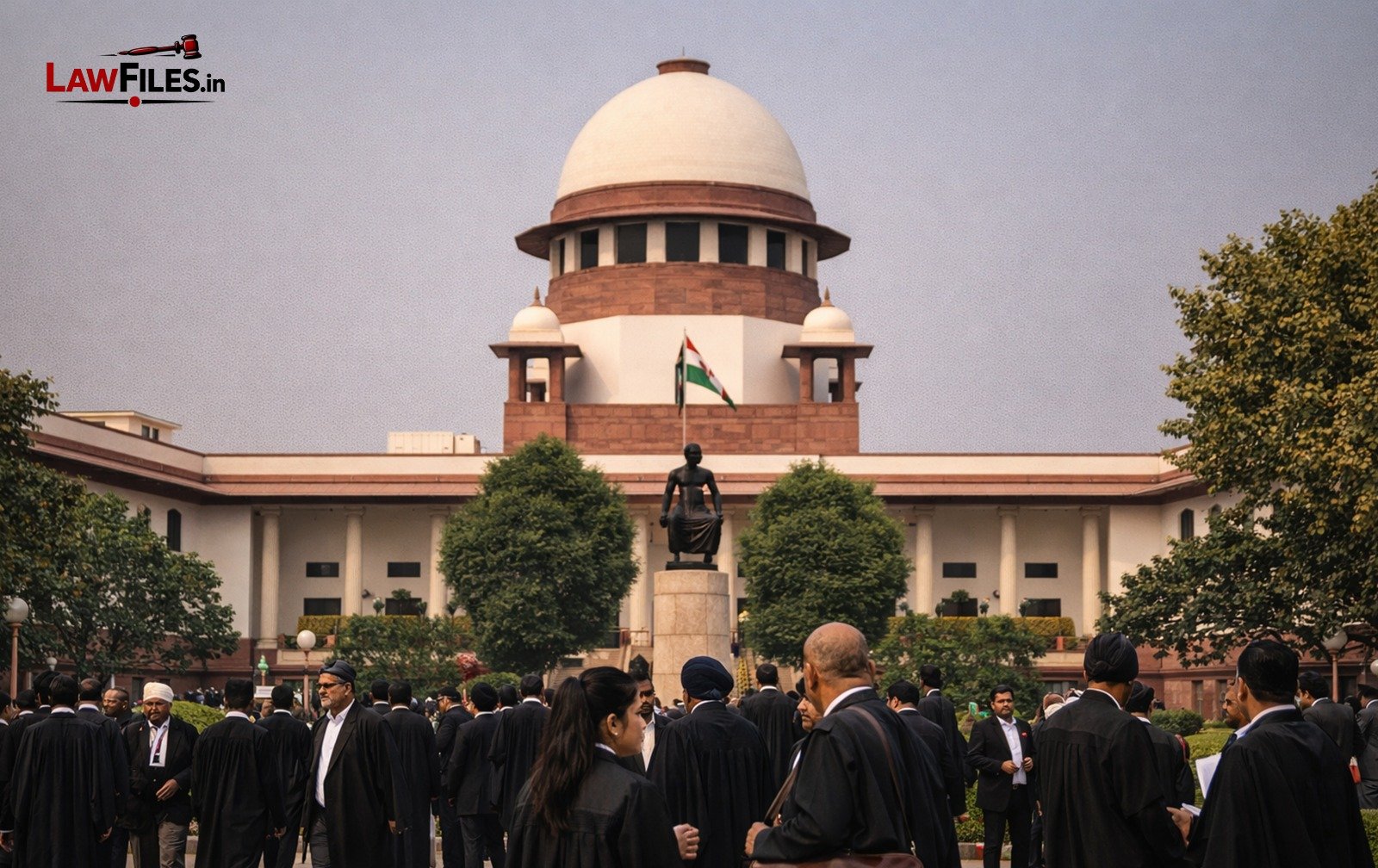
The Supreme Court has delivered an important reminder that access to justice is not satisfied merely by placing a lawyer’s name on the record. In a judgment arising from a criminal appeal against acquittal in a dowry-death case, a Bench comprising Justice J.B. Pardiwala and Justice K. Vinod Chandran held that constitutional courts must remain sensitive to the difficulties faced by litigants and, where legal assistance is inadequate, must take affirmative steps to ensure that the litigant receives meaningful and competent representation. The Court accordingly set aside a Rajasthan High Court order that had dismissed an appeal because it was filed 19 days late without a separate application seeking condonation of delay, particularly when the appellant was not represented before the High Court.
The case, Ummed Devi v. State of Rajasthan and Another, arose from a criminal prosecution involving allegations of dowry demand, harassment and the death of the appellant’s daughter. Following the acquittal of the accused, the victim’s mother sought to challenge that decision before the Rajasthan High Court. The appeal, however, was presented with a delay of 19 days and was not accompanied by an application explaining the delay and seeking its condonation. When the matter came before the High Court, there was also no effective representation on behalf of the appellant.
The High Court consequently dismissed the appeal on the procedural ground that the statutory requirement concerning limitation had not been complied with. The dismissal meant that the merits of the challenge to the acquittal were never examined. The Supreme Court was therefore called upon not merely to decide whether the procedural requirement had technically been violated, but whether that technical defect should have been permitted to terminate the appellant’s substantive challenge in circumstances where she was not adequately represented.
The Supreme Court accepted at the outset that an application for condonation of delay ought ordinarily to accompany an appeal filed beyond the prescribed period. The Bench did not suggest that limitation provisions are irrelevant or that litigants are free to disregard procedural requirements. What the Court found problematic was the manner in which the requirement had been applied in the particular circumstances. A procedural rule designed to regulate litigation, the Court effectively emphasised, cannot be applied mechanically where doing so would prevent a litigant from receiving a meaningful opportunity to have the grievance examined.
The crucial factor was the absence of adequate legal assistance. The Court noted that when the appellant’s matter was listed before the High Court, nobody appeared for her. In such circumstances, the Court held that the High Court ought to have considered appointing an amicus curiae or an advocate through the Legal Services Authority rather than allowing the matter to fail solely because the litigant’s legal representation had broken down.
This observation is considerably broader than a direction concerning one delayed appeal. It places a positive responsibility upon constitutional courts to ensure that access to justice is effective rather than merely formal. A litigant may technically have the right to approach a court, but that right becomes hollow if the person does not have competent assistance to understand limitation requirements, prepare the necessary applications, present the case and respond to objections raised by the opposing side.
The judgment therefore reinforces a distinction between legal representation and effective legal assistance. The presence of an advocate on paper cannot by itself establish that the litigant has received meaningful access to justice. A lawyer who is unavailable, unprepared or otherwise incapable of effectively representing the litigant may leave the individual in substantially the same position as an unrepresented party. The constitutional obligation identified by the Supreme Court is consequently concerned with the quality and effectiveness of assistance, not merely its formal existence.
The principle has particular importance in criminal proceedings. An acquittal appeal can have profound consequences for a victim and the accused alike. While an accused is protected by the presumption of innocence and the procedural safeguards governing criminal prosecution, a victim or victim’s family also has statutory and constitutional interests in seeking legal remedies against an acquittal. If such a challenge is terminated without examination because the victim’s legal representative failed to take a basic procedural step, the justice system risks punishing the litigant for the shortcomings of the legal assistance available to her.
The Supreme Court’s approach is rooted in the broader constitutional conception of access to justice under Article 21. The right to life and personal liberty has long been interpreted to encompass procedural fairness, and the Court’s jurisprudence has recognised legal assistance as an essential component of a fair legal process in appropriate circumstances. The Court has previously held that free legal assistance for persons unable to afford representation is not merely a matter of governmental charity but forms part of the constitutional guarantee of a fair procedure. (api.sci.gov.in)
The constitutional foundation is reinforced by Article 39A, which directs the State to secure equal justice and provide free legal aid so that opportunities for securing justice are not denied because of economic or other disabilities. Although the Directive Principles are not independently enforceable in the same manner as fundamental rights, Article 39A has played an important role in the development of India’s legal-aid architecture and has informed judicial interpretation of access to justice.
The Legal Services Authorities Act, 1987 subsequently institutionalised this constitutional commitment by establishing a framework for legal services authorities at the national, state, district and subordinate levels. The statutory scheme is not restricted to placing an advocate before a litigant. Its broader objective is to make justice accessible to persons who would otherwise face substantial barriers in approaching courts and tribunals.
The Supreme Court’s observation is therefore consistent with the philosophy underlying the legal-services system. Legal aid must be competent enough to enable the litigant to actually use the judicial process. The existence of a panel of lawyers or a formal appointment mechanism is not sufficient if the representation ultimately fails to protect the litigant’s interests.
The importance of this principle becomes clearer when viewed against the realities of litigation. Courts operate through complex procedural rules concerning limitation, court fees, appeals, pleadings, affidavits and applications. A legally trained advocate may regard the filing of a condonation application as routine. A litigant without legal knowledge may not even understand that a delay of a few days requires a separate procedural step. Treating the omission as fatal without examining whether the litigant had meaningful legal assistance can transform procedural law into a barrier to substantive justice.
The Supreme Court did not, however, abolish the discipline of limitation. This is an important qualification. Limitation law serves legitimate purposes: it prevents stale claims, provides finality to litigation and protects parties from indefinite exposure to legal proceedings. Courts cannot simply ignore statutory periods whenever a litigant invokes hardship. What the judgment emphasises is that the application of limitation must be informed by the circumstances of the case and by the court’s responsibility to prevent genuine litigants from being deprived of adjudication because of failures attributable to inadequate representation.
The 19-day delay was particularly relevant to the Court’s assessment. The Bench described it as minimal in the overall circumstances and considered that the High Court should have allowed the matter to be dealt with on its merits. The Court therefore did not hold that every delayed appeal must automatically be entertained. Instead, it examined the short duration of the delay together with the absence of representation and the nature of the underlying criminal case.
This is an example of the distinction between procedural compliance and procedural rigidity. A procedural requirement remains valid, but its enforcement must serve the larger purpose of adjudication rather than defeat it. Courts are not merely administrative registries responsible for rejecting defective filings; constitutional courts have a broader responsibility to ensure that access to the judicial process remains meaningful.
The Supreme Court’s direction to appoint an amicus or Legal Services Authority advocate where necessary is particularly significant. It places the court in a more active role when it becomes apparent that an unrepresented litigant may suffer serious prejudice. The court is not expected to become the litigant’s advocate, but it cannot remain indifferent when the absence of legal assistance threatens to extinguish the litigant’s right to be heard.
This does not mean that courts must routinely rescue parties from every procedural mistake. Such an approach could undermine procedural discipline and encourage carelessness. The duty identified by the Court arises particularly where the surrounding circumstances demonstrate that the litigant is inadequately represented and that the absence of effective assistance may result in a serious denial of justice.
The judgment therefore raises an important institutional question concerning the functioning of legal-services authorities. If courts are expected to call upon Legal Services Authorities whenever representation is inadequate, those authorities must have sufficient panels of advocates capable of handling complex criminal, civil and constitutional litigation. The quality of the lawyer appointed becomes as important as the existence of the appointment itself.
This is consistent with the National Legal Services Authority’s regulatory framework, which expressly contemplates monitoring the performance of panel lawyers and permits action where a lawyer is not performing satisfactorily or acts contrary to the objectives of the legal-services legislation. The legal-aid system, therefore, is increasingly moving away from the idea that “free” representation can mean representation of an inferior standard.
The Supreme Court itself has an established legal-aid mechanism through the Supreme Court Legal Services Committee. Its official framework provides for panel advocates and access to legal assistance for eligible persons, while the Court has repeatedly emphasised that financial inability should not become an insurmountable barrier to approaching the country’s highest court.
The broader jurisprudence also demonstrates that legal aid is inseparable from the fairness of the adjudicatory process. In cases such as Madhav Hayawadanrao Hoskot v. State of Maharashtra and Suk Das v. Union Territory of Arunachal Pradesh, the Supreme Court established that the right to legal assistance has constitutional significance, particularly when the individual’s liberty or ability to effectively participate in proceedings is at stake. The present decision extends the same justice-oriented philosophy into the context of an inadequately represented litigant before a constitutional court.
The significance of the ruling is also heightened by the fact that the appellant was the mother of a deceased woman in a case involving allegations of dowry-related harassment and death. Dowry-death prosecutions occupy a sensitive position within criminal law because they often involve family relationships, allegations of sustained harassment and evidence that may emerge from circumstances surrounding the victim’s death. The victim’s family may already be dealing with considerable emotional and social difficulties while navigating a complex criminal process.
In such circumstances, a court’s insistence upon procedural perfection from an inadequately represented litigant can produce a particularly harsh result. The Supreme Court’s intervention recognises that the justice system must account for the actual conditions in which litigants approach courts. Legal rules cannot be applied as though every party possesses the same resources, knowledge and ability to navigate procedural requirements.
At the same time, the judgment should not be interpreted as creating a special procedural regime for victims of dowry death. The principle articulated by the Bench expressly extends to litigants generally, whether they are victims or accused persons. The Court stated that constitutional courts have a duty to provide quality legal assistance where existing assistance is inadequate, irrespective of the side of the criminal process on which the litigant stands.
This is constitutionally important because access to justice cannot depend upon the court agreeing with the litigant’s cause. The State’s obligation to provide fair legal assistance exists precisely because justice must be administered impartially. An accused person facing imprisonment and a victim seeking a legal remedy may occupy different procedural positions, but both are entitled to meaningful access to the legal process.
The Court’s approach also reinforces the principle that an adversarial justice system works only when both sides are capable of participating effectively. Courts are designed to adjudicate disputes between parties presenting competing cases. If one side is effectively absent because of inadequate representation, the adversarial process becomes structurally distorted. The judge may remain formally neutral, but the quality of adjudication can suffer.
The decision is therefore not merely about leniency towards a delayed appeal. It is about the institutional responsibility of courts to preserve the conditions necessary for a fair hearing. When the legal assistance available to a litigant is manifestly inadequate, a constitutional court must be prepared to intervene to prevent the procedural machinery from operating unjustly.
The judgment also provides a useful reminder about the role of an amicus curiae. An amicus is not ordinarily a substitute for a party’s advocate in every case. But where a litigant is unrepresented and a matter involving substantial legal or factual issues is before the court, appointment of an amicus can ensure that the court receives meaningful assistance before deciding the dispute. In the present case, such an appointment could have allowed the High Court to address the delay question properly rather than dismissing the appeal without reaching its merits.
The Court’s direction to restore the appeal to the High Court is consequently significant. The Supreme Court did not itself determine whether the acquittal was legally correct. Instead, it restored the appeal and requested the High Court to hear it on merits. This preserves the appellate court’s institutional role and ensures that the accused’s acquittal remains subject to the ordinary appellate process rather than being disturbed by the Supreme Court without substantive examination.
That procedural restraint is important. The Supreme Court’s concern was not that the accused should necessarily be convicted or that the victim’s allegations should necessarily be accepted. Its concern was that the appeal should receive the judicial consideration it was denied because of a procedural defect in circumstances where the appellant lacked effective representation.
The case therefore illustrates a recurring theme in constitutional adjudication: access to justice is not equivalent to access to the courthouse door. A person may technically be permitted to file a case, but meaningful access requires the ability to understand the procedure, present the case and receive a decision based upon the substance of the dispute where circumstances warrant such consideration.
The decision also has implications for High Court registry and listing practices. When an unrepresented litigant appears before a constitutional court in a matter involving serious criminal consequences, the system should have mechanisms to identify whether legal assistance is required. Such institutional screening could prevent cases from being dismissed merely because a litigant failed to understand a procedural requirement that a lawyer would ordinarily have addressed.
There is therefore a strong case for strengthening the interface between High Courts and State Legal Services Authorities. Instead of treating legal aid as something that litigants must discover and request themselves, courts can proactively identify situations where representation is clearly inadequate. This would move the legal-aid system closer to the constitutional vision of equal access to justice.
The judgment also has a subtle message for the Bar. Legal representation carries a professional responsibility that extends beyond appearing when a case is called. Counsel must understand limitation requirements, ensure that necessary applications accompany appeals and remain attentive to the procedural steps necessary to preserve a client’s remedy. A litigant should not lose access to appellate adjudication merely because basic professional responsibilities were not discharged.
That does not mean that every procedural error by counsel should automatically be excused. Courts must still examine the explanation for delay and the circumstances of each case. But where the litigant is effectively abandoned or unrepresented, the court must consider whether the procedural default genuinely reflects the litigant’s own conduct or is instead a consequence of inadequate legal assistance.
The decision consequently strikes a careful balance between two competing judicial values. On one side stands the need for procedural discipline and respect for limitation statutes. On the other stands the constitutional obligation to ensure that procedure does not become an instrument of injustice. The Supreme Court has placed the present case firmly within the second category because of the combination of a short delay, the seriousness of the underlying allegations and the absence of representation.
The ruling is especially relevant in a justice system where procedural complexity can disproportionately affect vulnerable litigants. Court processes increasingly involve electronic filing, strict formatting requirements, multiple procedural applications and technical rules concerning appeals. These systems may improve efficiency for represented litigants but can become formidable barriers for individuals who lack adequate assistance.
The answer cannot simply be to eliminate procedure. Procedural rules are necessary for the orderly functioning of courts. The more sustainable constitutional approach is to ensure that procedural requirements are accompanied by meaningful access to competent assistance. In that sense, legal aid and procedural justice are not competing objectives; effective legal aid is one of the mechanisms through which procedural justice becomes achievable.
The Supreme Court’s intervention also reflects a broader judicial philosophy that constitutional courts should not lose sight of the human being behind the litigation. The appellant in the present case was not merely a litigant who had missed a filing requirement. She was a mother seeking appellate consideration after the acquittal of persons accused in connection with her daughter’s death. That context did not automatically entitle her to succeed, but it justified ensuring that her appeal was not extinguished without an opportunity for proper adjudication.
Ultimately, the Supreme Court’s ruling in Ummed Devi v. State of Rajasthan does not weaken limitation law or excuse every procedural defect. Instead, it establishes a more fundamental proposition: procedural rules must operate within a justice system that remains conscious of unequal access to legal knowledge and representation. Where a constitutional court finds that a litigant lacks adequate legal assistance, particularly in a matter carrying serious consequences, it cannot mechanically allow that deficiency to determine the outcome. The High Court should have ensured that the appellant had appropriate representation, considered the short delay in its proper context and then decided the appeal on its merits. By restoring the proceedings, the Supreme Court has reinforced the constitutional idea that justice is not achieved merely because a court follows procedure; justice requires that the litigant be given a genuine and effective opportunity to participate in that procedure. In a system founded upon equal access to justice, a procedural lapse may be corrected, a delay may be explained and representation may be provided—but an unrepresented litigant should not be left to bear the irreversible consequences of a legal system she was never adequately equipped to navigate.
