


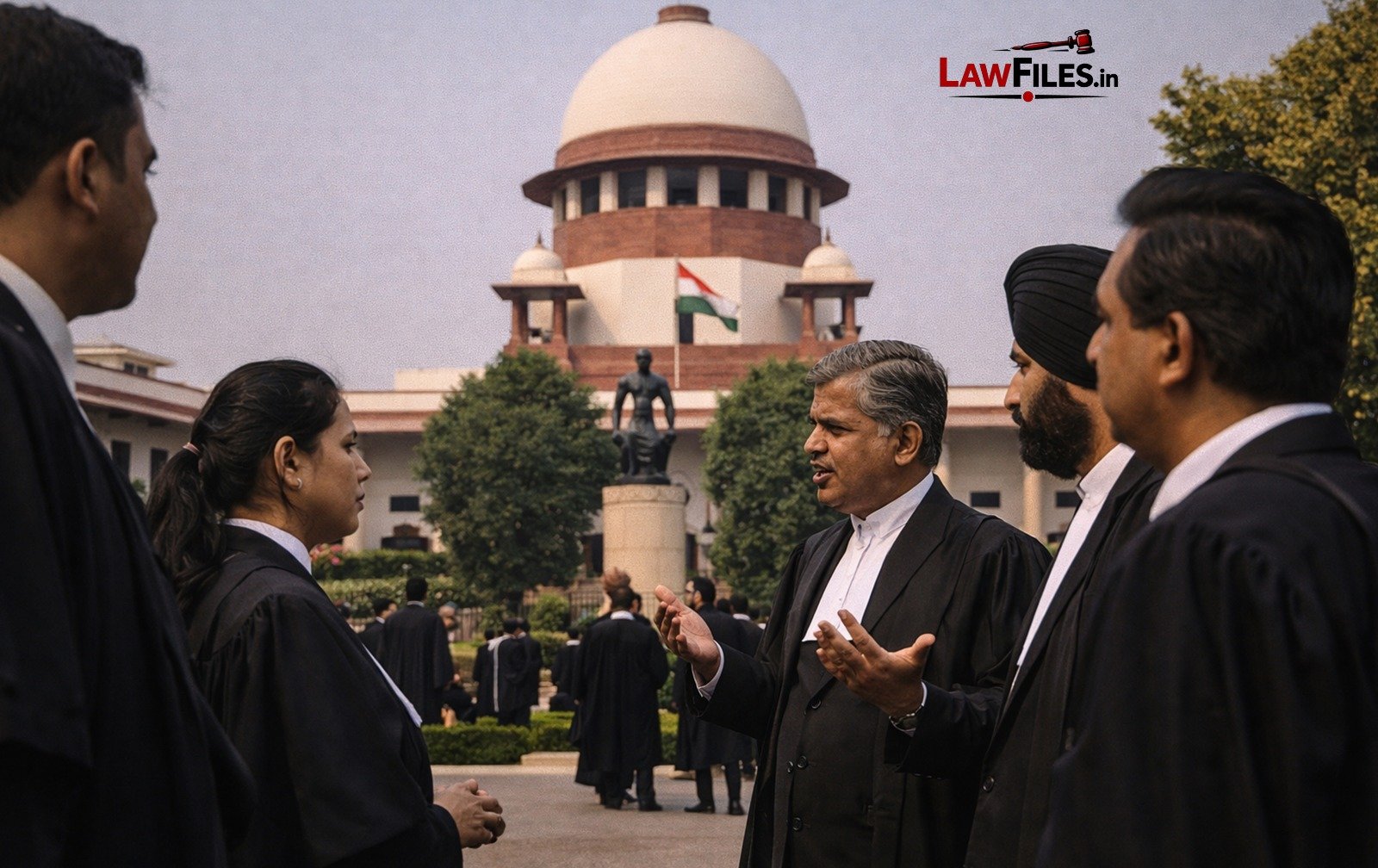
In a significant decision touching the delicate constitutional balance between judicial accountability and judicial independence, the Supreme Court of India dismissed a petition seeking registration of a First Information Report (FIR) against Justice Yashwant Varma in connection with the alleged cash recovery controversy. While declining to entertain the prayer for immediate criminal prosecution, the Court reiterated that allegations against members of the higher judiciary must be addressed within the constitutional and institutional framework specifically evolved for that purpose and cannot be permitted to circumvent established judicial safeguards. The ruling is of considerable constitutional importance because it reaffirms that the independence of the judiciary is not merely an institutional privilege but a structural requirement of the Constitution, and that accountability of constitutional functionaries must proceed through legally recognised procedures rather than public pressure or extraordinary judicial directions.
The petition before the Supreme Court sought a direction for registration of an FIR against Justice Yashwant Varma in relation to allegations that had attracted considerable public attention. The petitioner argued that ordinary criminal law should apply uniformly and that an FIR ought to be directed without awaiting any internal institutional process. The Union and other respondents, however, maintained that the Constitution and settled judicial precedents prescribe a distinct legal framework for dealing with allegations involving sitting judges of constitutional courts. After considering the submissions, the Supreme Court declined to grant the relief sought and dismissed the petition, thereby refusing to direct registration of a criminal case through its extraordinary jurisdiction.
The proceedings are legally significant because they revisit one of the most sensitive constitutional questions in Indian public law—how should allegations against judges of the constitutional courts be investigated without compromising either judicial independence or judicial accountability? Unlike ordinary public officials, judges of the High Courts and the Supreme Court occupy a unique constitutional position. They are entrusted with deciding disputes involving governments, constitutional authorities and powerful institutions. The framers of the Constitution therefore designed multiple safeguards to ensure that judges remain free from external pressures capable of influencing judicial decision-making. At the same time, these safeguards were never intended to create immunity from accountability. The challenge lies in preserving both principles simultaneously.
While dismissing the plea, the Supreme Court implicitly reaffirmed the jurisprudence flowing from the landmark decision in K. Veeraswami v. Union of India (1991). In that case, a Constitution Bench recognised that judges are not above the law and may be subjected to criminal investigation where circumstances so warrant. However, the Court simultaneously evolved procedural safeguards requiring that no criminal case against a sitting High Court or Supreme Court judge should ordinarily proceed without the prior approval of the Chief Justice of India. The rationale behind this safeguard is institutional rather than personal. It seeks to prevent frivolous, politically motivated or retaliatory criminal proceedings from being used as instruments to intimidate judges while preserving the possibility of genuine prosecution where credible material exists.
The present proceedings therefore do not concern the existence or absence of criminal liability itself. Instead, they concern the constitutional procedure through which allegations against members of the higher judiciary must be processed. The Supreme Court has, over several decades, developed an in-house mechanism for examining complaints against judges. This procedure permits institutional scrutiny of allegations before determining whether further constitutional or legal action becomes necessary. The Court’s refusal to directly order an FIR reinforces the principle that extraordinary writ jurisdiction cannot ordinarily be employed to bypass these constitutionally evolved institutional safeguards.
Another significant aspect of the ruling concerns the doctrine of separation of powers. Criminal investigation ordinarily falls within the executive domain, while judicial review examines the legality of executive action. If constitutional courts were routinely directed to order registration of FIRs against sitting judges without following established constitutional procedures, the delicate equilibrium between judicial independence and executive investigation could become vulnerable to abuse. The Court’s approach therefore reflects an institutional concern that mechanisms designed to ensure judicial accountability must themselves remain consistent with constitutional design.
The decision also revisits the relationship between Article 14 and constitutional status. Critics often argue that equality before law requires judges to be treated exactly like every other citizen. The Supreme Court has consistently responded that equality does not prohibit reasonable procedural distinctions where the Constitution itself creates institutions performing specialised public functions. Similar procedural protections exist for several constitutional authorities not because they enjoy personal privilege but because the offices they occupy require insulation from arbitrary interference. Judicial independence, therefore, is protected not for the benefit of judges individually but for preserving the confidence of litigants who approach constitutional courts seeking impartial adjudication.
From the perspective of judicial accountability, the judgment should not be misunderstood as insulating judges from investigation or legal consequences. The Supreme Court has repeatedly affirmed that no constitutional office is immune from scrutiny. The distinction lies in the manner in which such scrutiny is initiated. The constitutional framework insists that allegations against judges be examined through carefully structured institutional procedures before criminal processes are invoked. This ensures that genuine complaints are addressed while preventing misuse of criminal law as an instrument of institutional pressure.
The proceedings also highlight the significance of the in-house procedure, a mechanism evolved by the Supreme Court to preserve public confidence in the judiciary while respecting constitutional limitations. Although the in-house procedure is not a substitute for criminal law where criminality is ultimately established, it serves an important preliminary function by enabling institutional examination of complaints concerning judicial conduct. Depending upon the outcome of such examination, appropriate constitutional, administrative or legal consequences may follow in accordance with law.
The case acquires additional importance because it concerns public confidence in the administration of justice. Confidence in constitutional courts depends upon two equally indispensable principles. First, judges must remain independent of political or executive influence. Secondly, credible allegations concerning judicial conduct must receive fair, transparent and legally sustainable examination. The Supreme Court’s refusal to direct an FIR cannot therefore be read as rejecting accountability. Rather, it reflects the Court’s view that accountability itself must operate through constitutionally recognised procedures rather than ad hoc judicial directions.
Another noteworthy legal dimension concerns the scope of writ jurisdiction under Article 32. The Supreme Court has consistently held that extraordinary constitutional remedies cannot ordinarily replace statutory processes where adequate legal mechanisms already exist. In the present matter, the petitioner effectively sought judicial intervention at a stage where the constitutional framework governing allegations against judges had already been judicially recognised through earlier precedents. The Court’s refusal to exercise its extraordinary jurisdiction therefore reinforces the principle that constitutional remedies should complement not displace established legal procedures.
The ruling also contributes to the broader jurisprudence concerning institutional independence. Around the world, constitutional democracies have struggled to balance effective judicial accountability with protection against politically motivated investigations. Many jurisdictions have established judicial councils, disciplinary commissions or special constitutional procedures for examining complaints against judges. India’s model, shaped through constitutional provisions, judicial precedents and institutional practice, similarly attempts to reconcile these competing objectives without undermining either judicial integrity or public confidence.
Importantly, the Supreme Court did not pronounce upon the truth or falsity of the allegations forming the subject matter of the controversy. The dismissal of the petition is confined to the question whether the Court should, in exercise of its constitutional jurisdiction, direct registration of an FIR in the manner sought by the petitioner. The order therefore does not amount to judicial exoneration, nor does it foreclose action in accordance with constitutionally recognised procedures should the competent authorities consider such action legally warranted.
The proceedings also illuminate the distinction between institutional accountability and public perception. In an era of intense media scrutiny and rapid public discourse, constitutional courts increasingly confront demands for immediate judicial intervention in matters involving constitutional authorities. The Supreme Court’s decision serves as a reminder that constitutional adjudication must remain anchored in legal principle rather than public sentiment. Institutional legitimacy depends not upon responding to every allegation through immediate criminal prosecution but upon ensuring that established constitutional processes function effectively and impartially.
From a constitutional perspective, the judgment reinforces a central feature of India’s constitutional architecture—that judicial independence and judicial accountability are complementary rather than competing principles. An independent judiciary lacking accountability risks erosion of public confidence. Equally, an accountability mechanism lacking procedural safeguards risks undermining judicial independence itself. The Constitution therefore requires careful institutional balance rather than simplistic preference for one value over the other.
The decision is also likely to influence future litigation involving allegations against members of the higher judiciary. By reaffirming the relevance of existing constitutional procedures, the Court has indicated that petitions seeking direct judicial directions for criminal prosecution of sitting judges are unlikely to succeed where they seek to bypass the institutional framework already recognised by constitutional jurisprudence. This promotes greater certainty regarding the legal pathway through which such complaints must proceed.
Ultimately, the Supreme Court’s dismissal of the plea seeking registration of an FIR against Justice Yashwant Varma represents far more than a procedural ruling in an individual case. It is a reaffirmation of the constitutional philosophy that institutions safeguarding the rule of law must themselves be governed by the rule of law. Judicial accountability remains indispensable in a constitutional democracy, but so too does judicial independence. The Constitution does not permit either principle to overwhelm the other. By insisting that allegations against judges proceed through established constitutional mechanisms rather than extraordinary judicial directions, the Court has reinforced a foundational constitutional message: public confidence in the judiciary is preserved not by abandoning procedural safeguards, but by ensuring that accountability itself is pursued through processes that are lawful, impartial and institutionally credible.
