


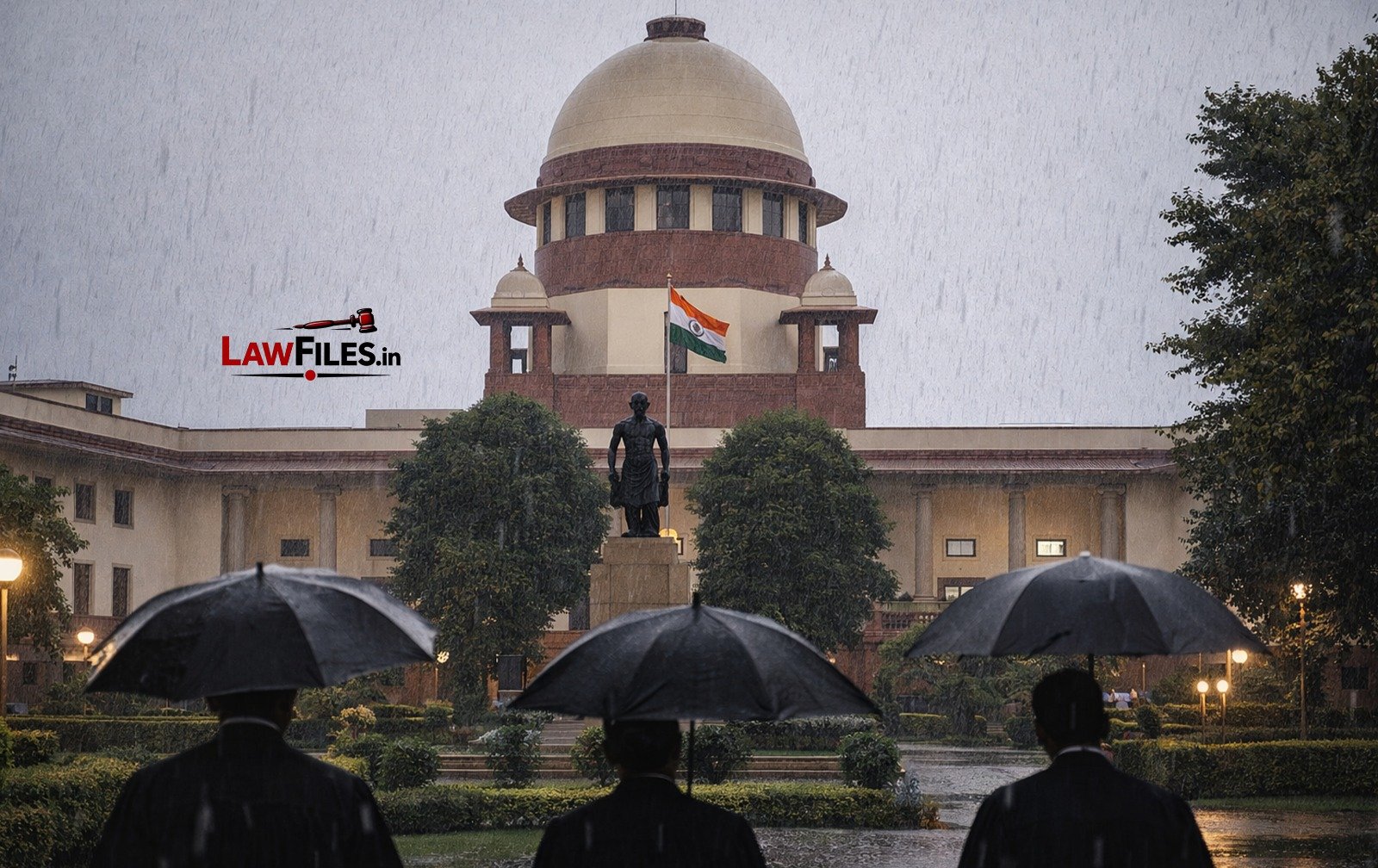
In an important development with far-reaching implications for medical education, public health administration and cooperative federalism, the Supreme Court of India has suggested that the Union Government consider evolving a uniform national policy governing compulsory rural service by MBBS graduates. The observation came during the hearing of a matter concerning the varying obligations imposed upon medical students by different States regarding mandatory rural service after completion of their medical education. While the Court refrained from issuing an immediate nationwide mandate, it expressed concern over the absence of a consistent regulatory framework and observed that the issue deserved consideration at the national level. The proceedings have revived a long-standing debate regarding the balance between the State’s constitutional obligation to provide healthcare in underserved rural regions and the professional autonomy and career aspirations of young medical graduates.
The issue before the Court arose against the backdrop of widely divergent rural service policies adopted by various States and Union Territories. Several States require MBBS students admitted to government medical colleges—or those receiving subsidised medical education to serve in rural or remote healthcare institutions for specified periods after graduation. Other States impose monetary bond obligations in lieu of compulsory service, while some prescribe different durations of service, penalties and exemption criteria. This lack of uniformity, the petitioners argued, results in unequal treatment of similarly placed medical graduates across the country, despite their having undergone substantially similar medical education under nationally regulated standards.
During the hearing, the Supreme Court observed that medical education has increasingly acquired a national character, particularly after the introduction of NEET as a common entrance examination and the establishment of uniform academic standards under the National Medical Commission (NMC). Against this backdrop, the Bench questioned whether there should also be greater consistency regarding post-graduation service obligations imposed upon MBBS students. The Court indicated that while healthcare administration largely remains within the domain of the States, the issue of compulsory rural service affects medical education, workforce planning and access to healthcare at a national level, thereby justifying consideration of a comprehensive policy rather than fragmented State-specific approaches.
The proceedings raise a fundamental constitutional question concerning the relationship between the right to healthcare and the freedom to pursue one’s profession. Rural India continues to experience an acute shortage of qualified medical practitioners, particularly in primary health centres, community health centres and remote district hospitals. Governments have frequently relied upon compulsory service bonds as a mechanism for ensuring temporary deployment of newly qualified doctors in underserved regions. At the same time, medical graduates argue that inconsistent bond policies, prolonged mandatory service and substantial financial penalties impose disproportionate burdens upon their professional development, postgraduate education and career planning. The Supreme Court’s observations therefore seek to locate a constitutional balance between these competing public interests.
From a constitutional perspective, the issue engages both Article 21 and the Directive Principles of State Policy. Over the past several decades, the Supreme Court has repeatedly held that the right to life encompasses the right to health, imposing a positive obligation upon governments to ensure reasonable access to healthcare facilities. Simultaneously, Articles 38, 39, 41 and 47 direct the State to improve public health and promote equitable access to medical services. Compulsory rural service has often been defended as a policy instrument advancing these constitutional objectives by addressing chronic shortages of medical professionals in rural India. The present proceedings therefore do not question the legitimacy of improving rural healthcare but rather examine whether such objectives should be pursued through a more coherent and nationally consistent regulatory framework.
Another significant legal dimension concerns Article 14, which guarantees equality before the law. The petitioners highlighted that similarly situated MBBS graduates frequently face substantially different obligations depending solely upon the State in which they studied or secured admission. Some graduates complete their education without any mandatory rural service requirement, whereas others are required to serve for extended periods or pay substantial bond amounts upon non-compliance. Such disparities, it was argued, raise legitimate questions regarding uniformity and fairness in public medical education.
The Court’s observations also revive the broader constitutional discussion on cooperative federalism. Healthcare remains principally a State subject, whereas medical education increasingly operates within a nationally regulated framework through institutions such as the National Medical Commission, uniform entrance examinations and common academic standards. The suggestion for a national rural service policy therefore represents an attempt to harmonise these overlapping constitutional responsibilities rather than centralise healthcare administration. A uniform policy, if eventually adopted, would still require extensive consultation with States because they remain primarily responsible for operating government hospitals and public health institutions.
An equally important aspect of the proceedings concerns the effectiveness of compulsory rural service itself. Over the years, policymakers have differed on whether mandatory deployment constitutes the most sustainable solution to rural healthcare shortages. Critics argue that short-term compulsory postings often result in high attrition, administrative difficulties and limited continuity of patient care. Others contend that mandatory rural service exposes young doctors to valuable clinical experience while simultaneously strengthening primary healthcare infrastructure. The Supreme Court’s suggestion does not endorse either position conclusively but recognises the need for a policy framework informed by evidence rather than fragmented administrative practices.
The issue also intersects with the broader evolution of medical education policy in India. Following the establishment of the National Medical Commission and the adoption of NEET as the single national entrance examination, considerable emphasis has been placed upon uniform academic standards. The Court’s observations suggest that workforce planning may now require similar coherence. If admission standards, curriculum, examinations and licensing increasingly operate on a national basis, the Court appears to indicate that post-qualification service obligations may also merit coordinated policy consideration.
Another noteworthy feature of the hearing is the Court’s institutional restraint. Rather than itself prescribing a nationwide rural service framework through judicial legislation, the Bench suggested that the Union Government examine the desirability of evolving an appropriate policy after consultation with stakeholders. Such an approach respects the constitutional separation of powers by recognising that formulation of healthcare policy ordinarily falls within the executive and legislative domains. Judicial intervention remains confined to identifying constitutional concerns arising from the present regulatory diversity.
The proceedings also underscore the importance of predictability in regulatory obligations affecting medical students. Students entering MBBS programmes make long-term academic and financial decisions extending over several years. Frequent policy changes, inconsistent bond conditions and varying service obligations across jurisdictions often generate uncertainty affecting postgraduate planning and professional mobility. A nationally coordinated framework could potentially improve regulatory certainty while allowing States sufficient flexibility to address local healthcare requirements through uniform guiding principles.
From the perspective of public administration, the matter illustrates the growing challenge of balancing workforce distribution with professional freedom. Urban concentration of healthcare professionals continues to leave many rural and tribal regions underserved despite substantial public investment in medical education. Governments therefore seek mechanisms ensuring that graduates receiving subsidised education contribute, at least temporarily, towards strengthening public healthcare. Whether compulsory service, financial incentives, enhanced infrastructure or voluntary rural practice ultimately proves more effective remains a matter of continuing policy debate.
The Court’s observations may also have implications for future litigation concerning service bonds imposed by educational institutions. Indian courts have generally upheld reasonable bond conditions where they bear a rational nexus to legitimate public objectives, particularly in medical education. However, the proportionality of such obligations, their duration, financial consequences and uniform application continue to attract judicial scrutiny. A comprehensive national framework could potentially reduce future litigation by establishing consistent principles governing rural service obligations.
Importantly, the Supreme Court has not directed the immediate implementation of compulsory rural service throughout the country, nor has it invalidated existing State policies. The observations presently remain in the nature of a constitutional suggestion encouraging the Union Government to consider whether a more uniform national approach would better serve both public health objectives and the interests of medical graduates. The ultimate decision regarding policy formulation continues to lie with the executive authorities after appropriate consultation with States and other stakeholders.
The issue also raises broader questions concerning the future of India’s public healthcare system. Rural healthcare challenges cannot be addressed solely through mandatory service requirements. Adequate infrastructure, modern equipment, housing facilities, career progression, financial incentives, professional security and continuing medical education remain equally important factors influencing doctors’ willingness to serve in remote regions. A uniform national policy, if eventually framed, would therefore need to integrate these broader structural considerations rather than rely exclusively upon compulsory deployment.
Ultimately, the Supreme Court’s observations represent more than a discussion concerning service bonds for MBBS graduates. They invite a larger constitutional conversation regarding how India should reconcile the fundamental right to health with the legitimate professional aspirations of young doctors in an increasingly nationalised system of medical education. Whether the Union Government ultimately formulates a uniform policy remains to be seen. Nevertheless, the proceedings underscore an important constitutional reality that equitable access to healthcare and equitable treatment of medical professionals are not competing objectives but complementary pillars of a robust public health system. A carefully designed national framework, balancing federal autonomy with uniform guiding principles, may therefore become an important step towards ensuring that both rural patients and medical graduates receive justice within the constitutional vision of social welfare and public health.
