


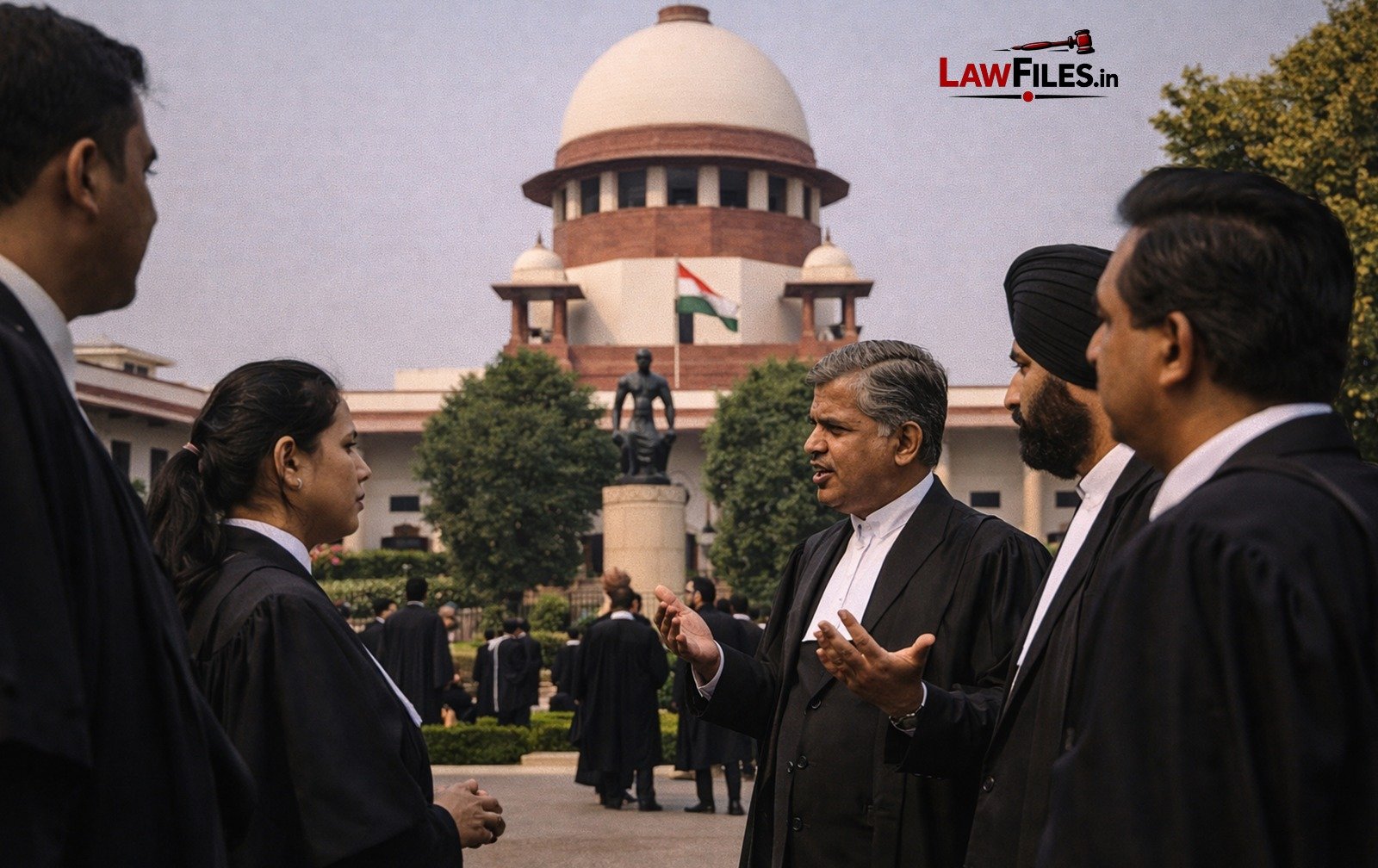
The long-running legal dispute over Super Speciality (NEET-SS) admissions has once again reached the Supreme Court of India, this time through an application filed by Tamil Nadu Government Medical Officers seeking modification of the Court’s earlier direction requiring the State to surrender all unfilled in-service super-speciality seats to the All India Quota (AIQ). The applicants have urged the Court to permit the State to retain the entire pool of vacant seats instead of transferring them to the central counselling mechanism, contending that such seats were originally created to strengthen the State’s public healthcare system and should continue to serve that objective. The application revives one of the most significant constitutional questions in medical education today whether vacant State quota super-speciality seats should automatically migrate to the national merit pool, or whether States possess a legitimate constitutional interest in retaining them for their own healthcare infrastructure.
The present application has been moved after the Supreme Court’s earlier order directing Tamil Nadu to intimate the Director General of Health Services (DGHS) regarding approximately 151 unfilled super-speciality seats, thereby enabling their allotment through the Medical Counselling Committee (MCC) on the basis of the All India Merit List during the ongoing NEET-SS counselling process. That direction effectively ended an earlier deadlock in the counselling schedule and allowed the national counselling process to proceed without further delay. The latest plea, however, seeks reconsideration of that arrangement on the ground that the complete transfer of all remaining seats undermines the very policy behind creating an in-service quota for government doctors serving within the State health system.
According to the applicants, government medical officers represent a distinct category of candidates who continue to serve in public hospitals, district headquarters and rural healthcare institutions while simultaneously pursuing higher medical qualifications. The application reportedly argues that reserving super-speciality seats for such doctors is not intended merely as an educational concession but as a long-term investment in strengthening the State’s tertiary healthcare infrastructure. If vacant in-service seats are routinely transferred to candidates from the All India Quota, the State may ultimately lose the opportunity to develop a sustainable cadre of super-specialists committed to public service within Tamil Nadu.
The proceedings therefore extend beyond a routine counselling dispute and enter the larger constitutional domain of cooperative federalism. Medical education in India operates within a shared constitutional framework involving both the Union and the States. While national entrance examinations such as NEET-SS seek to maintain uniform academic standards, States continue to shoulder primary responsibility for delivering public healthcare to their residents. The present controversy illustrates the tension that occasionally emerges between these two objectives. The Union emphasises optimal utilisation of every available super-speciality seat through national counselling, whereas the applicants contend that States require flexibility to build specialised human resources capable of serving regional healthcare needs.
During earlier hearings, the Supreme Court had proceeded on the premise that vacant seats should not remain unutilised, particularly in super-speciality disciplines where India continues to face a shortage of highly trained specialists. The Court accordingly directed that unfilled seats be surrendered to the All India pool so that deserving candidates elsewhere in the country could secure admission instead of allowing valuable educational resources to remain vacant. That approach reflects a long-standing judicial concern that scarce medical education infrastructure should be utilised to its fullest extent in the larger public interest.
The medical officers’ application, however, presents a different perspective. It argues that utilisation of seats should not be viewed exclusively through the lens of immediate admissions. According to the applicants, the policy objective behind in-service reservation extends beyond filling educational vacancies; it is designed to create a continuous pipeline of specialist doctors who, after completing higher training, return to government service and strengthen tertiary healthcare institutions. If those seats migrate permanently to candidates outside the in-service framework, the State may experience a long-term shortage of super-specialists within its own public hospitals despite having created the very educational infrastructure intended to prevent such shortages.
A central legal issue likely to engage the Supreme Court concerns the relationship between merit and service obligations. NEET-SS admissions ordinarily operate on the basis of national merit. However, several States—including Tamil Nadu—have historically evolved separate policies recognising the contribution of government doctors serving in difficult conditions by earmarking specific super-speciality seats for in-service candidates. Courts have consistently recognised that merit in medical education is a constitutional value, yet they have also acknowledged that States may legitimately design limited service-based incentives aimed at improving public healthcare delivery. The present application therefore requires the Court to determine how these competing public interests should be balanced when reserved seats remain vacant.
The dispute also has important implications for the interpretation of the National Medical Commission (NMC) framework governing super-speciality admissions. Under the present counselling structure, the Medical Counselling Committee (MCC) conducts centralised counselling for super-speciality seats across the country. Once vacant seats are surrendered to the central pool, they become available for allotment strictly according to national merit. The applicants effectively seek an exception to that process by requesting that Tamil Nadu retain the entire block of unfilled seats instead of transferring them to the central mechanism.
Another significant legal dimension concerns the principle of maximum utilisation of public resources. Courts have repeatedly observed that medical seats constitute valuable national assets and should ordinarily not remain vacant. Every unfilled super-speciality seat represents an opportunity lost in a country facing substantial shortages of specialised healthcare professionals. At the same time, the applicants argue that utilisation must also be assessed in terms of public health outcomes, not merely the number of admissions completed. A specialist trained under an in-service programme may continue serving in government hospitals for years, producing systemic benefits extending well beyond individual educational advancement.
The application also revives an earlier issue concerning the qualifying percentile for in-service candidates. During previous hearings, the Supreme Court had orally observed that government doctors serving the public health system deserved meaningful consideration and questioned why the qualifying threshold had not been suitably reduced to facilitate filling of in-service super-speciality seats. Those observations reflected judicial recognition that service doctors often work under demanding conditions while simultaneously preparing for highly competitive examinations. Although the Court stopped short of issuing final directions on that issue, the observations continue to inform the broader debate surrounding equitable access for in-service candidates.
From a constitutional standpoint, the controversy illustrates the evolving relationship between Articles 14 and 21. Equality requires that admissions remain transparent, merit-based and free from arbitrary discrimination. Simultaneously, Article 21 increasingly encompasses the constitutional obligation of the State to ensure accessible healthcare. The applicants argue that strengthening government super-speciality institutions through dedicated in-service training ultimately advances the constitutional right to health for the wider population. The Court may therefore be required to determine whether preservation of the in-service quota serves a constitutionally legitimate public purpose capable of justifying differential treatment.
The proceedings also raise broader policy questions concerning human resource planning in healthcare. States invest substantial public resources in training government doctors, often expecting them to return to public service after acquiring advanced qualifications. If the educational pipeline designed for that purpose is significantly diluted through transfer of vacant seats to the All India pool, State governments argue that long-term workforce planning may become increasingly difficult. On the other hand, supporters of the AIQ mechanism contend that national redistribution prevents wastage of educational infrastructure and ensures that every available super-speciality seat contributes to the country’s overall healthcare capacity.
Another noteworthy aspect of the case is its potential impact beyond Tamil Nadu. Several States operate various forms of in-service reservation or service-linked admission policies in postgraduate and super-speciality medical education. The Supreme Court’s eventual ruling on the present modification application may therefore influence future counselling disputes involving similar reservation structures elsewhere in the country. A decision clarifying the legal status of unfilled in-service seats could establish an important precedent for future admission cycles.
The Court’s earlier directions were also intended to avoid disruption of the counselling calendar. Delays in NEET-SS counselling have repeatedly affected commencement of academic sessions, hospital staffing and specialist training programmes across India. The Supreme Court has consistently emphasised the importance of maintaining certainty in medical admissions so that academic schedules are not repeatedly disturbed by prolonged litigation. The present application therefore requires the Bench to balance the need for stable counselling timelines against the applicants’ request for reconsideration of the earlier allocation mechanism.
From the perspective of administrative law, the dispute exemplifies the complexity of judicial supervision over nationwide admission processes. Courts are increasingly required to reconcile competing policy objectives involving educational standards, federal autonomy, public health requirements, workforce planning and constitutional equality. Unlike purely private educational disputes, super-speciality admissions directly affect the future availability of highly trained doctors in government hospitals, making judicial decisions in this area particularly consequential for public welfare.
Ultimately, the application filed by the Tamil Nadu Government Medical Officers transforms what initially appeared to be a counselling dispute into a larger constitutional conversation about how India should distribute scarce super-speciality medical education resources. Whether the Supreme Court ultimately modifies its earlier order or reaffirms the transfer of vacant seats to the All India pool, the decision is likely to shape the future architecture of NEET-SS counselling. More importantly, it will determine how the law balances two equally compelling public interests—ensuring that no valuable medical seat goes vacant, and preserving the States’ ability to build a dedicated cadre of super-specialists committed to strengthening India’s public healthcare system.
