


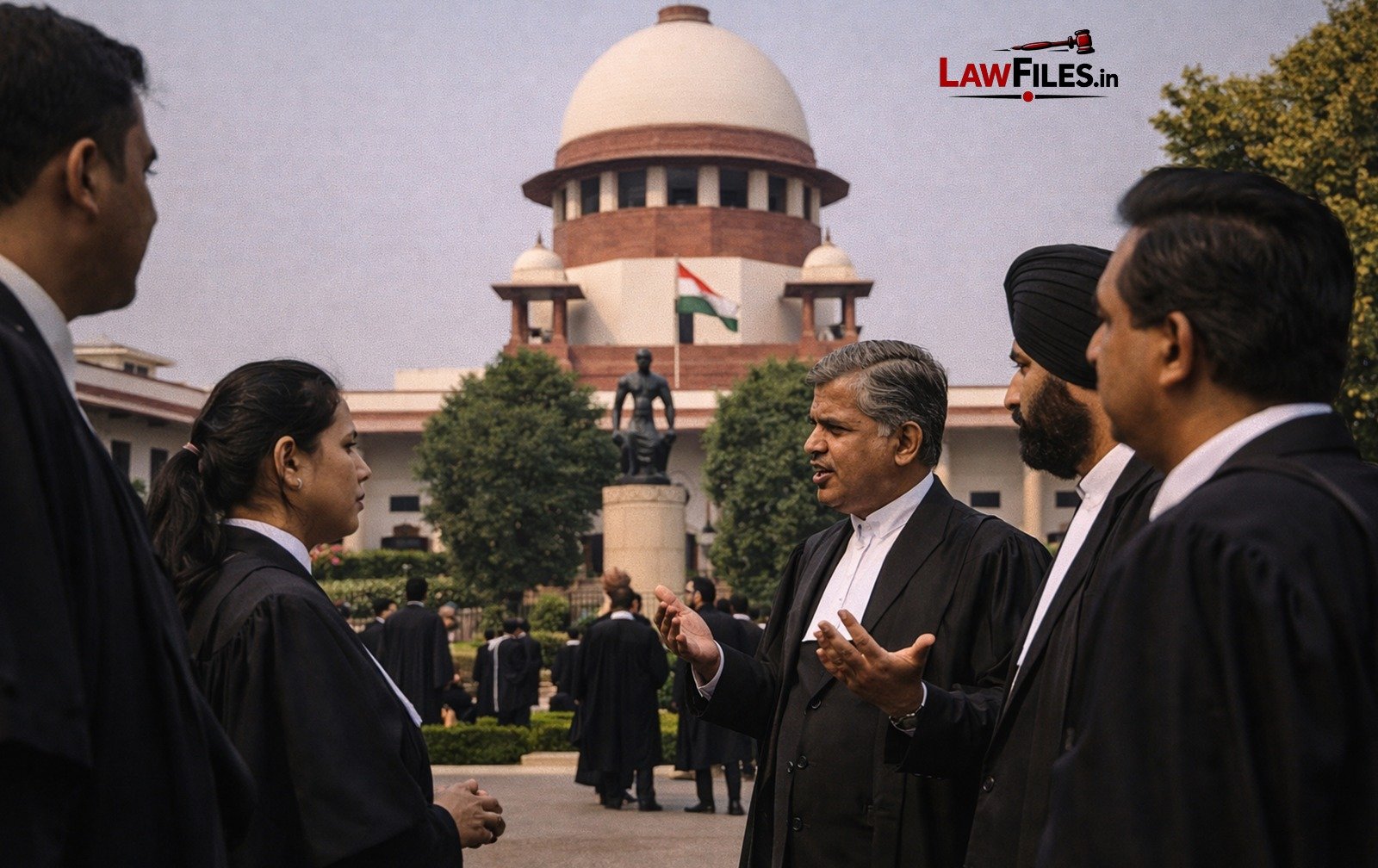
In a significant interim order balancing the competing constitutional imperatives of effective criminal investigation and protection of personal liberty, the Supreme Court of India granted interim protection from arrest to DMK leader and former Tamil Nadu Minister V. Senthil Balaji in connection with the alleged TASMAC corruption case being investigated by the Directorate of Vigilance and Anti-Corruption (DVAC). The order came shortly after the Madras High Court refused anticipatory bail, prompting Balaji to approach the apex court by way of a Special Leave Petition. While refraining from expressing any opinion on the merits of the allegations, the Supreme Court directed that no coercive action be taken against the petitioner until the matter receives further consideration. The interim protection neither terminates nor dilutes the ongoing investigation. Instead, it underscores a fundamental constitutional principle that arrest is an investigative tool, not an automatic consequence of registration of a criminal case, particularly where judicial scrutiny of the legality and necessity of such arrest is pending.
The present proceedings arise from a fresh corruption case registered by the Directorate of Vigilance and Anti-Corruption alleging large-scale irregularities in the functioning of the Tamil Nadu State Marketing Corporation (TASMAC) between 2021 and 2025, when Senthil Balaji held ministerial responsibilities connected with the department. According to the prosecution, the investigation concerns allegations of corruption, abuse of official position and irregular administrative practices affecting the State-run liquor distribution system. Following registration of the FIR, investigating officials conducted searches at numerous locations associated with the former minister and other individuals connected with the inquiry. The prosecution maintained that the investigation concerns serious economic offences involving public administration and substantial public revenue, thereby necessitating custodial powers available under criminal law.
Apprehending arrest after the registration of the case, Senthil Balaji initially approached the Madras High Court seeking anticipatory bail. The High Court, however, declined to grant protection, holding that the allegations required detailed investigation and that anticipatory bail was not warranted at that stage. Soon thereafter, the petitioner invoked the appellate jurisdiction of the Supreme Court. During the initial listing, an interesting procedural development occurred when Justice V. Mohana recused herself from hearing the matter after disclosing that she had represented the petitioner in an earlier professional capacity before her elevation to the Bench. The matter was thereafter placed before another Bench, which proceeded to consider the request for interim protection.
Hearing the appeal, the Supreme Court granted interim protection from arrest pending further consideration of the legal issues raised by the petitioner. Importantly, the Court did not quash the FIR, stay the investigation or pronounce upon the correctness of the allegations. The order merely restrained the investigating agency from effecting arrest until the Court had an opportunity to comprehensively examine the challenge. Such interim protection has become a recognised feature of constitutional criminal jurisprudence where questions concerning personal liberty arise at the threshold stage of criminal proceedings.
The order once again draws attention to the constitutional distinction between investigation and arrest. Criminal investigation encompasses numerous investigative measures, including collection of documentary evidence, examination of witnesses, forensic analysis, financial scrutiny and searches. Arrest, however, represents the most coercive step available to investigating agencies because it directly affects the personal liberty guaranteed under Article 21 of the Constitution. Consequently, Indian constitutional jurisprudence has consistently maintained that investigation can ordinarily continue even where arrest is deferred, unless custodial interrogation is demonstrably necessary for legitimate investigative purposes.
This constitutional philosophy has evolved considerably over the past three decades. Beginning with the landmark judgment in Joginder Kumar v. State of Uttar Pradesh, the Supreme Court clarified that the existence of power to arrest does not imply an obligation to arrest. The Court observed that arrest cannot become a routine administrative response whenever a cognizable offence is alleged. That principle received further elaboration in Arnesh Kumar v. State of Bihar, where the Supreme Court directed investigating agencies to satisfy themselves that arrest is genuinely necessary for reasons recognised under criminal law, including preventing abscondence, tampering with evidence, influencing witnesses or obstructing investigation. The present interim order fits squarely within this constitutional tradition by recognising that judicial scrutiny remains essential before coercive powers are exercised.
The proceedings are particularly significant because they arise in the context of an economic offence. Courts have consistently recognised that corruption cases involving public revenue are serious matters affecting governance and public confidence. Nevertheless, the seriousness of allegations alone does not eliminate constitutional safeguards protecting individual liberty. The Supreme Court has repeatedly held that gravity of offence cannot by itself justify mechanical arrest. The investigating agency must still establish why custodial interrogation is indispensable and why less intrusive investigative measures would be inadequate in the particular factual circumstances.
The TASMAC case also illustrates the increasing complexity of corruption investigations involving public institutions. Allegations concerning procurement, licensing, administrative discretion, tender processes and financial management generally depend upon documentary records, official correspondence, electronic communications and financial transactions. Such investigations often involve substantial documentary evidence already available with investigating agencies. Consequently, courts increasingly examine whether custodial interrogation is genuinely required or whether effective investigation can continue through production of records, questioning under notice and cooperation by the accused. The Supreme Court’s interim protection reflects this evolving judicial approach without prejudging the eventual merits of the prosecution.
Another notable feature of the proceedings is the Court’s institutional restraint. Despite granting interim protection, the Bench consciously avoided commenting upon the political controversy surrounding the case or the correctness of the allegations. Constitutional courts have repeatedly emphasised that bail proceedings are not mini-trials. The question before the Court is not whether the accused is ultimately guilty but whether personal liberty deserves temporary protection pending judicial examination of the legal issues. This distinction assumes particular importance in politically sensitive prosecutions where judicial observations made at preliminary stages may inadvertently prejudice subsequent investigation or trial.
The order also revives an important constitutional debate concerning the relationship between anti-corruption enforcement and individual rights. Effective investigation of corruption undoubtedly serves a compelling public interest because corruption undermines governance, public finance and institutional integrity. At the same time, criminal investigation must remain consistent with constitutional guarantees protecting liberty, dignity and due process. The Constitution does not create a hierarchy in which one value automatically displaces the other. Instead, courts are required to balance both concerns through case-specific judicial scrutiny. Interim protection from arrest, where appropriate, represents one mechanism through which that balance is maintained.
From the standpoint of criminal procedure, the proceedings highlight the distinct functions performed by anticipatory bail and interim constitutional protection. While anticipatory bail ordinarily originates under the statutory framework of the Code of Criminal Procedure (and now the Bharatiya Nagarik Suraksha Sanhita), the Supreme Court’s appellate jurisdiction enables it to grant interim protection pending examination of legal questions arising from orders passed by High Courts. Such protection neither confers immunity from investigation nor creates a permanent shield against arrest. It merely preserves the existing position until constitutional adjudication is completed.
The case also underscores the judiciary’s continuing insistence that investigating agencies act with procedural fairness. Courts have consistently recognised that arrest should facilitate investigation rather than operate as a punitive measure before trial. This principle becomes particularly significant in cases involving public officials or political personalities, where arrest frequently attracts considerable public attention and may produce consequences extending far beyond the criminal proceedings themselves. Judicial oversight therefore serves the dual purpose of protecting individual rights while enhancing public confidence that coercive powers are exercised strictly according to law.
The proceedings acquire additional significance when viewed alongside the Supreme Court’s broader jurisprudence on personal liberty. Recent constitutional decisions repeatedly emphasise that liberty occupies a central place within India’s constitutional framework and that restrictions upon liberty must satisfy the tests of legality, necessity and proportionality. Whether the allegation concerns corruption, economic offences or conventional criminal law, the underlying constitutional inquiry remains substantially similar: is arrest genuinely necessary to secure the legitimate objectives of investigation? The interim order in the present case reflects that continuing judicial commitment to constitutional proportionality.
Equally important is what the order does not decide. The Supreme Court has neither absolved Senthil Balaji of the allegations nor questioned the authority of the investigating agency to pursue the inquiry. Searches already conducted, collection of evidence and other lawful investigative measures remain unaffected. The interim order merely postpones the exercise of one specific coercive power—arrest—until the Court is satisfied that the legal issues arising from the High Court’s refusal of anticipatory bail have been adequately examined. This limited intervention reflects judicial caution rather than adjudication on the merits of the prosecution.
From a broader institutional perspective, the case reinforces the constitutional understanding that judicial oversight forms an indispensable component of criminal investigation in a constitutional democracy. Investigating agencies perform the essential function of detecting and prosecuting crime, while courts ensure that investigative powers remain consistent with constitutional guarantees. Neither function diminishes the other. Rather, both operate within a carefully structured legal framework intended to preserve the rule of law.
Ultimately, the Supreme Court’s interim protection to Senthil Balaji represents neither a victory for the accused nor a setback for the investigation. It is, instead, an affirmation of a deeper constitutional principle—that the legitimacy of criminal investigation depends not merely upon uncovering wrongdoing but upon conducting that investigation within the discipline imposed by constitutional law. As the proceedings continue, the Court’s eventual decision is likely to further clarify the jurisprudence governing arrest in corruption investigations and reaffirm that in India’s constitutional order, personal liberty remains the rule, while deprivation of liberty through arrest must always satisfy the exacting standards prescribed by law.
