


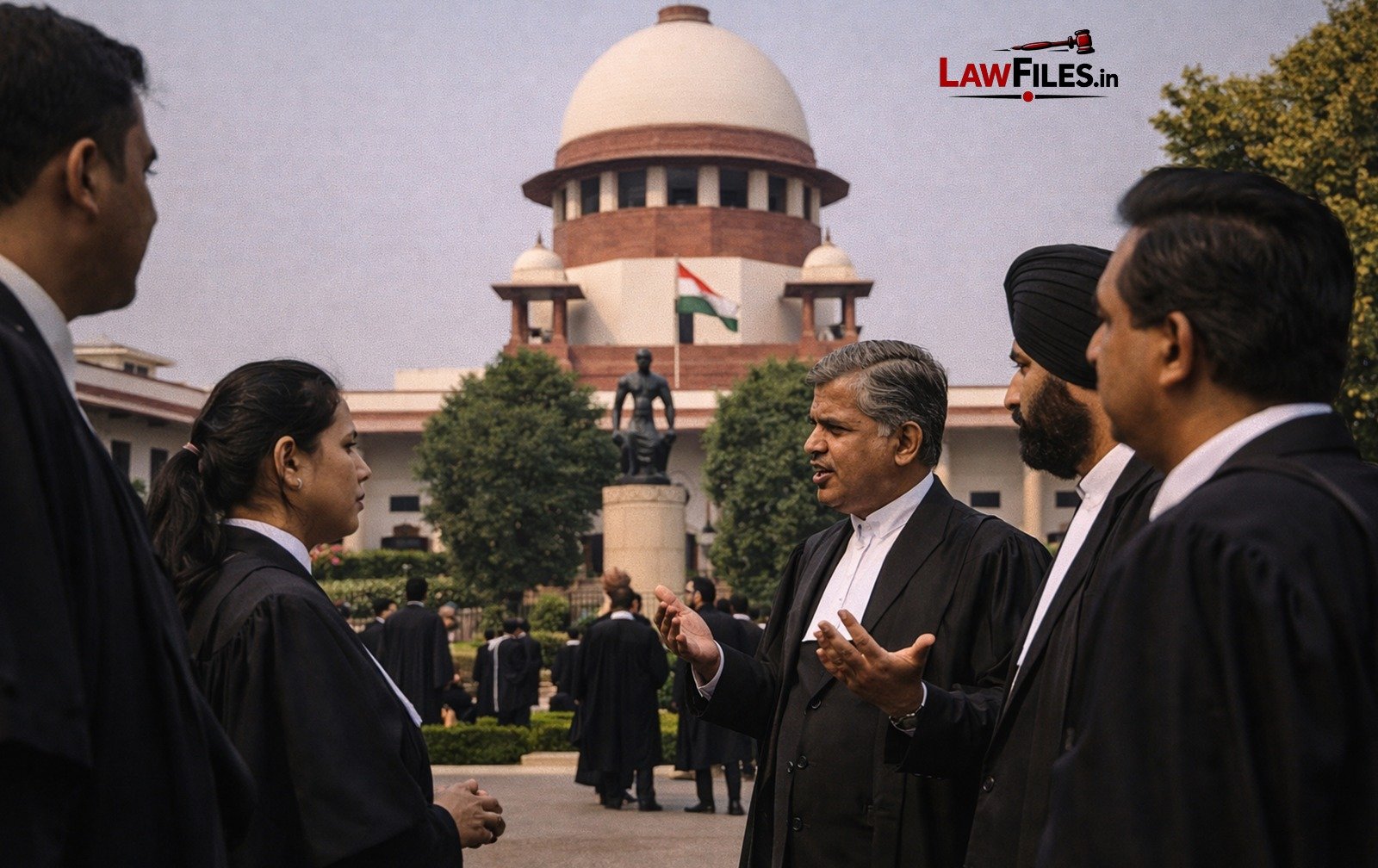
In a significant development that has brought the constitutional right to protest back to the forefront of judicial discourse, the Supreme Court of India has agreed to hear on Monday two petitions alleging excessive use of police force against students participating in protests across the country over the alleged NEET examination paper leak and broader concerns regarding examination integrity. The matter was mentioned before a Bench led by Chief Justice of India Justice Surya Kant, when Senior Advocate Gopal Sankaranarayanan informed the Court that two properly instituted writ petitions concerning police action against student protesters had now been formally filed after obtaining diary numbers. Taking note of the submission, the Chief Justice observed that the Court would entertain the petitions on Monday, thereby paving the way for judicial scrutiny of allegations involving the use of force by law enforcement agencies during one of the largest student-led protest movements witnessed in recent years. The order assumes significance because it marks the first substantive indication that the Supreme Court is prepared to examine the constitutional issues arising from the police response to the nationwide demonstrations.
The development is particularly noteworthy when viewed against the events that unfolded only a few days earlier. During an earlier mentioning, the Supreme Court had declined to urgently list a representation concerning alleged police brutality, with the Chief Justice remarking that the Court was not inclined to examine video clips placed before it and advising counsel to adopt the appropriate legal procedure. That interaction generated widespread public debate and, in some quarters, inaccurate media reports suggesting that the Supreme Court had refused to hear the issue altogether. On Friday, however, the Chief Justice clarified that no properly instituted writ petition had been pending before the Court at that stage and that what had reached the Court was merely a representation rather than a formally filed petition. Once regular petitions were instituted in accordance with procedural requirements, the Court agreed to hear them, thereby underscoring an important constitutional principle that judicial intervention ordinarily follows properly invoked legal process rather than media narratives or informal communications.
The petitions arise from allegations that police authorities used disproportionate force while dispersing students who had assembled in different parts of the country, particularly in the National Capital, to protest against repeated examination paper leaks and to demand structural reforms in the country’s competitive examination system. According to the petitioners, peaceful demonstrators were subjected to baton charges, tear gas and physical force despite exercising what they contend are constitutionally protected rights under Article 19 of the Constitution. Although the factual allegations remain to be judicially examined, the petitions seek an independent inquiry into the conduct of law enforcement authorities, accountability for any unlawful use of force and appropriate guidelines governing police action during peaceful public demonstrations. The hearing therefore is likely to examine not only individual allegations of misconduct but also the broader constitutional framework regulating the State’s response to democratic dissent.
The controversy cannot be understood in isolation from the wider social context in which it has emerged. The protests originated after allegations of irregularities and paper leaks relating to the NEET-UG 2026 examination generated widespread public concern regarding the credibility of India’s examination system. What initially began as a movement seeking accountability for examination failures gradually evolved into a broader youth movement demanding transparency, institutional responsibility and educational reforms. Demonstrations spread across several cities, attracting students, parents, educators and civil society organisations. In response, authorities imposed extensive security arrangements, including barricading, restrictions on movement, temporary closure of metro stations and, in certain areas, suspension of mobile internet services. The resulting confrontation between protesters and police has consequently transformed an educational controversy into a constitutional debate concerning civil liberties and executive power.
From a constitutional perspective, the impending hearing directly implicates Article 19(1)(a) and Article 19(1)(b) of the Constitution, which guarantee the freedoms of speech, expression and peaceful assembly. These guarantees constitute the democratic foundation upon which public participation in governance rests. The right to criticise governmental policy, organise peaceful demonstrations and collectively express dissent is not merely a political privilege but a constitutionally recognised civil liberty. Nevertheless, these freedoms are not absolute. The Constitution itself permits reasonable restrictions in the interests of sovereignty, public order and security of the State. Consequently, the legal issue before the Supreme Court is unlikely to be whether the State possesses the power to regulate public protests. Rather, the central constitutional inquiry will concern whether the measures adopted by the authorities were proportionate, necessary and consistent with the limitations imposed by constitutional jurisprudence.
The doctrine of proportionality is likely to occupy a central position during the adjudication of these petitions. Over the past decade, the Supreme Court has repeatedly emphasised that restrictions upon fundamental rights must satisfy a structured constitutional test. Executive action must pursue a legitimate governmental objective, bear a rational connection with that objective, employ the least restrictive means reasonably available and maintain a fair balance between competing constitutional interests. Applied to allegations of police excesses, proportionality requires the Court to examine whether the force allegedly employed corresponded to the actual threat posed by the demonstrators, whether alternative crowd-management techniques were available and whether the State discharged its obligation to facilitate peaceful protest while simultaneously preserving public order.
The petitions also revive an enduring constitutional question regarding the nature of police powers in a democratic republic. Police authorities undoubtedly possess statutory powers to regulate assemblies, prevent violence and maintain law and order. However, constitutional democracies distinguish between preventive policing and punitive suppression. The Supreme Court has consistently recognised that public order cannot become a blanket justification for disproportionate interference with civil liberties. Democratic governance requires law enforcement agencies not merely to control crowds but to facilitate the peaceful exercise of constitutional freedoms wherever reasonably possible. The forthcoming hearing therefore presents an opportunity for the Court to revisit the constitutional standards governing police conduct during public demonstrations in an era of increasingly frequent mass protests.
Equally important is the institutional dimension of the litigation. The petitions seek judicial oversight over allegations involving executive use of force, thereby engaging the constitutional doctrine of checks and balances. Judicial review does not imply administrative control over policing. Instead, it reflects the judiciary’s constitutional responsibility to ensure that executive power remains subject to constitutional limitations. Whenever allegations arise that State action may have disproportionately affected fundamental rights, constitutional courts perform the indispensable function of examining legality, fairness and procedural compliance. In this sense, the proceedings transcend the immediate factual dispute and reaffirm the judiciary’s role as the guardian of constitutional liberties.
The developments have also drawn significant attention from the legal fraternity. Earlier this week, both the Supreme Court Bar Association (SCBA) and the Supreme Court Advocates-on-Record Association (SCAORA) issued resolutions expressing concern over allegations of excessive force against students and members of the Bar during the protests. The associations called for an independent inquiry and emphasised that the use of disproportionate force against peaceful demonstrators would be incompatible with constitutional values and the rule of law. While these resolutions do not determine the legal merits of the petitions, they underscore the seriousness with which sections of the legal community view the allegations and reinforce the broader constitutional conversation regarding accountability in policing.
Another aspect likely to receive judicial attention concerns the evidentiary standards applicable in cases alleging police excesses. Modern public demonstrations are extensively documented through mobile phones, surveillance cameras, body-worn devices and media recordings. While such digital material can assist courts in reconstructing disputed events, it also presents challenges relating to authenticity, selective editing and contextual accuracy. The Supreme Court’s earlier observation that judicial proceedings cannot be conducted merely on the basis of circulating videos illustrates the importance of formal evidence tested through established legal procedures. The forthcoming hearing may therefore contribute to evolving jurisprudence regarding the evidentiary treatment of digital recordings in constitutional litigation involving allegations of excessive force.
Comparative constitutional jurisprudence further demonstrates that courts across democratic jurisdictions increasingly scrutinise police responses to peaceful protests through the lens of necessity and proportionality. International human rights standards recognise that while States possess legitimate authority to regulate assemblies and prevent violence, force may be employed only when strictly necessary and only to the extent proportionate to the legitimate objective pursued. Indian constitutional law, though rooted in domestic statutory and constitutional provisions, has progressively moved in a similar direction by requiring accountability, transparency and judicial review whenever executive action substantially interferes with civil liberties.
The Supreme Court’s decision to entertain the petitions should not be interpreted as a finding that police misconduct has occurred. The allegations remain to be established through judicial proceedings, and the State will have a full opportunity to justify its actions by placing relevant records before the Court. Nevertheless, the willingness of the Court to hear the matter carries constitutional significance. It signals judicial recognition that allegations involving the exercise of coercive State power against citizens engaging in political expression warrant careful constitutional examination rather than summary dismissal. That approach reinforces public confidence that even in periods of heightened political tension, disputes concerning fundamental rights remain subject to impartial judicial scrutiny.
Ultimately, the forthcoming hearing presents an opportunity for the Supreme Court to clarify the constitutional boundaries governing the relationship between democratic dissent and State authority. The issue before the Court is not whether governments may maintain public order or whether protests may ever be regulated. Those propositions are well established. The more enduring constitutional question is how far executive power may extend before it begins to undermine the very democratic freedoms that the Constitution seeks to protect. Whatever the eventual outcome on the facts, the proceedings are likely to contribute significantly to India’s evolving jurisprudence on peaceful assembly, police accountability, proportional use of force and the constitutional architecture governing protest in a democratic society. As the nation awaits Monday’s hearing, the case promises to become another important chapter in the continuing dialogue between liberty, security and the rule of law.
