


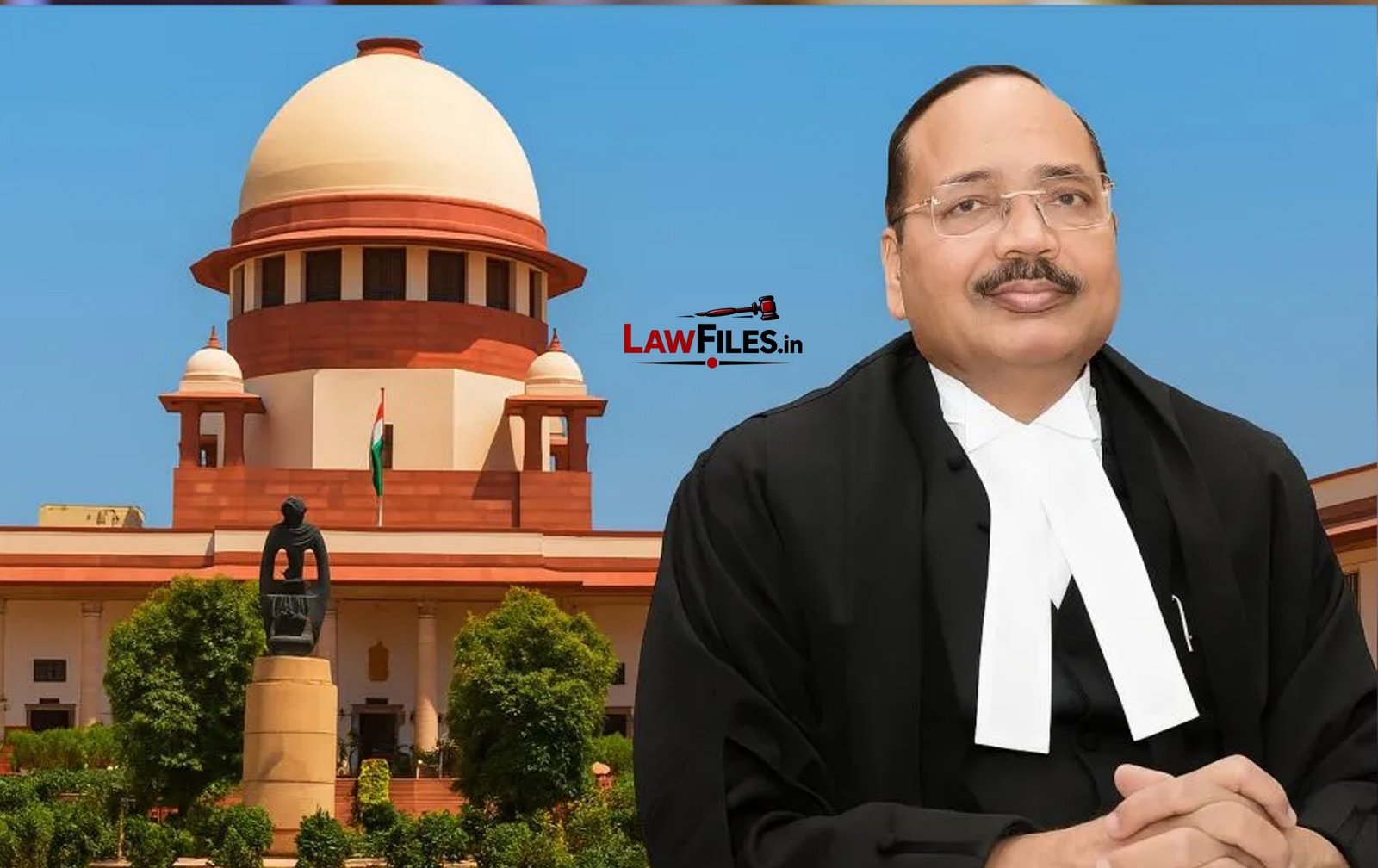
In a courtroom exchange that has sparked an important constitutional conversation on the federal structure of the Indian judiciary and the proper invocation of the Supreme Court’s extraordinary jurisdiction, Chief Justice of India Justice Surya Kant firmly declined an urgent mentioning seeking protection against the demolition of a building, observing that “Even if it is completely demolished today, I will not allow listing.” Refusing to entertain the matter directly, the Chief Justice reminded counsel that litigants cannot routinely bypass the jurisdictional High Courts merely because urgency is pleaded. Directing the petitioner to approach the concerned High Court, the Bench simultaneously deprecated what it described as the growing practice of treating the Supreme Court as the court of first instance in matters where an equally efficacious constitutional remedy already exists before the High Courts. Though the remarks arose during a mentioning exercise rather than a detailed adjudication, they reaffirm an increasingly important judicial principle that constitutional urgency cannot override constitutional structure.
The matter was mentioned before the Bench seeking immediate intervention against an alleged demolition exercise. Counsel appearing for the petitioner submitted that despite the existence of a duly sanctioned building plan, the authorities were proceeding to demolish the structure on the allegation that it had been constructed over land classified as a pond area. Stressing the irreversible nature of demolition, counsel requested that the matter be listed the very same day and sought immediate interim protection from the apex court before the structure was razed.
The Chief Justice, however, declined to entertain the request. Making it clear that the Supreme Court would not exercise its jurisdiction as the first forum in such disputes, Justice Surya Kant remarked that even if the building were demolished that very day, the Court would nevertheless not list the matter directly. Instead, the petitioner was directed to avail the constitutional remedy before the jurisdictional High Court. More significantly, the Chief Justice criticised the increasing tendency of litigants to approach the Supreme Court directly for urgent relief without first invoking the writ jurisdiction of the High Courts.
Although brief, the observations carry considerable constitutional significance. They reaffirm the carefully designed hierarchical structure of constitutional remedies under the Indian Constitution. While Article 32 empowers every citizen to directly approach the Supreme Court for enforcement of fundamental rights, Article 226 confers an even wider jurisdiction upon High Courts, enabling them not only to enforce fundamental rights but also “for any other purpose.” Consequently, High Courts exercise broader writ jurisdiction than the Supreme Court in many respects and remain the primary constitutional courts within their respective territorial jurisdictions.
The distinction between Articles 32 and 226 has been repeatedly emphasised in constitutional jurisprudence. Article 32 undoubtedly constitutes a fundamental right in itself, a proposition famously recognised by Dr. B.R. Ambedkar, who described it as the “heart and soul” of the Constitution. Yet this does not imply that every grievance involving alleged violation of rights must immediately reach the Supreme Court. Constitutional practice has consistently recognised that the High Courts form the first line of judicial protection for citizens, particularly where disputes involve local authorities, municipal bodies, land administration, revenue records or factual controversies requiring examination of evidence.
The present proceedings demonstrate why this institutional arrangement exists. Demolition disputes frequently involve disputed questions regarding building permissions, municipal records, land classification, sanctioned plans, survey maps, revenue entries and compliance with local planning statutes. These are matters more appropriately examined by the High Courts, which possess territorial jurisdiction over the authorities concerned and are institutionally better equipped to supervise compliance with local statutory frameworks. Direct recourse to the Supreme Court in every such dispute would not only burden the apex court but would also dilute the constitutional role assigned to the High Courts.
The Chief Justice’s observations also resonate with the Supreme Court’s recent jurisprudence concerning demolition proceedings and “bulldozer justice.” In In Re: Directions in the Matter of Demolition of Structures (2024), the Supreme Court laid down nationwide procedural safeguards governing demolition actions. The Court held that no demolition should ordinarily take place without prior notice, adequate opportunity of hearing and compliance with the procedure established by law. Importantly, however, while recognising these constitutional safeguards, the Supreme Court also clarified in subsequent proceedings that allegations of violation of those guidelines should ordinarily be examined by the concerned High Courts because such disputes frequently involve factual controversies regarding service of notice, existence of authorisation and compliance with municipal law.
The Chief Justice’s refusal therefore should not be misunderstood as indifference towards demolition disputes. Rather, it reflects a constitutional commitment to the proper allocation of judicial functions. The Supreme Court has itself formulated the governing legal principles protecting citizens against arbitrary demolitions. The responsibility for applying those principles to individual factual disputes, in the first instance, ordinarily rests with the High Courts exercising territorial jurisdiction.
From an institutional perspective, the remarks also reinforce the concept of judicial federalism. India’s constitutional structure establishes a unified judiciary but distributes constitutional responsibilities across different levels. High Courts are not subordinate constitutional courts in the sense of possessing inferior constitutional authority. They are constitutional courts established directly under the Constitution, entrusted with extensive powers of judicial review. Their writ jurisdiction under Article 226 has repeatedly been described by the Supreme Court as forming part of the Constitution’s basic structure because it constitutes an essential safeguard against arbitrary executive action.
The increasing tendency to directly approach the Supreme Court for urgent interim relief has attracted judicial concern in recent years. Matters involving demolitions, land acquisition, municipal notices, service disputes, admissions, local elections and administrative actions are often filed before the apex court even where equally effective remedies exist before the High Courts. Such practices not only increase the Supreme Court’s already substantial docket but also undermine the constitutional expectation that disputes should ordinarily travel through the judicial hierarchy before reaching the country’s highest court.
The issue assumes particular significance because the Supreme Court is simultaneously discharging multiple constitutional responsibilities. Apart from deciding thousands of Special Leave Petitions under Article 136, it regularly hears Constitution Bench matters concerning federalism, electoral reforms, taxation, reservation, data protection, environmental governance, insolvency, arbitration and numerous questions involving interpretation of the Constitution. If every urgent administrative dispute were permitted to bypass the High Courts, the Supreme Court’s capacity to perform its constitutional role as the nation’s final interpreter of law would inevitably be affected.
Equally important is the doctrine of alternative efficacious remedy. Although this doctrine is generally associated with statutory remedies, constitutional courts have repeatedly recognised that where an effective remedy exists before a High Court possessing comprehensive writ jurisdiction, direct invocation of the Supreme Court’s extraordinary powers may not be appropriate except in exceptional circumstances. The existence of urgency alone does not automatically justify bypassing the constitutional hierarchy unless extraordinary circumstances demonstrate that intervention by the apex court is indispensable.
The Chief Justice’s remarks also reflect the constitutional philosophy that judicial discipline applies not only to litigants but to courts themselves. Constitutional institutions function most effectively when each performs the role assigned by the constitutional design. High Courts remain the principal guardians of legality within their territorial jurisdiction. The Supreme Court functions as the ultimate constitutional arbiter, correcting errors of law, resolving substantial constitutional questions and ensuring uniformity in legal interpretation across the country. Respecting this distribution of responsibilities strengthens rather than weakens constitutional governance.
From the standpoint of access to justice, directing litigants to approach High Courts should not be viewed as denial of constitutional remedies. On the contrary, High Courts frequently provide more immediate factual scrutiny, easier geographical access and closer institutional supervision over local administrative authorities. They possess ample constitutional authority to grant interim protection, stay demolition actions, quash illegal notices and issue mandatory directions wherever statutory or constitutional violations are established.
The episode also illustrates an important distinction between judicial accessibility and judicial hierarchy. The Supreme Court remains accessible for enforcement of fundamental rights under Article 32, but that accessibility does not eliminate the constitutional role of High Courts. Judicial efficiency requires that disputes first be examined by courts best positioned to assess the factual matrix, leaving the Supreme Court to address broader questions of constitutional interpretation and legal principle where necessary.
Ultimately, Chief Justice Surya Kant’s emphatic refusal to entertain the demolition plea at the threshold is likely to be remembered less for the dramatic wording of the observation than for the constitutional principle it reinforces. The statement that the Court would not permit direct listing “even if the building is demolished today” was not a dismissal of the seriousness of demolition disputes; rather, it was a reaffirmation that constitutional governance depends as much upon institutional process as upon substantive rights. The rule of law requires not only that citizens have access to judicial remedies, but also that those remedies are invoked through the constitutional framework carefully crafted by the Constitution itself.
The message emerging from the courtroom is therefore one of institutional clarity. The Supreme Court continues to stand as the ultimate guardian of constitutional rights, but it has simultaneously reminded the legal community that India’s High Courts are not mere intermediate forums they are the primary constitutional courts, vested with expansive powers under Article 226 and entrusted with the responsibility of protecting citizens against arbitrary executive action. In preserving that constitutional architecture, the Court has reaffirmed a foundational principle of Indian judicial federalism: the strength of the constitutional system lies not in centralising every dispute before the apex court, but in ensuring that every constitutional court faithfully performs the role assigned to it by the Constitution.
