


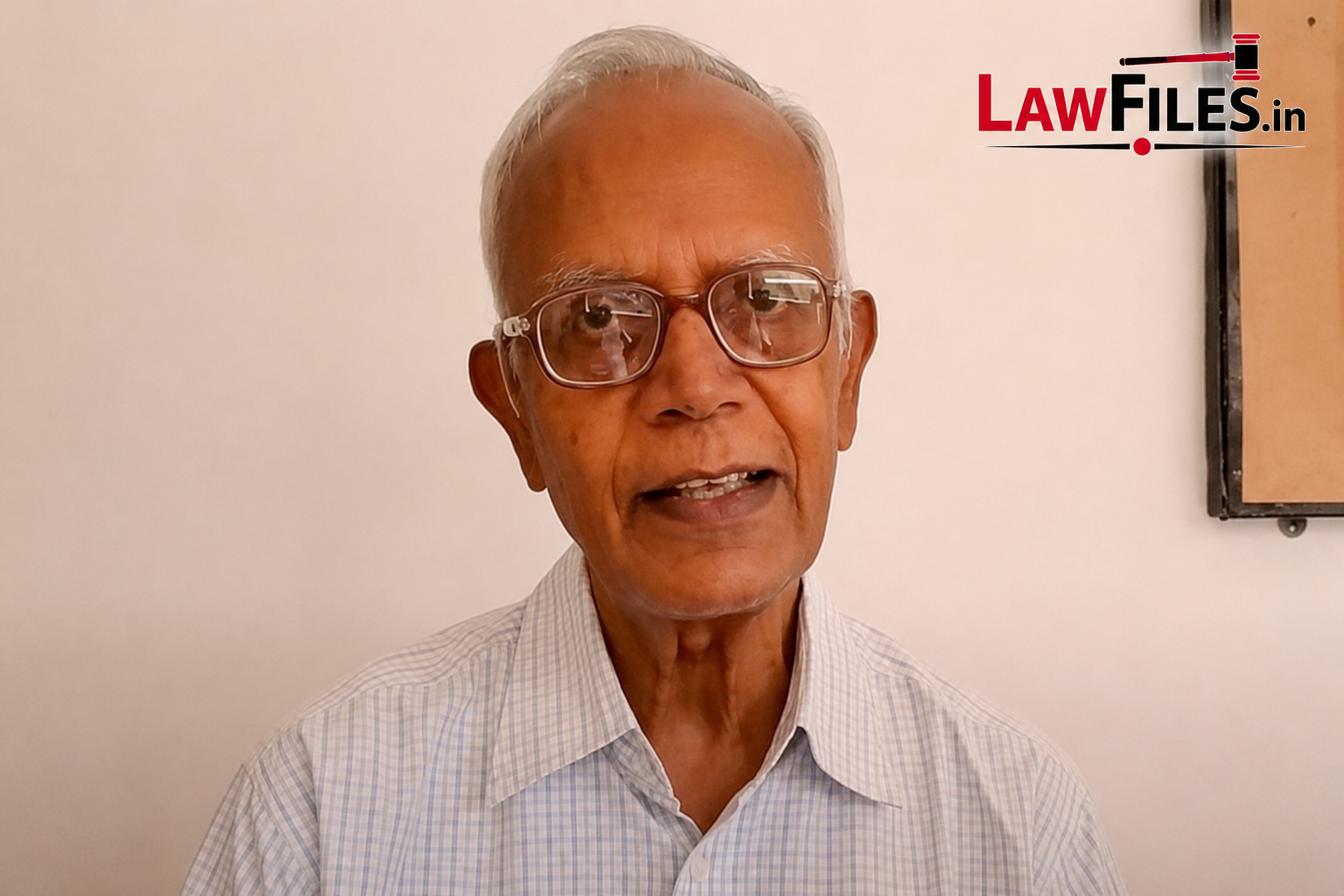
Five years after the custodial death of Jesuit priest and tribal rights activist Father Stan Swamy, the legal questions surrounding the operation of the Unlawful Activities (Prevention) Act, 1967 (UAPA) continue to occupy the centre of India’s constitutional discourse. While the circumstances of his death in judicial custody in July 2021 remain one of the most debated episodes in recent criminal justice history, the larger legal conversation has gradually shifted from the individual tragedy to broader institutional concerns relating to prolonged pre-trial incarceration, the stringent statutory restrictions on bail under anti-terror legislation, and the balance between national security and the constitutional guarantee of personal liberty. A recent commentary revisiting the episode argues that the systemic concerns highlighted by the Stan Swamy case remain unresolved even today, particularly as courts continue to grapple with the interpretation of the UAPA’s restrictive bail provisions.
Father Stan Swamy, who was 84 years old at the time of his arrest by the National Investigation Agency in October 2020 in connection with the Bhima Koregaon-Elgar Parishad case, was charged under several provisions of the UAPA and the Indian Penal Code alleging links with banned Maoist organisations. He consistently denied the allegations throughout the proceedings. Suffering from Parkinson’s disease, hearing impairment and other age-related ailments, he repeatedly sought bail on medical grounds while lodged in Taloja Central Prison. His applications were opposed by the investigating agency, and after spending more than 270 days in custody, he passed away on 5 July 2021 while undergoing treatment at a Mumbai hospital during the pendency of his medical bail proceedings before the Bombay High Court.
The events surrounding his incarceration acquired particular legal significance because they reignited the constitutional debate regarding Section 43D(5) of the UAPA. Unlike ordinary criminal law, where the principle that “bail is the rule and jail is the exception” ordinarily governs judicial discretion, the UAPA substantially restricts the power of courts to grant bail once they are satisfied that the accusations appear prima facie true. The provision requires courts, at the pre-trial stage, to undertake only a limited assessment of the prosecution’s case without conducting a detailed evaluation of the evidence. Critics have argued that this framework often results in lengthy periods of incarceration before the commencement or completion of trial, whereas supporters maintain that such safeguards are essential in investigations concerning terrorism and offences affecting national security.
The discussion assumes renewed importance because several recent judicial developments have reflected a continuing evolution in UAPA jurisprudence. Over the last few years, constitutional courts have repeatedly examined the relationship between statutory restrictions contained in Section 43D(5) and the broader guarantee of personal liberty under Article 21 of the Constitution. While the Supreme Court has consistently recognised Parliament’s authority to prescribe a higher threshold for bail in terrorism-related offences, it has also, in a number of cases, acknowledged that prolonged incarceration without meaningful progress in trial may itself become a relevant constitutional consideration while deciding applications for bail. This developing jurisprudence illustrates the judiciary’s continuing effort to reconcile competing constitutional values rather than mechanically prioritising one over the other.
One of the recurring concerns highlighted in the post-Stan Swamy discourse is the pace of criminal trials under special legislation. The Bhima Koregaon prosecution itself continues to remain pending years after the filing of the charges, with several accused having secured bail from constitutional courts on different legal grounds over time. Courts granting such relief have frequently examined factors such as prolonged custody, delay in commencement of trial, medical conditions, age and individual roles attributed to the accused. At the same time, constitutional courts have repeatedly clarified that such orders do not amount to findings on guilt or innocence and are confined to determining whether continued detention is legally justified pending trial.
The legal significance of the Stan Swamy case also extends beyond the UAPA. It has become a reference point in discussions concerning prison administration, medical treatment of undertrial prisoners and the obligations of the State towards elderly and medically vulnerable detainees. During the proceedings, considerable public attention focused on issues relating to the availability of basic assistive devices required because of Parkinson’s disease, access to specialised medical care and the standards governing humanitarian treatment within custodial institutions. These concerns have subsequently influenced wider debates on prison reforms and the constitutional obligation to preserve the dignity of persons in custody, irrespective of the nature of the accusations against them.
From a constitutional perspective, the case illustrates the continuing tension between two equally important principles. On one hand lies the sovereign responsibility of the State to investigate and prosecute offences affecting national security through robust statutory mechanisms. On the other lies the constitutional commitment that every accused person remains entitled to the presumption of innocence until guilt is established through a fair trial conducted in accordance with law. Indian constitutional jurisprudence has consistently held that preventive detention before conviction cannot become punitive in character. The challenge for courts therefore lies in ensuring that special legislation designed to combat terrorism does not inadvertently weaken the procedural safeguards that distinguish constitutional criminal justice from executive detention.
The debate has also generated renewed academic discussion regarding the relationship between investigation and adjudication. Under the UAPA framework, courts deciding bail applications are generally prohibited from undertaking a detailed appreciation of evidence. Instead, they are required to examine whether the prosecution material, taken at face value, discloses a prima facie case. Several legal scholars have argued that this limited scope of scrutiny may sometimes prolong detention in complex prosecutions where trials extend over several years. Others contend that relaxing the statutory threshold would undermine the very legislative purpose underlying anti-terror laws. These competing perspectives continue to shape judicial interpretation of the Act.
Another important institutional question concerns the speed of criminal trials under special statutes. Article 21 has long been interpreted by the Supreme Court as encompassing the right to a speedy trial. Where investigations are completed but trials progress slowly because of the volume of evidence, multiplicity of accused or procedural complexity, courts are increasingly required to balance the seriousness of allegations against the constitutional imperative that undertrials are not subjected to indefinite incarceration without adjudication. This balancing exercise has emerged as one of the defining themes of contemporary UAPA jurisprudence.
The Stan Swamy case has also assumed significance within the broader framework of access to justice. It highlighted the practical difficulties encountered by elderly prisoners in pursuing legal remedies, particularly where health conditions rapidly deteriorate during incarceration. Questions concerning legal aid, timely medical intervention, prison infrastructure and procedural responsiveness have since become integral components of discussions on custodial justice. These issues extend beyond any single prosecution and engage fundamental constitutional obligations owed by the State to every individual deprived of personal liberty.
Five years later, the legal legacy of Stan Swamy’s custodial death is therefore not confined to the facts of one case. It has become a recurring reference point in judicial, academic and legislative debates concerning the interpretation of the UAPA, the scope of constitutional protections available to undertrial prisoners, the meaning of personal liberty under Article 21 and the institutional responsibility to ensure that criminal procedure remains both effective and humane. The continuing discussion demonstrates that while Parliament possesses the authority to enact stringent national security legislation, constitutional courts remain entrusted with the equally vital responsibility of ensuring that such laws operate within the framework of fairness, proportionality and the rule of law. Whether future judicial developments further recalibrate this balance remains to be seen, but the questions raised by the Stan Swamy case continue to shape one of the most consequential conversations in contemporary Indian constitutional and criminal jurisprudence.
