

Close Menu
LawFilesLawFiles

    Subscribe to Updates

    Get the latest creative news from FooBar about art, design and business.

    What's Hot

    From Political Satire to Intellectual Property Dispute: The Curious Case of the ‘Cockroach Janata Party’ Trademark

    June 12, 2026

    Global Businesses, Local Laws: The Urgent Case for Cross-Border Insolvency in India

    June 12, 2026

    Supreme Court Clarifies Arbitration Limitation Law: Section 34 Challenge Period Begins Only After Disposal of Section 33 Proceedings

    June 12, 2026
    Facebook X (Twitter) Instagram Threads
    Saturday, June 13
    LawFilesLawFiles
    Facebook X (Twitter)
    • Home
      • Who We Are
      • Our Mission
      • Advisory board
      • Contact US
    • Supreme Court
    • High Courts
      • Gujarat High Court
      • Jharkhand High Court
      • Rajasthan High Court
      • Karnataka High Court
      • Andhra Pradesh High Court
      • Allahabad High Court
      • Himachal Pradesh High Court
      • Chhattisgarh High Court
      • Jammu & Kashmir and Ladakh High Court
      • Kerala High Court
      • Punjab and Haryana High Court
      • Patna High Court
      • Madhya Pradesh High Court
      • Madras High Court
      • Bombay High Court
      • Orissa High Court
      • Calcutta High Court
      • Meghalaya High Court
      • Delhi High Court
      • Manipur High Court
      • Gauhati High Court
    • Corporate
    • Taxation Laws
      • Income Tax
      • GST
      • Customs & Excise
    • Global Affairs
    • Articles
      • Sitting Judge’s’ Views
      • Senior Advocate
      • Policy Analysis
      • Tax Expert
    • PILS
      • Free/Affordable Legal Aid
      • PIL Cell
      • Law student Volunteer Cell (research & Drafting)
      • NGO & Legal services Authority Tie-ups
      • Online Legal Formats
      • Online Legal Help Form
    Subscribe Premium
    LawFilesLawFiles
    Home»Supreme Court»Supreme Court Clarifies Arbitration Limitation Law: Section 34 Challenge Period Begins Only After Disposal of Section 33 Proceedings
    Supreme Court

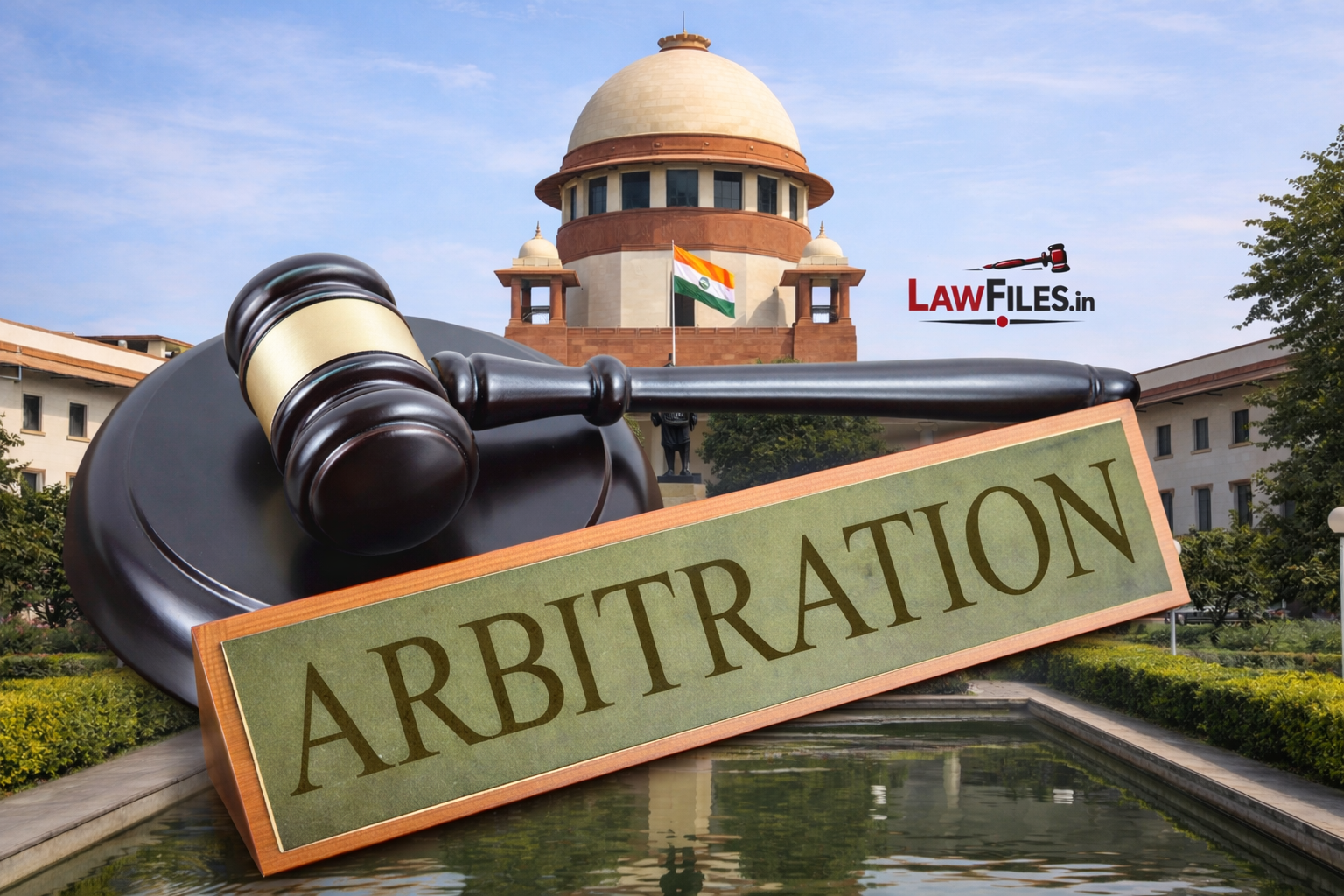
    Supreme Court Clarifies Arbitration Limitation Law: Section 34 Challenge Period Begins Only After Disposal of Section 33 Proceedings

    Anvita DwivediBy Anvita DwivediJune 12, 2026No Comments6 Mins Read
    WhatsApp Facebook Twitter Copy Link
    Share
    Facebook Twitter Pinterest Copy Link WhatsApp

    The Supreme Court has delivered an important judgment clarifying the law governing limitation periods in arbitration disputes, holding that the period for filing a challenge to an arbitral award under Section 34 of the Arbitration and Conciliation Act, 1996 commences only after the disposal of an application made under Section 33 of the Act, irrespective of whether that application is allowed or rejected. The ruling settles a recurring controversy in arbitration practice and provides greater certainty regarding the computation of limitation, an issue that frequently determines the fate of commercial disputes before courts.

    The dispute before the Court centered around the interpretation of Sections 33 and 34 of the Arbitration and Conciliation Act. Section 33 allows parties to seek correction of clerical, computational, typographical, or similar errors in an arbitral award. It also permits parties to seek interpretation of specific portions of the award or request an additional award on claims that may have been omitted by the tribunal. Section 34, meanwhile, provides the statutory mechanism through which an arbitral award may be challenged before a competent court. The controversy arose because Section 34(3) states that the limitation period for filing a challenge begins from the date on which a request under Section 33 is “disposed of.” However, uncertainty existed regarding whether this benefit would apply only when the Section 33 application resulted in modification of the award or whether it would extend even to cases where such an application was rejected.

    Resolving this ambiguity, the Supreme Court held that the expression “disposed of” must be interpreted in its ordinary and natural sense. According to the Court, Parliament consciously used broad language and did not distinguish between acceptance and rejection of a Section 33 application. Therefore, once such an application is formally decided by the arbitral tribunal, the limitation period for filing a challenge under Section 34 begins to run from the date of that decision regardless of its outcome. The Court emphasized that judicial interpretation cannot introduce conditions that the legislature itself chose not to incorporate into the statute.

    The judgment assumes considerable significance in the context of India’s evolving arbitration jurisprudence. One of the principal objectives of the Arbitration and Conciliation Act is to provide an efficient and predictable dispute resolution mechanism that minimizes unnecessary judicial intervention. Limitation provisions play a crucial role in achieving this objective by ensuring finality and certainty in commercial disputes. Ambiguity regarding the commencement of limitation often results in procedural disputes that consume substantial judicial time and delay resolution of substantive issues. By clarifying the legal position, the Supreme Court has eliminated a major source of uncertainty that had generated conflicting interpretations in various courts.

    The Court’s reasoning is also consistent with the broader architecture of arbitration law. Post-award proceedings under Section 33 are not entirely independent of the arbitral process. Rather, they constitute a continuation of the tribunal’s limited jurisdiction over the award for purposes of correction, clarification, or supplementation. Until such proceedings are concluded, the final contours of the award may remain subject to change. Commencing limitation before the completion of Section 33 proceedings would create a situation where parties might be compelled to initiate parallel court proceedings while correction applications remain pending before the tribunal. Such an outcome would undermine procedural efficiency and increase litigation costs.

    An important aspect of the ruling is its recognition of commercial realities. Arbitration is fundamentally designed to provide businesses with a speedy and specialized dispute resolution mechanism. Commercial parties require certainty regarding procedural timelines in order to effectively manage risk and plan litigation strategy. The Court’s interpretation ensures that parties are not forced into precautionary filings merely to safeguard themselves against potential limitation objections. Instead, they may await the tribunal’s decision on their Section 33 application before determining whether a challenge under Section 34 is necessary.

    At the same time, the judgment acknowledges concerns regarding possible misuse of Section 33 proceedings. Critics of a broader interpretation have often argued that litigants may file weak or frivolous correction applications solely to extend the limitation period for challenging an award. The Supreme Court addressed this concern by observing that courts retain the power to scrutinize the bona fides of such applications and impose costs where procedural mechanisms are abused. This approach seeks to strike a balance between protecting genuine litigants and preventing tactical misuse of statutory remedies.

    From a jurisprudential perspective, the ruling reflects a textual and purposive approach to statutory interpretation. The Court focused on the language chosen by Parliament while simultaneously considering the broader objectives of arbitration law. Such an approach is particularly important in commercial legislation, where predictability and consistency are often as important as substantive fairness. By avoiding an unduly restrictive interpretation, the Court has reinforced the principle that arbitration statutes should be construed in a manner that facilitates rather than frustrates efficient dispute resolution.

    The decision also aligns with international arbitration practices. Across major arbitration jurisdictions, post-award correction and clarification mechanisms are generally treated as part of the arbitral process itself. Judicial review timelines are often linked to the conclusion of such proceedings because the award may undergo modifications during that stage. The Supreme Court’s ruling therefore brings Indian arbitration jurisprudence closer to internationally accepted standards and enhances India’s reputation as an arbitration-friendly jurisdiction.

    For legal practitioners, the judgment carries significant practical implications. Lawyers handling arbitration matters must now carefully monitor the disposal date of Section 33 proceedings, as that date unequivocally determines the commencement of limitation under Section 34. The ruling also highlights the importance of strategic decision-making in post-award proceedings, where procedural choices can have substantial consequences for the viability of subsequent challenges.

    For young lawyers and arbitration professionals, the case serves as an instructive example of how procedural law often shapes substantive outcomes. Commercial disputes worth enormous sums can turn on the interpretation of a single statutory phrase. The judgment illustrates the growing importance of procedural expertise in modern arbitration practice and underscores the need for practitioners to develop a sophisticated understanding of limitation law and post-award remedies.

    Ultimately, the Supreme Court’s decision contributes significantly to the development of a coherent and predictable arbitration framework in India. By holding that limitation under Section 34 begins from the disposal of a Section 33 application regardless of whether it is allowed or rejected, the Court has reinforced the principles of certainty, efficiency, and procedural fairness that form the foundation of contemporary arbitration law. The ruling is likely to reduce unnecessary litigation over limitation issues and further strengthen confidence in India’s arbitration regime, a development that is particularly important as the country seeks to establish itself as a leading destination for international commercial arbitration.


    Section 34 Challenge Period Begins Only After Disposal of Section 33 Proceedings Supreme Court Clarifies Arbitration Limitation Law:
    Share. WhatsApp Facebook Twitter Pinterest Email
    Anvita Dwivedi

    Related Posts

    From Political Satire to Intellectual Property Dispute: The Curious Case of the ‘Cockroach Janata Party’ Trademark

    June 12, 2026

    Global Businesses, Local Laws: The Urgent Case for Cross-Border Insolvency in India

    June 12, 2026

    Supreme Court Reinforces IBC’s Strict Timelines: Delay in Re-Filing Defective Appeal Cannot Be Condoned Beyond Statutory Limits

    June 12, 2026
    Add A Comment
    Leave A Reply Cancel Reply

    Demo
    Top Posts

    Wrongful Claim Rejection Amounts to Deficiency in Service: Delhi Consumer Commission Holds Star Health Liable

    March 16, 202669 Views

    Bombay High Court Quashes POCSO Case, Directs Accused to Fund MacBook for Victim’s Education

    February 28, 202652 Views

    Siyahat Meri Syahi Se: A Journey That Transforms Travel into Thought and Entrepreneurship

    March 18, 202645 Views

    Supreme Court Quashes FIR Over ‘Improved’ Second Complaint: A Reminder That Criminal Law Cannot Be Built on Shifting Narratives

    June 4, 202638 Views
    Don't Miss

    From Political Satire to Intellectual Property Dispute: The Curious Case of the ‘Cockroach Janata Party’ Trademark

    By Anvita DwivediJune 12, 2026

    The filing of trademark applications for the phrase “Cockroach Janata Party” has transformed what began…

    Global Businesses, Local Laws: The Urgent Case for Cross-Border Insolvency in India

    June 12, 2026

    Supreme Court Clarifies Arbitration Limitation Law: Section 34 Challenge Period Begins Only After Disposal of Section 33 Proceedings

    June 12, 2026

    Supreme Court Reinforces IBC’s Strict Timelines: Delay in Re-Filing Defective Appeal Cannot Be Condoned Beyond Statutory Limits

    June 12, 2026
    Stay In Touch
    • Facebook
    • Twitter

    Subscribe to Updates

    Get the latest creative news from SmartMag about art & design.

    Top Posts

    Wrongful Claim Rejection Amounts to Deficiency in Service: Delhi Consumer Commission Holds Star Health Liable

    March 16, 202669 Views

    Bombay High Court Quashes POCSO Case, Directs Accused to Fund MacBook for Victim’s Education

    February 28, 202652 Views

    Siyahat Meri Syahi Se: A Journey That Transforms Travel into Thought and Entrepreneurship

    March 18, 202645 Views
    Don't Miss

    From Political Satire to Intellectual Property Dispute: The Curious Case of the ‘Cockroach Janata Party’ Trademark

    By Anvita DwivediJune 12, 2026

    The filing of trademark applications for the phrase “Cockroach Janata Party” has transformed what began…

    Global Businesses, Local Laws: The Urgent Case for Cross-Border Insolvency in India

    June 12, 2026

    Supreme Court Clarifies Arbitration Limitation Law: Section 34 Challenge Period Begins Only After Disposal of Section 33 Proceedings

    June 12, 2026

    Supreme Court Reinforces IBC’s Strict Timelines: Delay in Re-Filing Defective Appeal Cannot Be Condoned Beyond Statutory Limits

    June 12, 2026
    Stay In Touch
    • Facebook
    • YouTube
    • TikTok
    • Instagram
    Top Trending
    About Us
    About Us

    LawFiles.in is a comprehensive legal news platform delivering real-time updates from the Supreme Court, High Courts, Tribunals, Corporate and Tax law, Regulators, Politics, Crime, Consumer cases, and Global Affairs.

    Email Us: lawfilesoffical@gmail.com
    Contact: +91 8800026066

    Contact Us:
    India International Centre
    40, Max Mueller Marg
    Lodhi Estate, New Delhi-110003

    Facebook X (Twitter)
    Our Picks

    From Political Satire to Intellectual Property Dispute: The Curious Case of the ‘Cockroach Janata Party’ Trademark

    June 12, 2026

    Global Businesses, Local Laws: The Urgent Case for Cross-Border Insolvency in India

    June 12, 2026

    Supreme Court Clarifies Arbitration Limitation Law: Section 34 Challenge Period Begins Only After Disposal of Section 33 Proceedings

    June 12, 2026

    Supreme Court Reinforces IBC’s Strict Timelines: Delay in Re-Filing Defective Appeal Cannot Be Condoned Beyond Statutory Limits

    June 12, 2026

    Revocation of Probate and the Law of Limitation: Supreme Court Clarifies the Reach of Article 137

    June 12, 2026
    Most Popular

    Custodial Death and State Liability : A Critical Analysis of the Allahabad High Court’s ₹10 Lakh Compensation Judgment

    February 22, 20260 Views

    Gujarat High Court Commutes Death Sentence in Child Rape-Murder; Reinforces Capital Sentencing Standards in Light of MP High Court Precedent

    February 23, 20260 Views

    Delhi Family Court Rules Against Enforcement of Australian Property Orders in Shikhar Dhawan Matrimonial Dispute

    February 25, 20260 Views

    Madhya Pradesh High Court Examines Plea to Extend NRI Quota to Stray Vacancy Round in Medical Admissions

    February 26, 20260 Views

    Supreme Court Rules Limitation Period Under CrPC Starts When Offender’s Identity Is Known, Not From First Complaint

    February 27, 20260 Views
    © 2026 LawFiles. Owned by Varta24 Media.
    • Articles
    • Careers
    • Corporate
    • Global Affairs
    • Law Firms & Lawyers
    • PILS
    • Regulatory

    Type above and press Enter to search. Press Esc to cancel.