


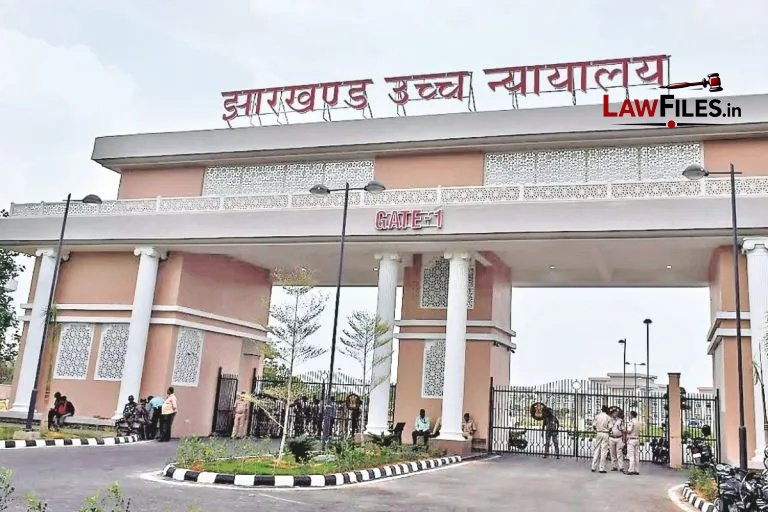
A landmark 55-page judgment delivered by the Jharkhand High Court. The court has made it clear that true justice does not end with a prison sentence for the guilty it begins with healing, rehabilitation, and long-term security for the survivor and their family.
A Division Bench comprising Chief Justice M.S. Sonak and Justice Rajesh Shankar passed this monumental order while hearing a public interest litigation (PIL) initially filed by Ms. Padma Baraik, which the court later converted into a suo motu (on its own motion) proceeding. The judgment confronts systemic insensitivity and lays down clear, binding guidelines that bridge the gaps between existing criminal procedures and the lived realities of survivors.
One of the most compassionate and forward-thinking aspects of this judgment is its focus on the children born out of rape incidents. In our society, these children often inherit a cruel, unearned stigma, facing isolation and immense economic hardships.
To dismantle this, the High Court went beyond the standard provisions of the Right to Education (RTE) Act which only covers children up to the age of 14 and ordered the state to guarantee free and compulsory education up to Class XII.
To ensure this doesn’t just remain a promise on paper, the Department of School Education and Literacy must appoint dedicated Nodal Officers in every single district. If these children show merit and clear admissions into premier national institutions like the IITs, NITs, AIIMS, or IIMs, the state government is legally mandated to provide them with full scholarships.
Furthermore, recognizing that hostile environments often make it impossible for a family to stay in their hometown, the court ordered the state to actively fund and manage the physical relocation and residential rehabilitation of survivors and their families.
The early hours following a trauma are crucial, yet survivors routinely face bureaucratic delays and cold shoulder treatments at local police stations. The High Court took a strict stance against this institutional inertia.
Under the newer provisions of the Bharatiya Nagarik Suraksha Sanhita (BNSS), 2023, the court reiterated that registering a “Zero FIR” is mandatory. A survivor cannot be turned away because an incident happened outside a specific station’s boundaries. If an officer fails to comply, they will face both internal departmental action and criminal prosecution under Section 199 of the Bharatiya Nyaya Sanhita (BNS).
For decades, the initial interactions a survivor had with the legal system were often cold, clinical, and sometimes downright hostile. The court tackles this head-on by mandating a strictly controlled, gender-sensitive, and friendly environment for recording statements. The judges ordered that a survivor’s statement must exclusively be taken by a female police officer, preferably one who holds a rank not lower than a Sub-Inspector. This is not just a change in personnel it is a deliberate effort to create a non-coercive, supportive atmosphere where a person who has just faced unimaginable trauma can speak freely without the fear of moral lecturing, judgment, or intimidation.
Beyond making the environment empathetic, the High Court focused heavily on the painful reality of institutional delays. To fix this, the judgment introduces strict investigation windows that put the police on a tight clock. Once a case is brought forward, any preliminary inquiries must be wrapped up within a maximum of 15 days. More importantly, the entire final investigation culminating in the filing of the formal charge sheet must be completed within two months of the FIR registration. By cutting down the time a police department can drag out an investigation, the court is trying to ensure that crucial forensic and situational evidence is preserved fresh, and the survivor is not subjected to a long, agonizing wait just to see their case reach a courtroom.
Finally, the court addressed the silent killer of criminal justice in India systemic foot-dragging during the trial stage. It is a common reality where state prosecutors or defense lawyers ask for adjournment after adjournment, stretching trials out for years until the victim is completely exhausted. To break this cycle, the High Court directed the Director General of Police (DGP) to step in directly and set up a specialized Anti-Adjournment Special Task Force (STF). This task force is legally required to conduct rigorous, quarterly audits of all pending sexual offense cases across the state. Their sole job is to monitor trial progress, identify bottlenecks, and actively prevent state prosecutors from seeking or allowing unnecessary delays. By enforcing these strict timelines from the police station to the trial court, the judgment builds an aggressive, accountable framework designed to deliver swift, uncompromised justice.
Expressing deep sadness over the structural isolation survivors endure, the judges observed:
“We are pained to observe that in some situations, a social mockery of the rape victim is made as if she is the culprit. In some cases, the victim is socially boycotted, causing immense hardship and mental agony to them and their families.”
By addressing this, the court emphasized that these legal changes are designed to completely alter the regressive “victim-blaming” mindset that dominates local communities.
Despite multiple strict warnings from the Supreme Court over the years, the invasive, unscientific, and deeply traumatizing “two-finger test” continues to be practiced in various corners of the country. The Jharkhand High Court issued an unconditional prohibition on this practice across all government and private hospitals, stating that any violation would be treated as professional misconduct. Medical college curriculums across the state will also be updated to train doctors exclusively in scientific forensic evaluations.
Additionally, the court called out the subpar state of the 24 “One-Stop Centres” (OSCs) in Jharkhand. Reports showed that many lacked basic sanitation, running kitchens, or proper staff. The court ordered an immediate logistical overhaul and directed the creation of a women-headed supervisory committee to audit these centers annually.
Crucially, the court specified that the Nari Niketan (Shakti Sadan) shelter in Ranchi must be open to survivors of sexual violence with no maximum time limit on their stay, ensuring women are not forced back into unsafe environments due to arbitrary deadlines.
Historically, instructions regarding victim care like the Supreme Court’s privacy mandates in the Nipun Saxena case have often been ignored at the ground level. Police officers routinely cited territorial confusion, and medical staff relied on outdated practices.
This judgment changes the game by linking older protections with the strict timelines and punitive measures of the newly implemented BNSS and BNS laws. By establishing non-contingent compensation meaning the trial court must award final compensation to the victim regardless of whether the case ends in a conviction the court has a survivor’s survival from the slow, unpredictable wheels of criminal trials.
By setting tight institutional deadlines, appointing district-level accountability officers, and establishing an automatic backend link between the women-centric helpline (181) and the emergency response system (112), Jharkhand has been given a concrete roadmap. This is no longer just about punishing the criminal it is about building a state apparatus that actually shields, educates, and restores the dignity of the person who survived.
