


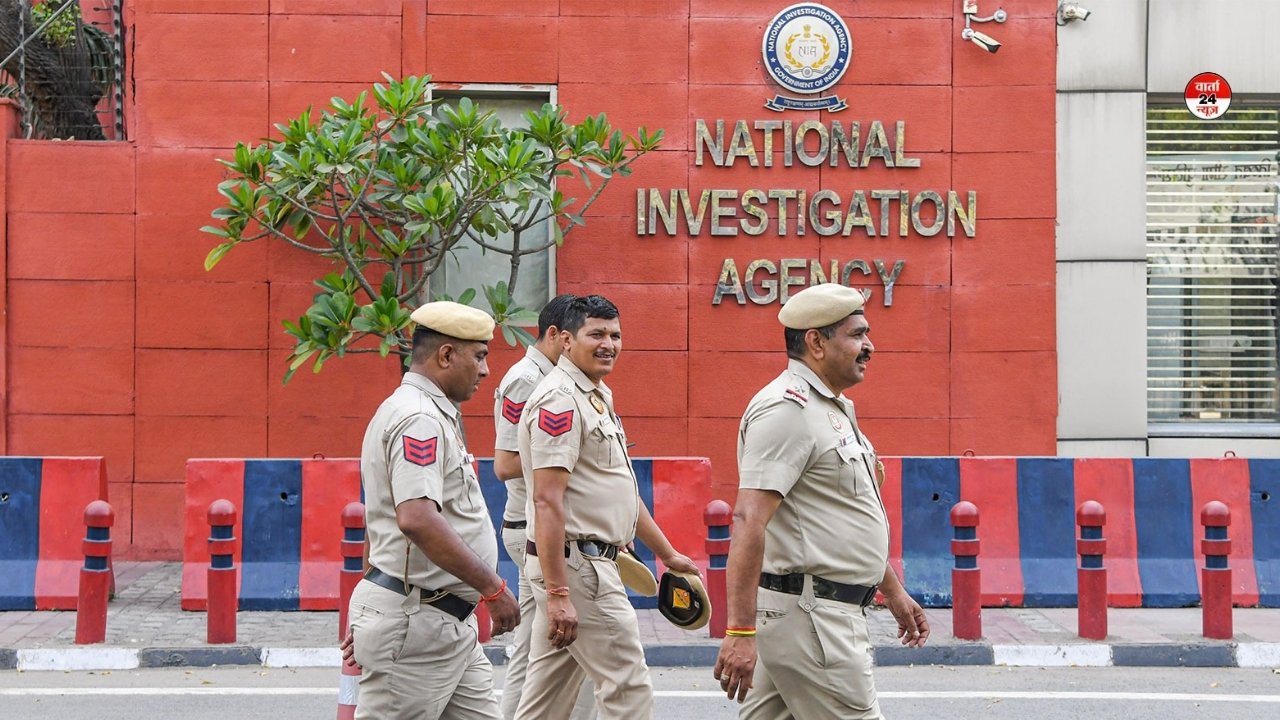
New Delhi: The National Investigation Agency (NIA) has brought back 303 fugitives from 36 countries since 1999, including 72 during 2026 so far, Director General Rakesh Aggarwal said on Friday. He shared the figures while addressing the media after the conclusion of the two-day sixth Anti-Terror Conference, which focused on cross-border terrorism, investigative coordination and strengthening the prosecution of terror-related cases.
Anti-Terror Conference adopts two-track approach
Explaining the conference’s structure, Aggarwal said the format had evolved from a single-track discussion to a two-track framework introduced in 2025.
He said the first four editions, held until 2024, followed a single-track format. However, a second track was added last year to provide greater attention to the operational aspects of counter-terrorism.
According to the NIA chief, Track One focuses on broader policy, strategy and tactics concerning the country’s anti-terror framework, while Track Two examines the practical and technical aspects of investigation and prosecution.
He added that the conference had also adopted a specific central theme since 2025 instead of covering the entire spectrum of terrorism-related issues. This year’s discussions were primarily centred on cross-border terrorism, or ‘Seema Paar Aatankwad’.
Focus on strengthening prosecution of terror cases
Aggarwal said this year’s second track concentrated on the prosecution of terrorism-related offences, building on the previous edition’s discussions on the use of digital evidence.
While last year’s deliberations examined how digital evidence could strengthen the prosecution of terror cases, the current edition focused on the legal process after a chargesheet is filed.
The discussions covered strategies to secure successful convictions, improve courtroom preparedness and ensure faster trials in terrorism-related cases.
Amit Shah highlights security gains and counter-terrorism measures
The NIA chief also outlined key observations made by Union Home Minister Amit Shah during the conference.
According to Aggarwal, Shah appreciated the efforts of security forces and central police organisations in addressing major internal security challenges, particularly the progress made against Left-Wing Extremism.
The Home Minister also highlighted the reported end of locally recruited terrorists in the Kashmir Valley, along with improvements in the overall security and law-and-order situation in Jammu and Kashmir.
Aggarwal said Shah also acknowledged continuing security challenges, including ethnic violence in the northeastern region.
States asked to strengthen Anti-Terrorism Squads
Another major focus of the Home Minister’s address was the need to improve the capabilities of state-level Anti-Terrorism Squads (ATS).
Aggarwal explained that while the NIA investigates terror-related offences at the central level, states have their own specialised units to handle similar cases. However, their operational capabilities and preparedness vary considerably.
Some state units have developed strong investigative capabilities, while others are still in the early stages of building their institutional framework.
Shah, according to the NIA chief, emphasised the need to strengthen these units and bring them up to a more uniform level of operational efficiency.
Local police stations to play bigger role in counter-terrorism
Aggarwal also stressed the importance of integrating local police stations into the broader counter-terrorism mechanism.
He said police stations are often the first point where suspicious activities or early warning signs become visible. These could include individuals operating under false identities, signs of radicalisation or the procurement of unusual materials that might potentially be used in making explosives.
He emphasised that identifying such indicators at an early stage and sharing information with specialised agencies could help prevent potential terrorist activities.
PRAHAAR framework to guide anti-terror operations
The NIA chief said the Centre’s Anti-Terrorism Policy, PRAHAAR, provides a comprehensive framework for tackling terrorism and should guide the functioning of state-level anti-terror units.
The framework encompasses prevention, response, resilience and rapid recovery following terrorist incidents, while also emphasising the importance of protecting human rights during counter-terrorism operations.
Aggarwal said state agencies must align their operational strategies with the principles outlined in PRAHAAR to ensure a coordinated and effective national response to terrorism.
72 fugitives brought back in 2026
Highlighting India’s growing efforts to track down fugitives operating from overseas, Aggarwal said 303 individuals wanted in various criminal cases had been brought back from 36 countries since 1999.
He pointed to a steady rise in the annual number of returns in recent years, with 72 fugitives brought back to India in 2026 so far.
The NIA chief said stronger coordination among investigating agencies and international cooperation had contributed to improving the country’s ability to trace and bring back individuals who flee abroad to evade legal proceedings.
He reiterated that efforts would continue to ensure that those accused of crimes in India cannot use foreign territories as safe havens.
