


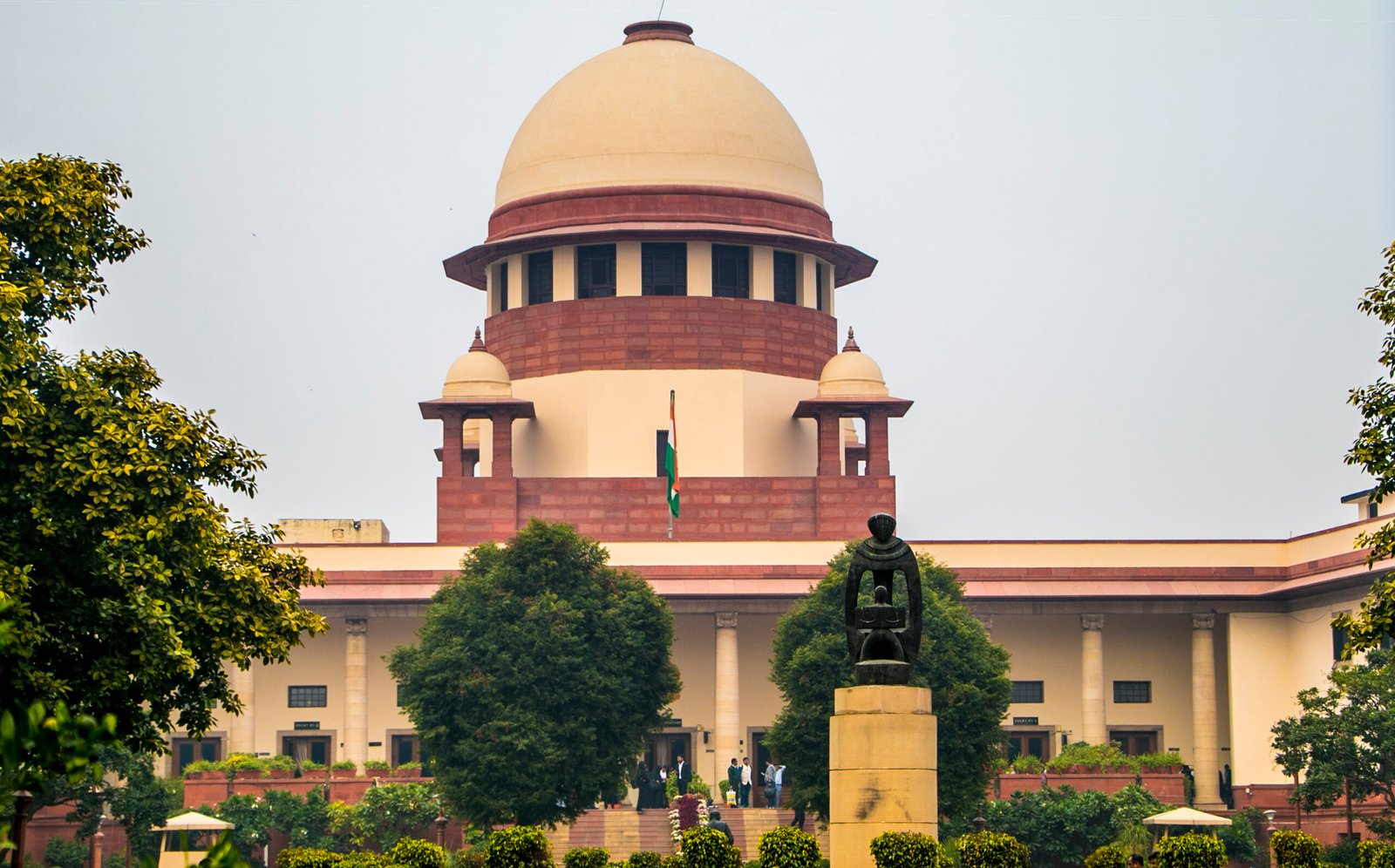
The Supreme Court of India on Friday dismissed a petition challenging a Bombay High Court observation that criminal magistrates have no jurisdiction to order the removal or blocking of online content under Section 69A of the Information Technology Act, 2000 and the related Blocking Rules (2009). The unanimous bench of Chief Justice Surya Kant, Justice Joymalya Bagchi, and Justice Vipul Pancholi declined to interfere with the High Court’s position, reinforcing that only authorities empowered under the statute primarily the Central Government or designated officers can issue such orders.
The dispute arose out of proceedings initiated by Dhyan Foundation, a charitable animal welfare organisation, which complained to a metropolitan magistrate in Mumbai that several defamatory videos on YouTube were being circulated about it. A magistrate directed Google LLC, the platform operator, to remove the videos and also instructed state authorities to correspond with Google to enforce compliance.
When the videos were not taken down, the Foundation pursued contempt proceedings for disobedience. The magistrate’s directions were challenged in higher courts on the ground that a criminal magistrate lacked the statutory authority to order social media intermediaries to block content under the Information Technology Rules, 2009.
The dispute arose out of proceedings initiated by Dhyan Foundation, a charitable animal welfare organisation, which complained to a metropolitan magistrate in Mumbai that several defamatory videos on YouTube were being circulated about it. A magistrate directed Google LLC, the platform operator, to remove the videos and also instructed state authorities to correspond with Google to enforce compliance.
When the videos were not taken down, the Foundation pursued contempt proceedings for disobedience. The magistrate’s directions were challenged in higher courts on the ground that a criminal magistrate lacked the statutory authority to order social media intermediaries to block content under the Information Technology Rules, 2009.
A Broader Constitutional Context
The ruling arrives against the backdrop of longstanding constitutional jurisprudence on online speech and intermediary liability, particularly as articulated in In Shreya Singhal, a two-judge bench of the Supreme Court struck down Section 66A of the IT Act a provision widely abused to suppress online speech and read down Section 79 to require that intermediaries act on court or government orders rather than arbitrary notices.
That case remains a touchstone for freedom of speech on digital platforms. It emphasised that intermediary liability must be constrained within constitutional limits and that restrictions on speech must be clearly defined, reasonable, and procedurally fair. The latest decision reinforces this legacy by reiterating that content takedown powers cannot be assumed by inferior courts absent express statutory authority.
Legal Foundation: Distinguishing Roles under the IT Act
At the heart of the dispute is the proper interpretation of the Information Technology Act, 2000, and especially Section 69A and the accompanying Information Technology (Procedure and Safeguards for Blocking for Access of Information by Public) Rules, 2009.
Under Section 69A, only the Central Government or an authorised officer is empowered to issue blocking orders for online content on specific grounds such as public order, national security, sovereignty, or friendly relations with foreign states. The Rules elaborate procedural safeguards including notice to intermediaries and review mechanisms precisely because of constitutional concerns about arbitrary censorship and the right to free speech.
While affirming the High Court’s position, the Supreme Court also made clear that this does not bar civil remedies for the petitioner or others aggrieved by defamatory or unlawful online material. Individuals may still approach civil courts in accordance with the law to seek relief on merits.
This caveat is significant: it recognises that while coercive content removal orders cannot be shoe-horned into criminal procedure or impromptu judicial fiat, the law does not leave wronged parties without a remedy. Civil processes defamation suits, injunctions, damages claims remain available paths for redress.
This Supreme Court ruling can be seen as a cautious recalibration reducing the risk of ad hoc judicial takedowns while preserving structured, constitutionally sanctioned processes for content regulation.
The Hon’ble Supreme Court’s affirmation of the Bombay High Court’s view represents a significant clarification on the limits of judicial powers in the digital era. In reinforcing that magistrates cannot assume authority under IT Rules, 2009 to block or remove online content, the Court has upheld a principle central to a free and open internet: lawful due process over ad hoc censorship.
At the same time, by preserving civil avenues for aggrieved parties, the judgement strikes a delicate balance between protecting reputation and upholding free speech a balance that will continue to evolve as digital communication becomes ever more central to public life in India.
