


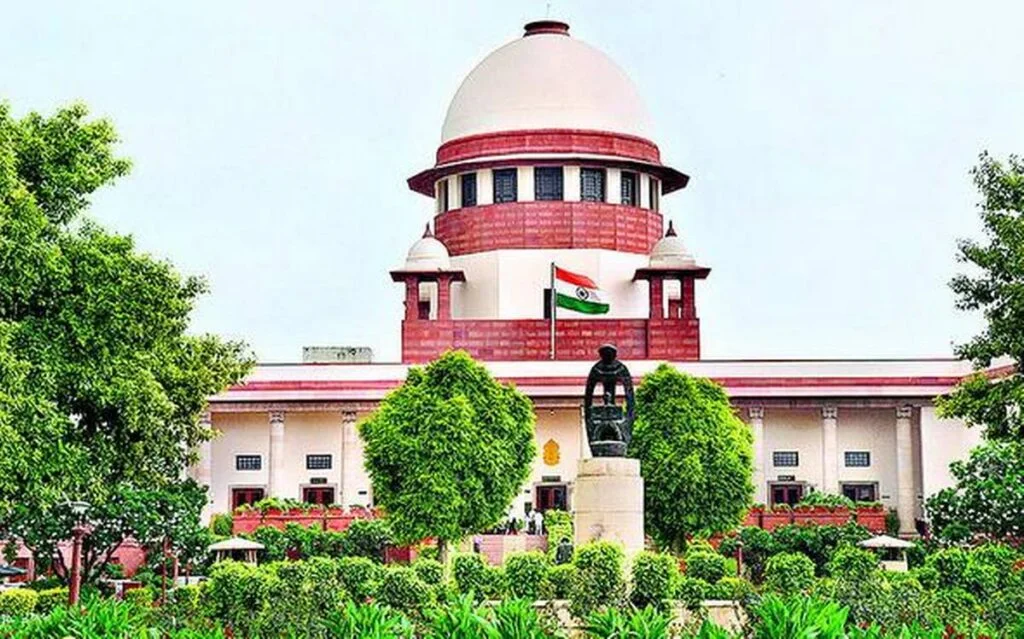
The Supreme Court of India has taken an unusual step by agreeing to hear in open court a set of review petitions challenging its own ruling that re-introduced a minimum three years of practice at the Bar as a qualifying criterion for entry-level judicial service posts such as Civil Judge (Junior Division). These review hearings are scheduled for 26 February 2026 before a Constitution Bench comprising Chief Justice of India Surya Kant, Justice Augustine George Masih, and Justice K. Vinod Chandran. Notices have been issued to all States and High Courts to appear and respond in the matter.
The controversy stems from a May 2025 judgment in All India Judges Association v. Union of India, where the Court revived the requirement that aspiring civil judges must have at least three years of courtroom practice before appearing for judicial service examinations. This effectively closed the door on fresh law graduates who had, until then, been eligible to compete directly after completing their degrees.
Review petitions are usually decided quietly in chambers without elaborate oral arguments. The Court’s decision to list these pleas for open-court hearing is rare and suggests that the judges themselves recognize the far-reaching consequences of the rule. It affects not just a handful of petitioners but thousands of law graduates across the country who have been preparing for judicial service exams.
Supporters of the three-year rule argue that judging is not a purely academic exercise. They believe courtroom exposure builds confidence, procedural understanding, and real-world perspective qualities that cannot be fully acquired through textbooks or internships alone.
Those challenging the rule see it differently. They argue that the requirement creates an arbitrary barrier, especially for candidates from modest backgrounds who may not be able to sustain three years in low-paying litigation practice. They also question whether there is concrete data proving that judges without prior practice perform worse. Modern legal education, with internships, clinical courses, and clerkships, they say, already equips graduates with meaningful exposure.
At its heart, this dispute is about how India chooses its judges at the entry level. Should the system priorities hands-on litigation experience, even if it delays entry for capable young graduates? Or should merit be assessed through rigorous exams and post-selection training, without insisting on a fixed period of practice?
By agreeing to hear the matter in open court, the Supreme Court appears to be taking a step back to re-examine its own reasoning. That in itself is noteworthy. The final outcome will shape the career paths of future lawyers and, more importantly, the character of India’s subordinate judiciary.
