


In Constitutional Moment: Change With Continuity
On 26 January, India commemorates the 76th anniversary of the commencement of its Constitution. Contrary to popular belief, the Constitution did not dismantle and rebuild the State from scratch. Instead, it infused sovereignty and democratic legitimacy into an already existing administrative and judicial framework, inherited largely from the Government of India Act, 1935.
Sovereignty was asserted, but continuity was preserved.
This philosophy of calibrated transition was most evident in the judicial system, where institutions remained largely intact—with the Supreme Court replacing the Federal Court, rather than displacing the entire structure.
⚖️ India Before an Apex Court: The Privy Council Era
For over a century—until 1937—India had no indigenous apex court. The Judicial Committee of the Privy Council (JCPC) in London served as India’s final court of appeal, sitting nearly 4,000 miles away.
🔹 Key Features
-
Established formally in 1833
-
Functioned until 1949 for Indian appeals
-
Decided thousands of Indian cases
-
Many decisions continue to be treated as binding or persuasive precedents
Despite geographical distance, the Privy Council earned a reputation for:
-
Impartiality
-
Judicial efficiency
-
Scholarly rigor
📜 Judging India Without Indian Law
Privy Council judges faced a unique challenge:
-
Indian statutory law was underdeveloped
-
Precedents were scarce
They relied on:
-
English common law
-
Arabic, Persian, and Sanskrit texts
-
Indigenous customs and religious doctrines
This jurisprudence shaped Indian law on:
-
Hindu coparcenary property
-
Waqf and Muslim endowments
-
Customary law
Appeals, however, were restricted:
-
Civil appeals required a minimum valuation of ₹10,000 + substantial question of law
-
Criminal appeals were exceptional, allowed only for grave injustice
🏛️ Early Demands for an Indian Supreme Court
The first sustained demand for a Supreme Court came from Sir Hari Singh Gour, who moved resolutions in:
-
1921
-
1922
-
1925
🔑 Gour’s Argument
-
Distance from London
-
Narrow criminal appellate jurisdiction
Importantly, Gour did not seek abolition of the Privy Council—he proposed a parallel Supreme Court in India.
These proposals faced resistance:
-
Assembly President ruled lack of legislative competence
-
Sir Tej Bahadur Sapru suggested deferral
-
Motilal Nehru opposed the idea citing:
-
Lack of separation of powers
-
Racial discrimination
-
Support, however, came from:
-
Mahatma Gandhi
-
Muhammad Ali Jinnah
-
Sir Sankaran Nair
🧭 Federal Court vs Supreme Court: The Constitutional Debate
The Round Table Conferences (1932–33) ignited a major debate:
-
Should India have a Federal Court, a Supreme Court, or both?
Positions
-
British Indian delegates: Combined Federal Court + Supreme Court
-
Princely States: Separate courts
-
Some jurists: Retain Privy Council due to neutrality
The White Paper of 1933 deferred the Supreme Court idea, proposing future legislative action.
The Joint Committee on Indian Constitutional Reform (1934) ultimately endorsed:
Expansion of Federal Court jurisdiction instead of creating a separate Supreme Court
📘 Government of India Act, 1935: A Turning Point
The Act established the Federal Court of India with:
-
Original jurisdiction in federal disputes
-
Appellate jurisdiction in constitutional matters
However:
-
Appeals to the Privy Council were retained
-
Princely States remained partly outside Federal Court control
Yet, the Act introduced uniformity:
Decisions of the Privy Council and Federal Court on federal law became binding across India.
In Independence Without Judicial Disruption
After 1947, judicial continuity was consciously preserved:
-
Federal Court Order, 1947 divided courts between India and Pakistan
-
The Federal Court continued under the 1935 Act
📌 Key Development
-
Federal Court (Enlargement of Jurisdiction) Act, 1947
-
Allowed regular civil appeals from High Courts
-
Barred direct civil appeals to the Privy Council
-
Criminal special leave jurisdiction of the Privy Council, however, survived briefly.
🚫 Abolition of Privy Council Jurisdiction (1949)
The decisive break came with:
Abolition of Privy Council Jurisdiction Act, 1949
Effects
-
Ended all appellate jurisdiction of the Privy Council over India
-
Transferred pending cases to the Federal Court
-
Preserved judgments already reserved
This ended a century-long judicial relationship—not in hostility, but by constitutional necessity.
🏛️ Birth of the Supreme Court (1950): Institutional Continuity
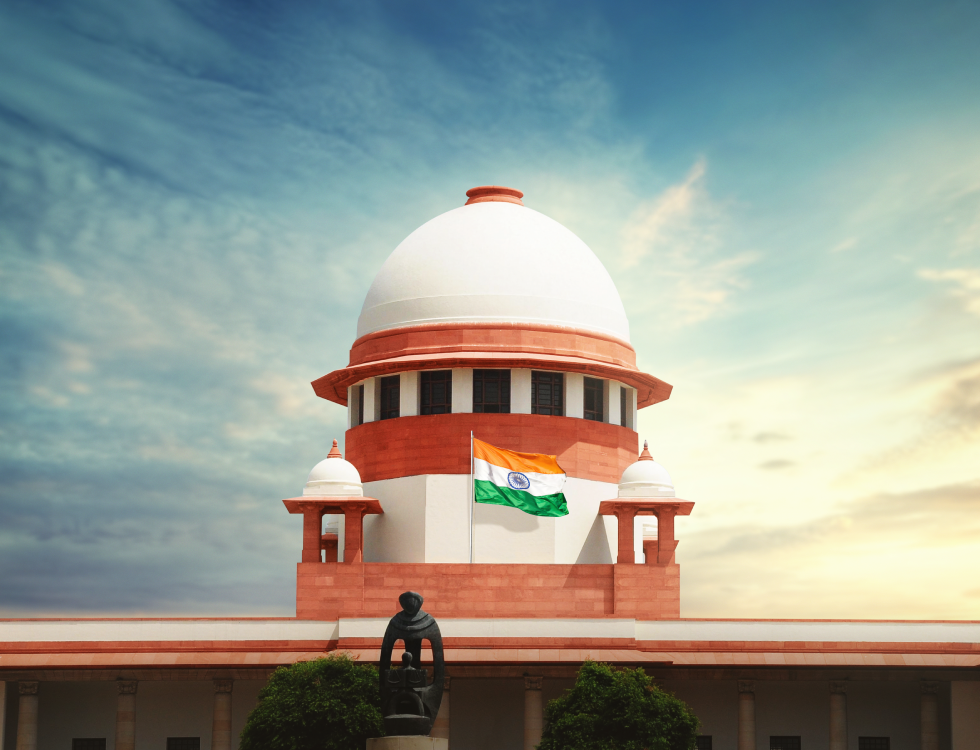
On 26 January 1950, the Supreme Court of India replaced the Federal Court.
Article 374 ensured:
-
Continuity of jurisdiction
-
Transfer of pending cases
-
Elevation of Federal Court judges
-
Binding force of prior rulings
Judicial allegiance shifted—from the Crown to the Constitution.
Some British judges even continued post-independence, underscoring the non-rupture model.
🔄 Absorption, Not Exclusion
As noted by Abhinav Chandrachud, revolutions often purge collaborators. India chose otherwise.
Indian constitutionalism evolved through absorption and recalibration, not rejection.
Colonial judicial institutions were domesticated, not dismantled.
🌍 India’s Choice: Complete Judicial Sovereignty
While nations like Mauritius, Brunei, and Antigua & Barbuda still allow Privy Council appeals, India opted for:
Full judicial autonomy rooted in its Constitution
This was not due to mistrust—but political and constitutional maturity.
🏁 Conclusion: A Living Legacy
The Privy Council and Federal Court—though imperial in origin—left behind:
-
A rich jurisprudential foundation
-
A disciplined judicial ethos
Indian judges built:
A new constitutional vessel upon an inherited keel and ribs
The result is a Supreme Court that is sovereign, continuous, and deeply rooted in history.
