


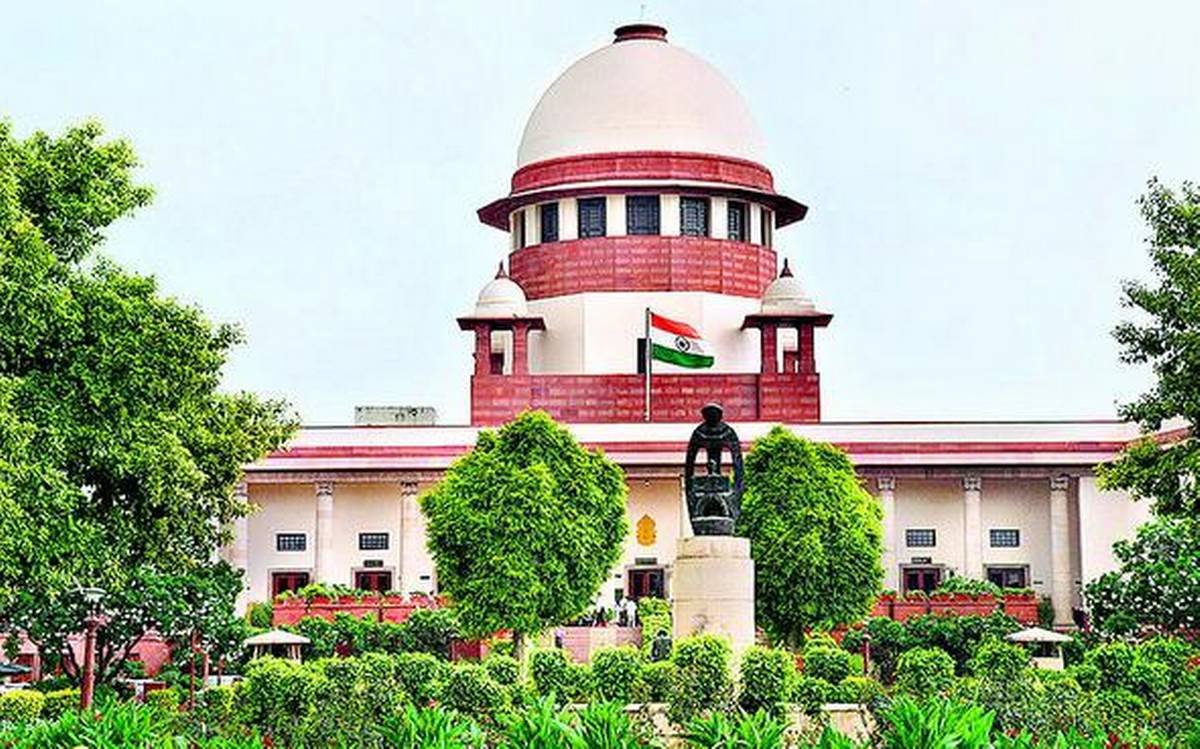
The Supreme Court has agreed to examine a long-standing and contentious issue under income tax law regarding whether employers can claim tax deductions for employees’ Provident Fund (PF) and Employees’ State Insurance (ESI) contributions deposited after the statutory due date.
A Bench comprising Justices JB Pardiwala and Sandeep Mehta issued notice in an appeal challenging a Delhi High Court ruling, which held that employees’ PF and ESI contributions deposited after the due dates prescribed under the respective welfare laws are not eligible for deduction, even if the payments are made before filing the income tax return.
Key Legal Issue Involved
The dispute revolves around the interpretation of Sections 2(24)(x), 36(1)(va), and 43B of the Income Tax Act, 1961.
-
Section 2(24)(x) treats employees’ PF and ESI contributions collected by the employer as income of the employer.
-
Section 36(1)(va) allows deduction of such contributions only if they are deposited on or before the statutory due dates under the respective welfare laws.
-
Section 43B, on the other hand, permits deduction of certain statutory payments if made before the due date of filing the income tax return, without insisting on compliance with statutory due dates.
Conflicting Judicial Views
This statutory overlap has led to divergent views among High Courts:
-
Strict View: Employees’ contributions must be deposited within the statutory due date under Section 36(1)(va); failure results in loss of deduction.
-
Liberal View: Deduction should be allowed if payment is made before filing the income tax return, by applying Section 43B.
Why This Case Matters
The Supreme Court’s intervention is expected to resolve the legal inconsistency and provide much-needed clarity for employers, as the issue has significant tax and compliance implications nationwide.
